

ASPARAGUS PREPARATION & COOKING TIPS
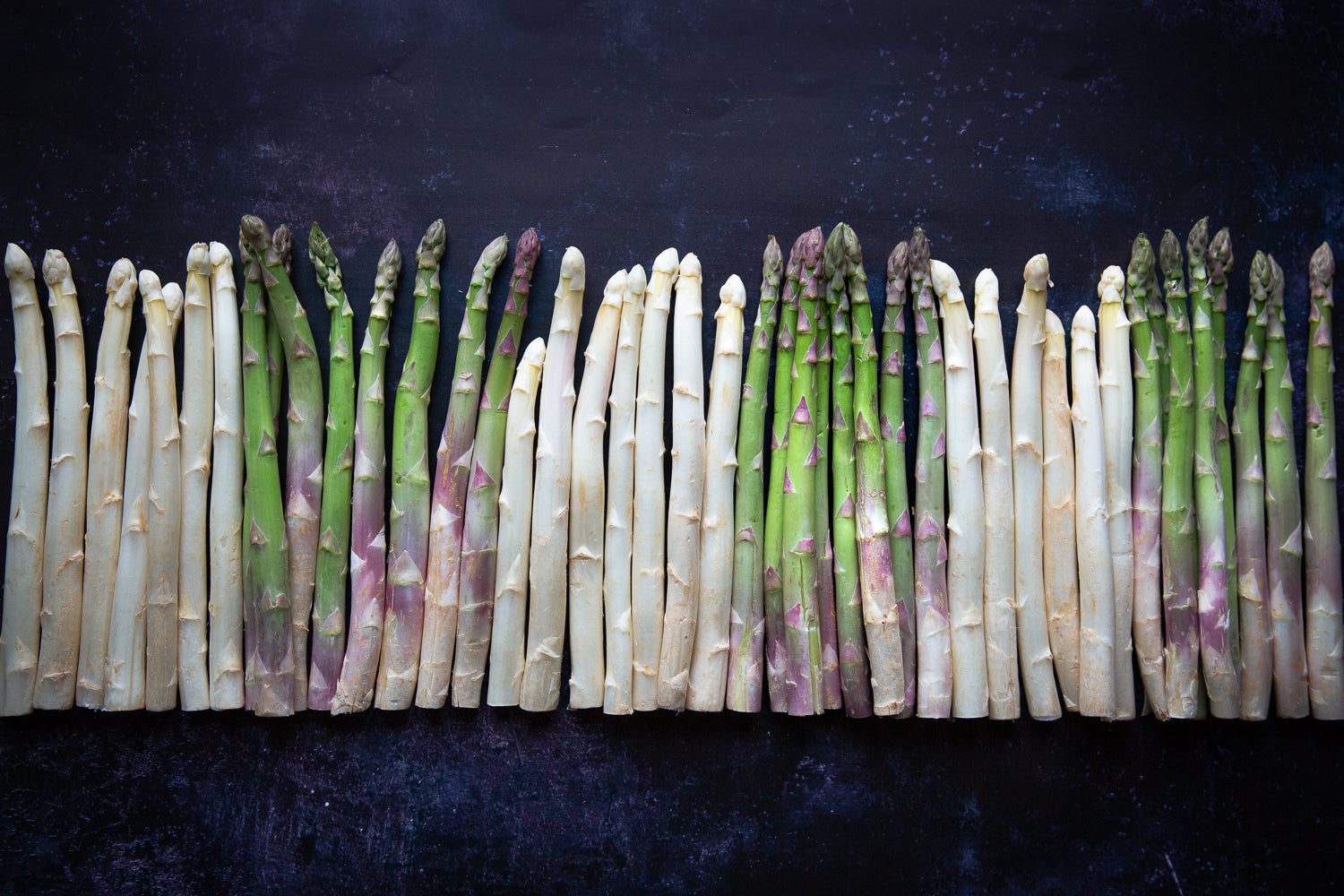
Whether you prefer green asparagus, with its grassy earthy flavour, or the milder, sweeter white variety, asparagus season is a much anticipated event in the culinary calendar.
There are numerous ways to prepare this much lauded vegetable, it can be steamed, boiled, griddled, roast, poached or sautéed, but if you really want to cook it to perfection, which way is best? Do you use the same method for white asparagus as you would green asparagus? The simple answer is they are best prepared differently, but once cooked they can be easily finished in a manner of different ways, for example on the barbecue.
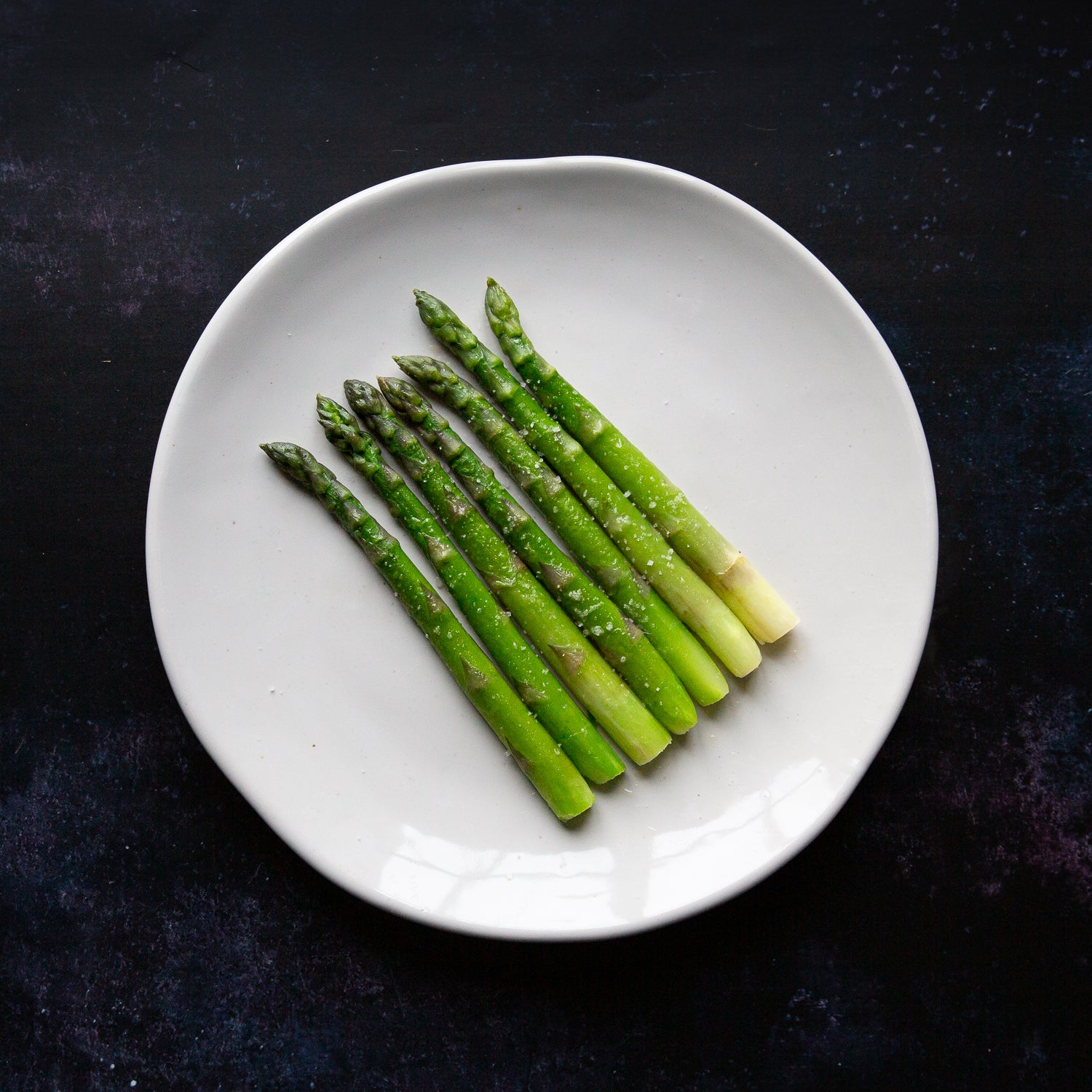
In order to preserve its vibrant chlorophyll colour, green asparagus is best cooked using renowned chef Thomas Keller’s big pot blanching method for green vegetables, a technique used in all the top restaurants. Essentially you can blanch all green vegetables with this method, which prevents natural sugars and salts from leaching into the cooking water, preserving nutrients, flavour and colour.
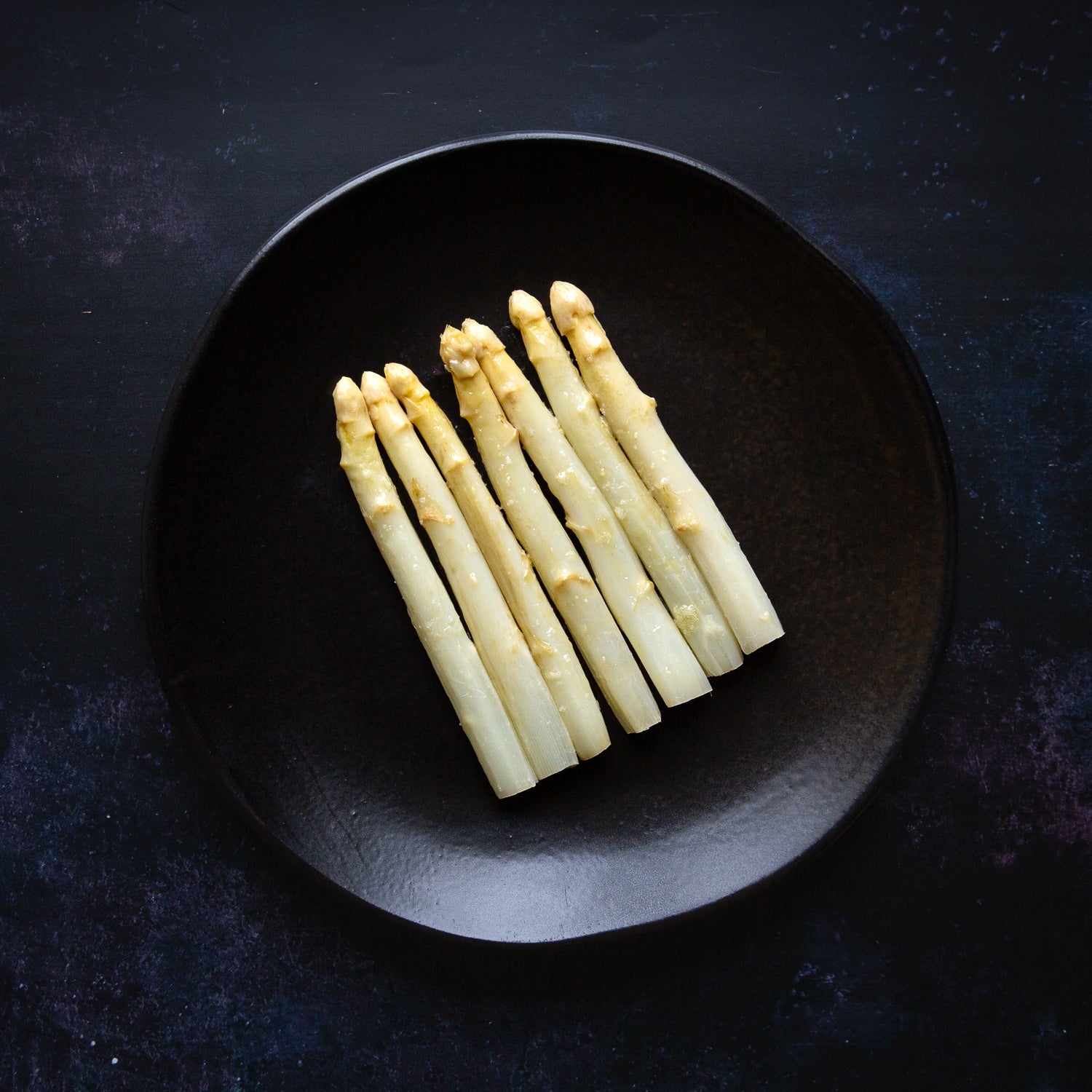
White asparagus needs a more gentle approach to preserve its delicate flavour. Poaching slowly in an emulsion of water and butter is the traditional method, resulting in beautifully tender stems that need nothing more than a simple adornment of unsalted butter and a pinch of Fleur de Sel to be enjoyed at their best.
THE CALIBERS - WHAT THE NUMBERS MEAN
Asparagus is graded by the diameter of the spear at its base, measured in millimetres. The number tells you about cooking behaviour as much as size. This isn't a quality hierarchy — it's a practical guide.
16+ · Fine Spears from 16mm diameter upwards. Slender, quick to cook, and elegant on the plate. Well suited to raw preparations, very brief blanching, or dishes where the asparagus shares the plate with other elements and shouldn't dominate. Responds well to high heat — a minute in a hot pan is often enough. Good for shaving over cured fish or folding through a warm grain salad.
22+ · Standard / Restaurant Grade The benchmark calibre — around half of Galis's total production falls into this size. Substantial enough to hold up to proper cooking but not so large that the texture becomes coarse. Takes well to grilling, roasting, and à la plancha. The sweet spot for hollandaise, beurre blanc, or alongside a good piece of fish. This is the grade that most professional kitchens default to because it works everywhere.
26+ · Grande / Chef's Cut Spears of 26mm and above — the largest, most prized grade. Impressive on the plate, with a thicker heart that stays creamy as the outside chars. The extra mass means you can cook them longer and harder without sacrificing texture. Ideal for roasting whole with butter and salt, or splitting and griddling. Enough presence to carry a dish on their own. Cut to 12cm for the pass.
HOW TO PREPARE AND COOK WHITE ASPARAGUS
The first step is to remove first 1-2 inches of woody stem. Take one asparagus and move a small sharp knife upwards from the bottom of the stem in small increments, the knife will ‘give’and cut through easily where the woody stem ends. Peel the outer skin on last 3 inches of the stem using a vegetable peeler. Use this stem as a measure, trim the rest of the bunch. If you have enough, save the woody ends to add flavour to a soup.
Place the white asparagus in a shallow pan, add enough cold water to just cover the stems or come halfway up the side of the pan, roughly a tablespoon of unsalted butter and a pinch of salt. Cover with a parchment cartouche and cook gently on a low heat for around 8 -12 minutes, depending on thickness, or until the tip of a knife will go into a stem with little resistance. If you have time, allow the asparagus to cool in the liquid as it will enhance the flavour. You can warm it through in a little unsalted butter, with added salt to taste, when ready to serve.
HOW TO PREP AND COOK GREEN ASPARAGUS
Trim the asparagus in the same way as for the white variety above. The woody ends can be used to add flavour to a soup, so nothing is wasted. Unlike white asparagus, green should not need too much peeling when young and fine, maybe just an aesthetic tidy up.
Put a large pan of water over a high heat. When it is boiling vigorously, add a tablespoon of salt, then add the green asparagus. Keep the pan at a fast boil for 5 minutes, then remove and drain the asparagus. Either serve immediately, or plunge into a bowl of iced water to stop it cooking and preserve the colour. When you are ready to serve simply warm through with some unsalted butter in a pan, adding salt to taste.
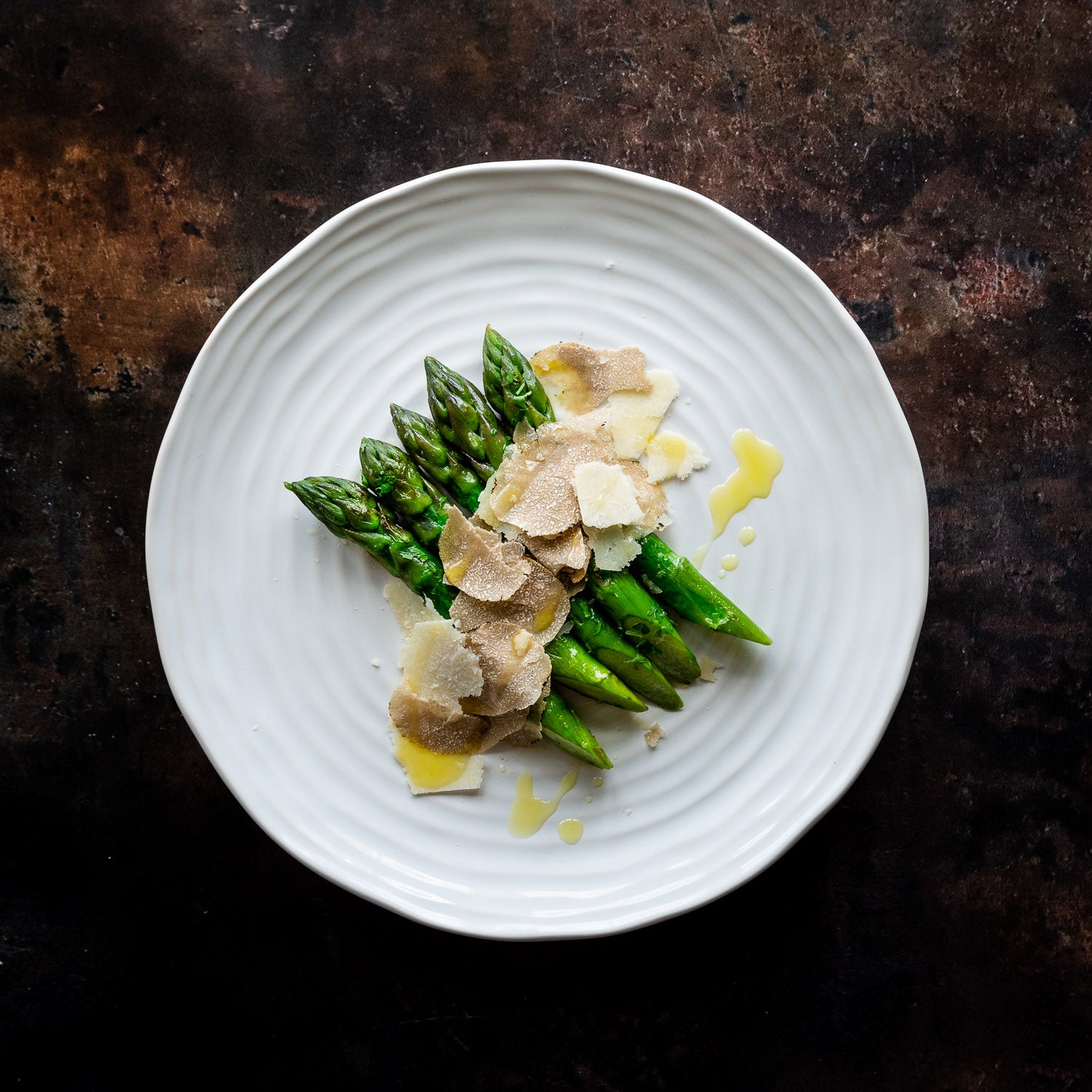
ASPARAGUS WITH FRESH SUMMER TRUFFLES & PARMIGIANA
RecipeSeasonal Vegetables