Charcuterie Classics & Epicurean Meats
Frequently asked questions
-
What makes your Toulouse sausage different from supermarket versions?
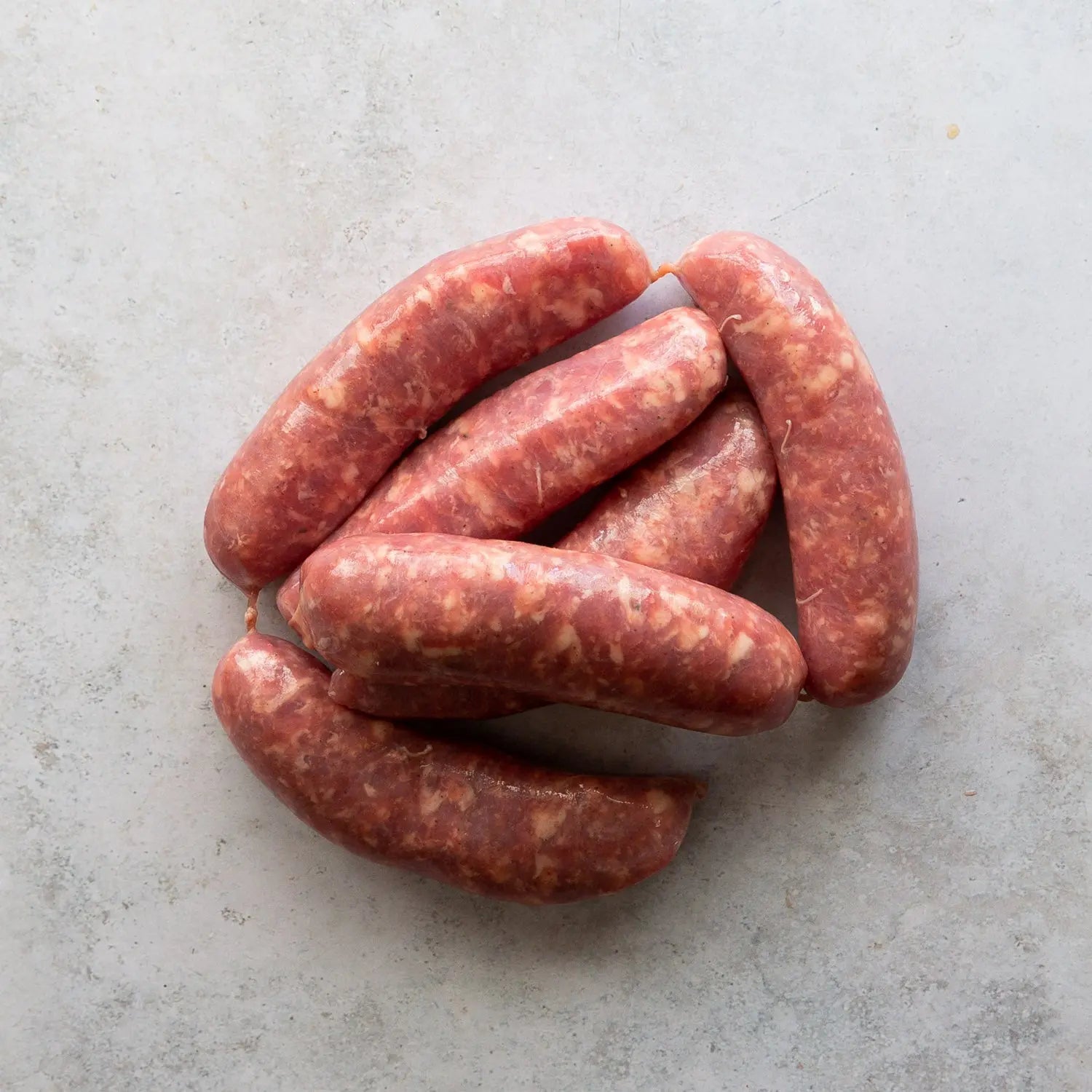
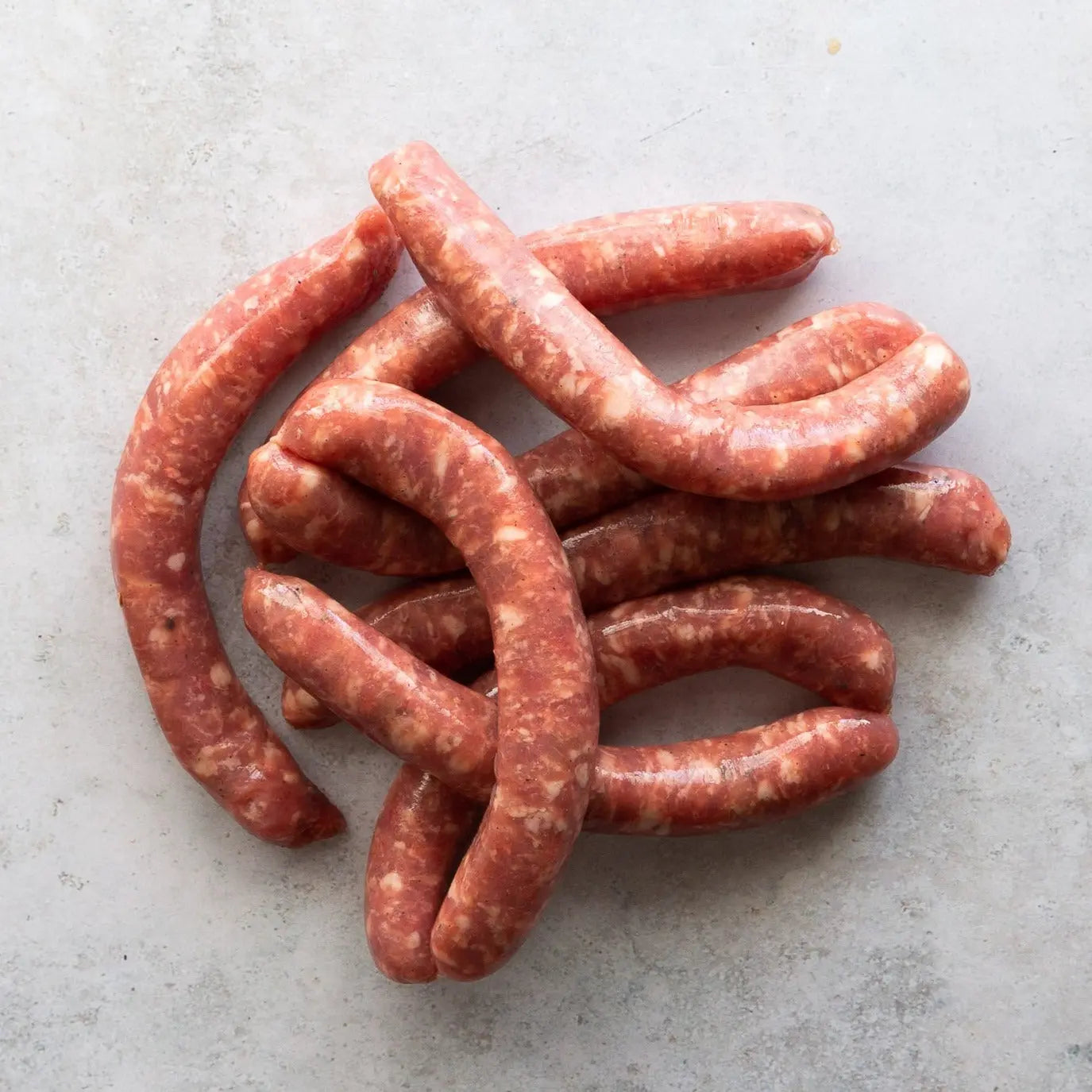
Most supermarket "Toulouse style" sausages have very little in common with the original product. They're typically made with lean pork mince, bulked with rusk or breadcrumbs, and packed in collagen casings. A proper Toulouse sausage is coarse-ground pure pork — no fillers, no rusk — in a natural casing, seasoned simply with salt, pepper, and garlic. The texture is completely different: chunky, meaty, and with a richness that comes from using the right cuts of pork at the right fat ratio. It's a straightforward product, but the quality of the pork and the simplicity of the recipe are what make it.
-
What is the difference between Morteau and Montbéliard sausage?
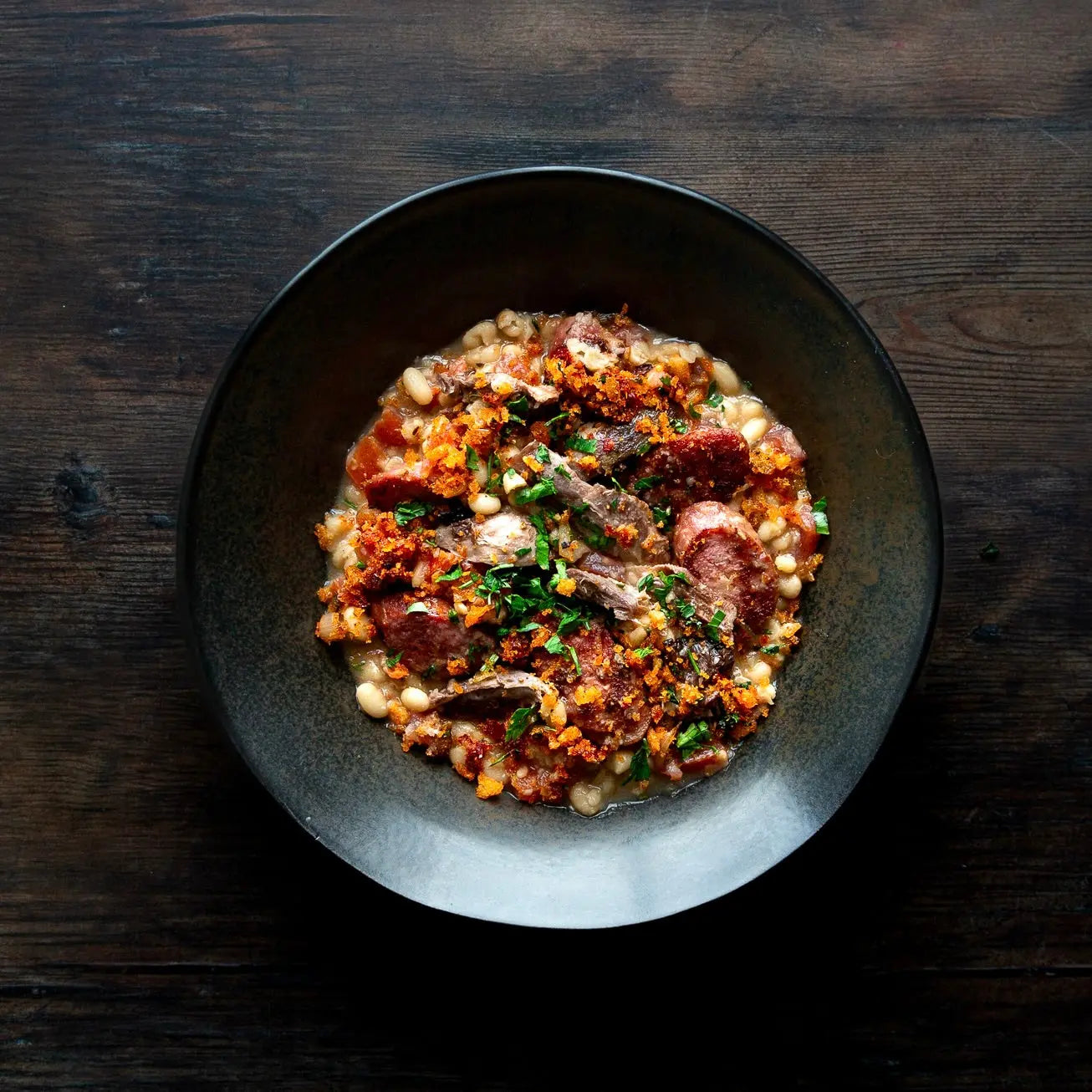
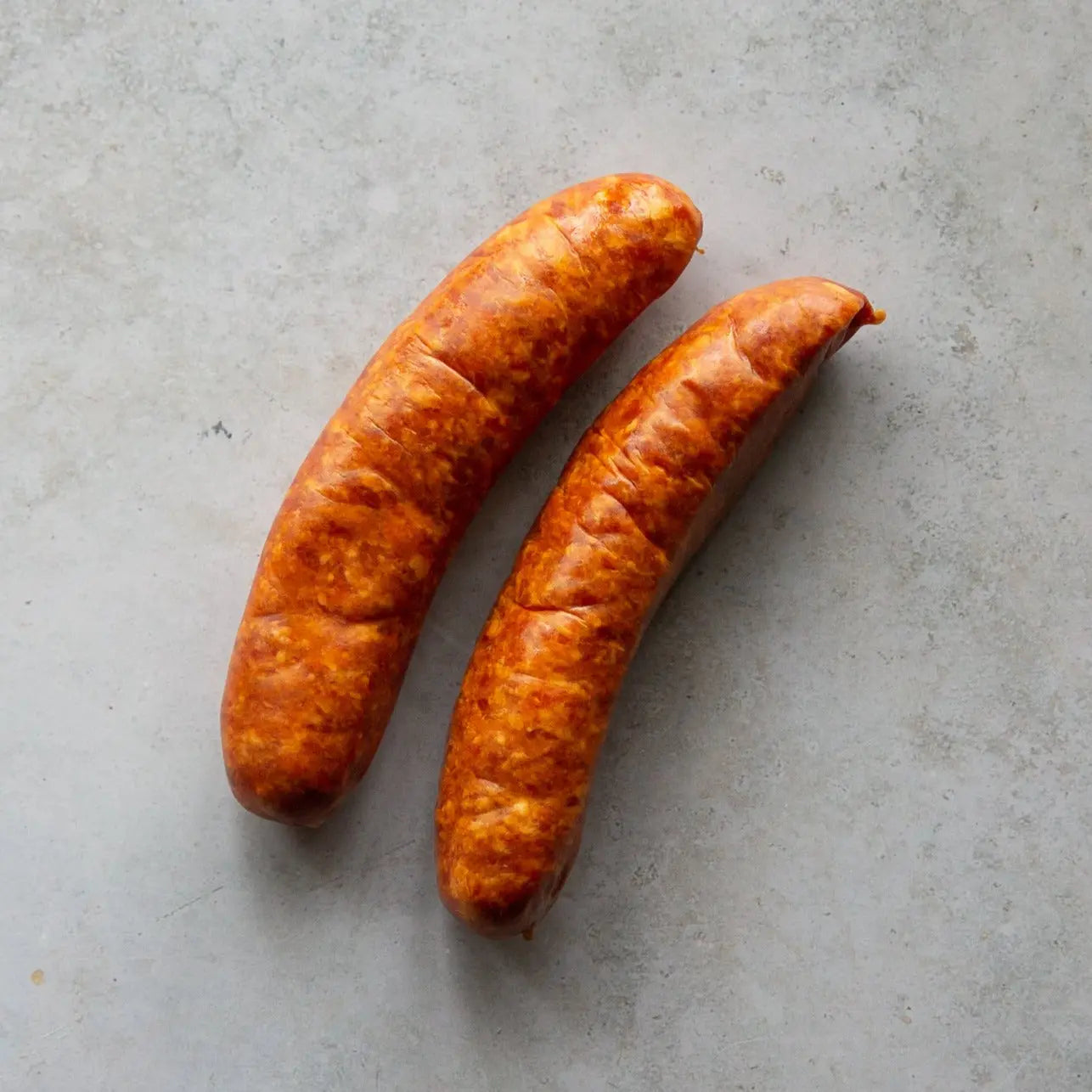
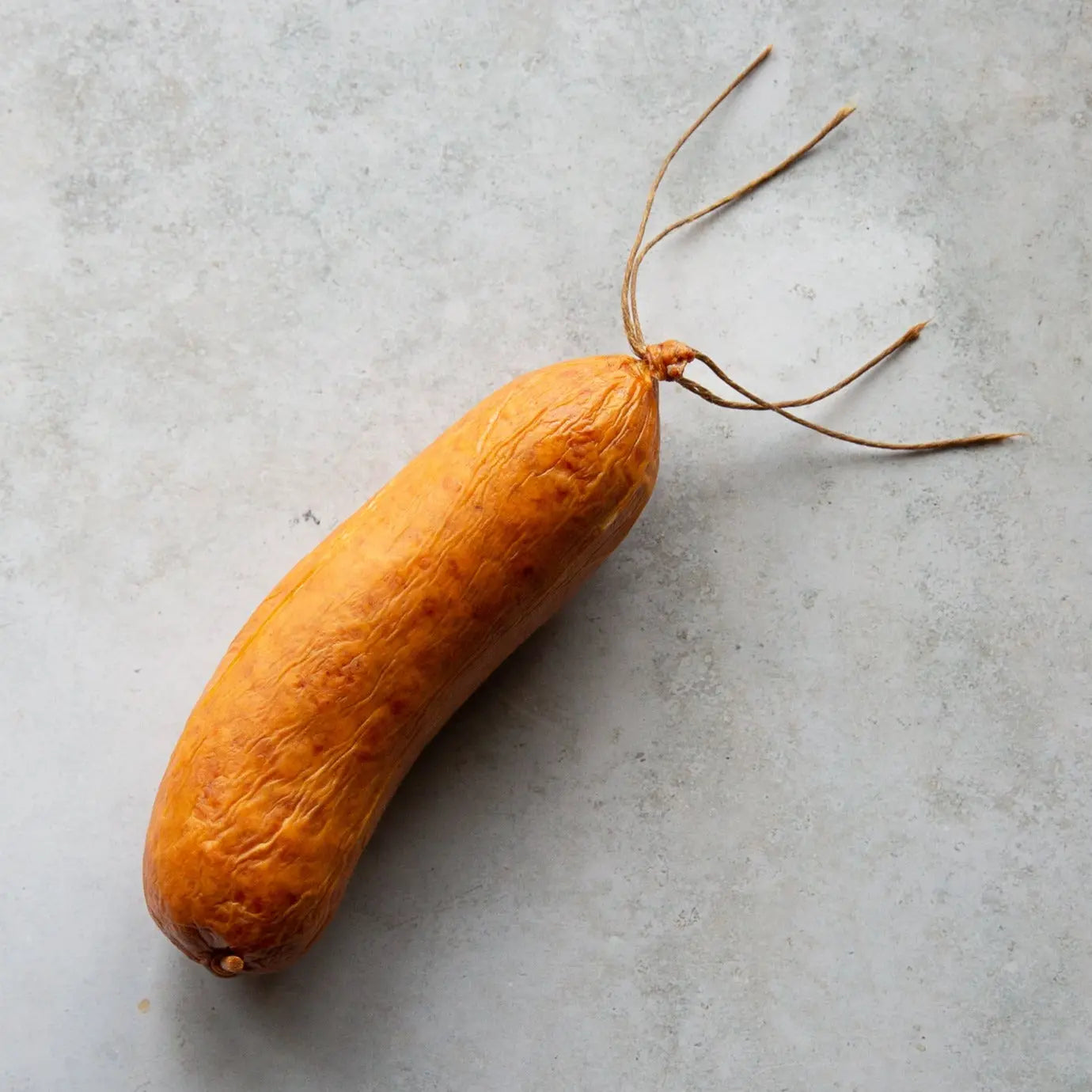
Both are smoked pork sausages from the Franche-Comté region of eastern France, and both are smoked over conifer and juniper in traditional tuyes (large chimneys). Morteau carries IGP protection — it must be produced and smoked within the designated area to strict standards, and is typically larger and more heavily smoked. Montbéliard is slightly smaller and milder. Both are pre-cooked during smoking, so they only need warming through — traditionally simmered in water or stock, served with lentils, potatoes, or as part of a choucroute garnie.
-
What is txistorra?
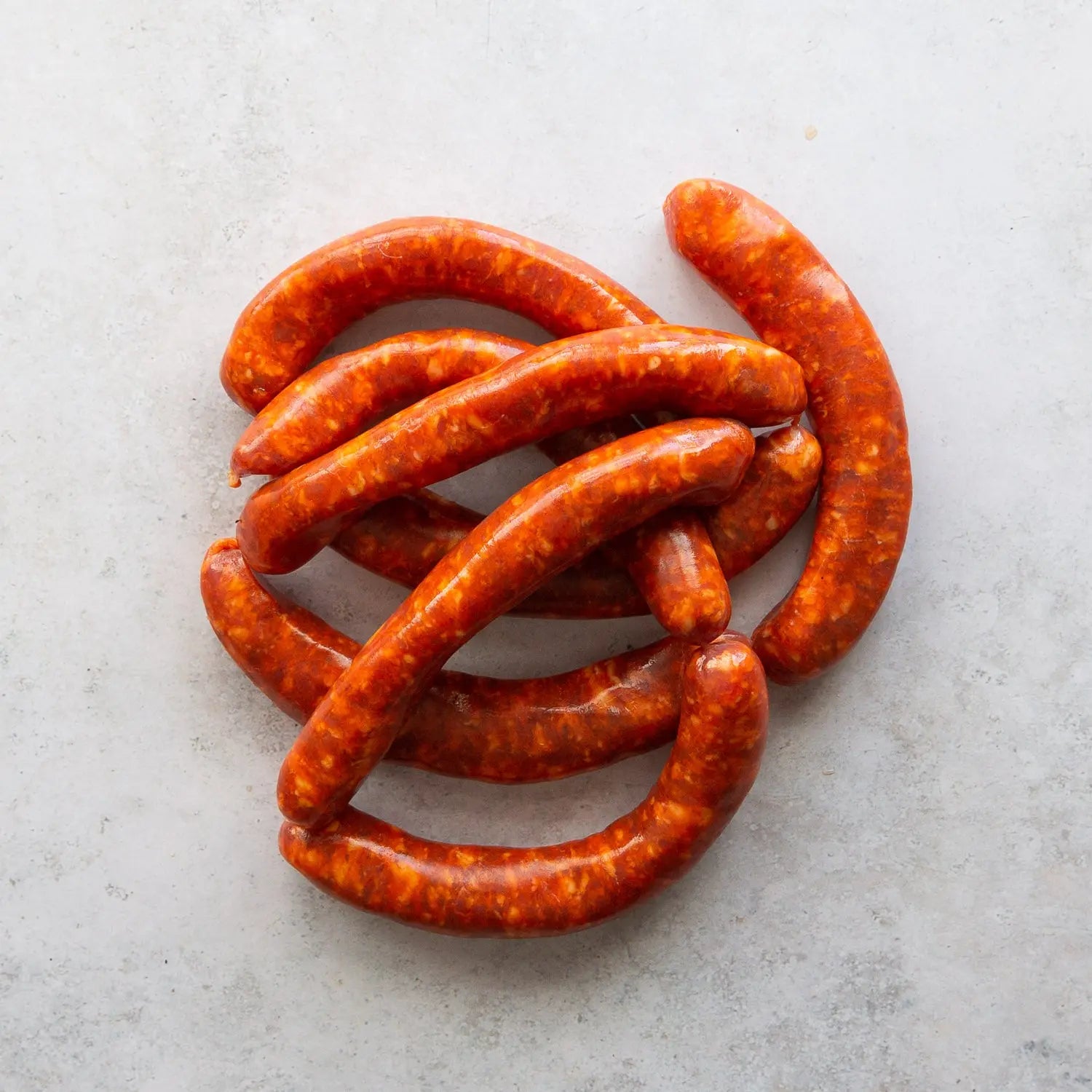
Txistorra is a thin, cured Basque sausage seasoned with pimentón (smoked paprika) and garlic. It cooks quickly — a few minutes in a hot pan or on a grill — and is a staple of Basque pintxo bars, often served in short lengths on bread. The flavour is mildly spicy and smoky with a satisfying snap to the casing. It's one of the simplest and most satisfying sausages to cook at home.
-
What is boudin blanc?
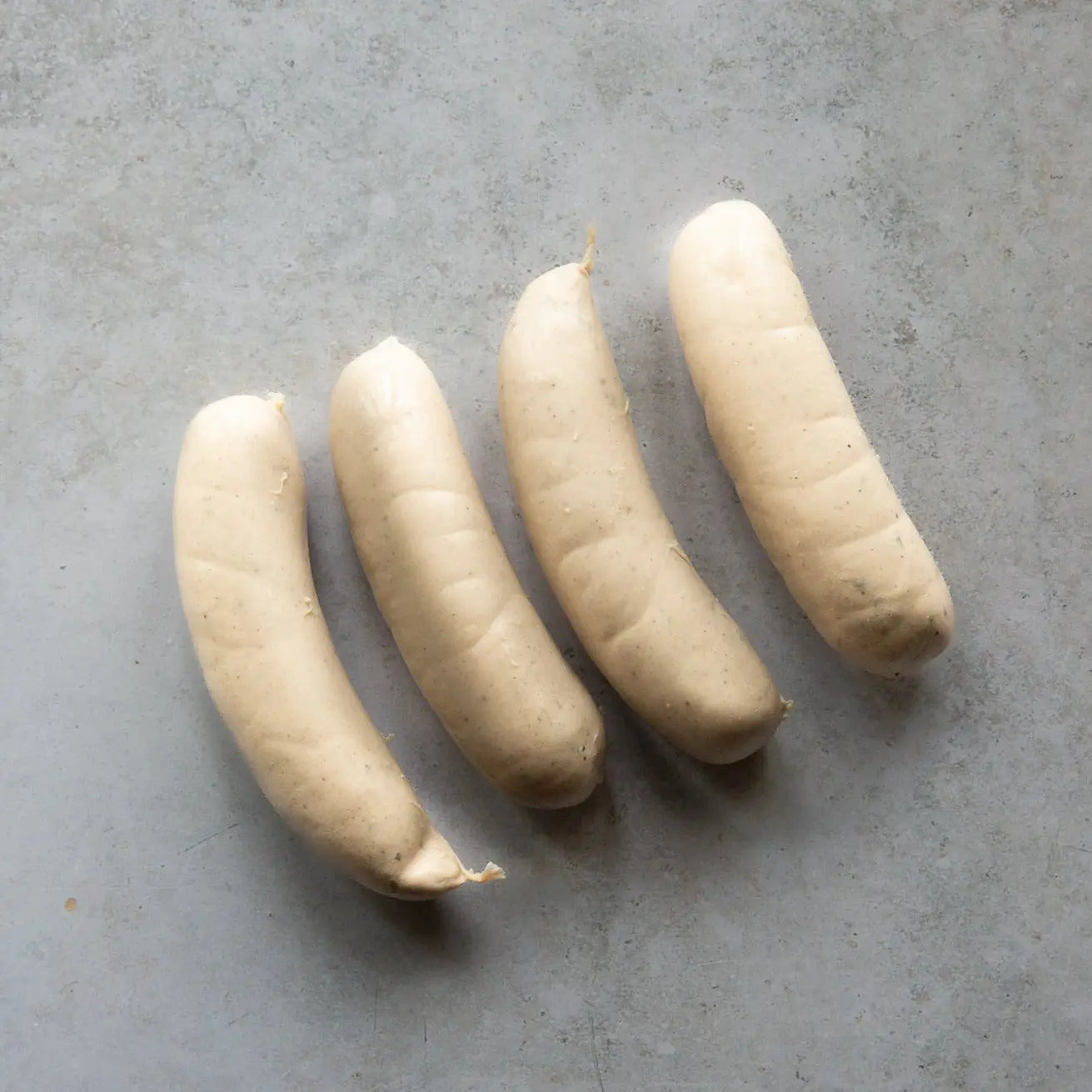
Boudin blanc is a traditional French white sausage — delicate, smooth, and far more refined than a standard sausage. Ours is a speciality from the Champagne-Ardenne region, made with prime pork, morels, mushrooms, and brandy to a recipe that dates back to the 17th century. Poach gently in water for ten minutes, pat dry, then finish in a pan over medium heat until lightly golden — do not cook over high heat or they will split. A staple of French charcuterie, particularly around Christmas, and rarely found in the UK outside specialist suppliers. This is the genuine French product.
-
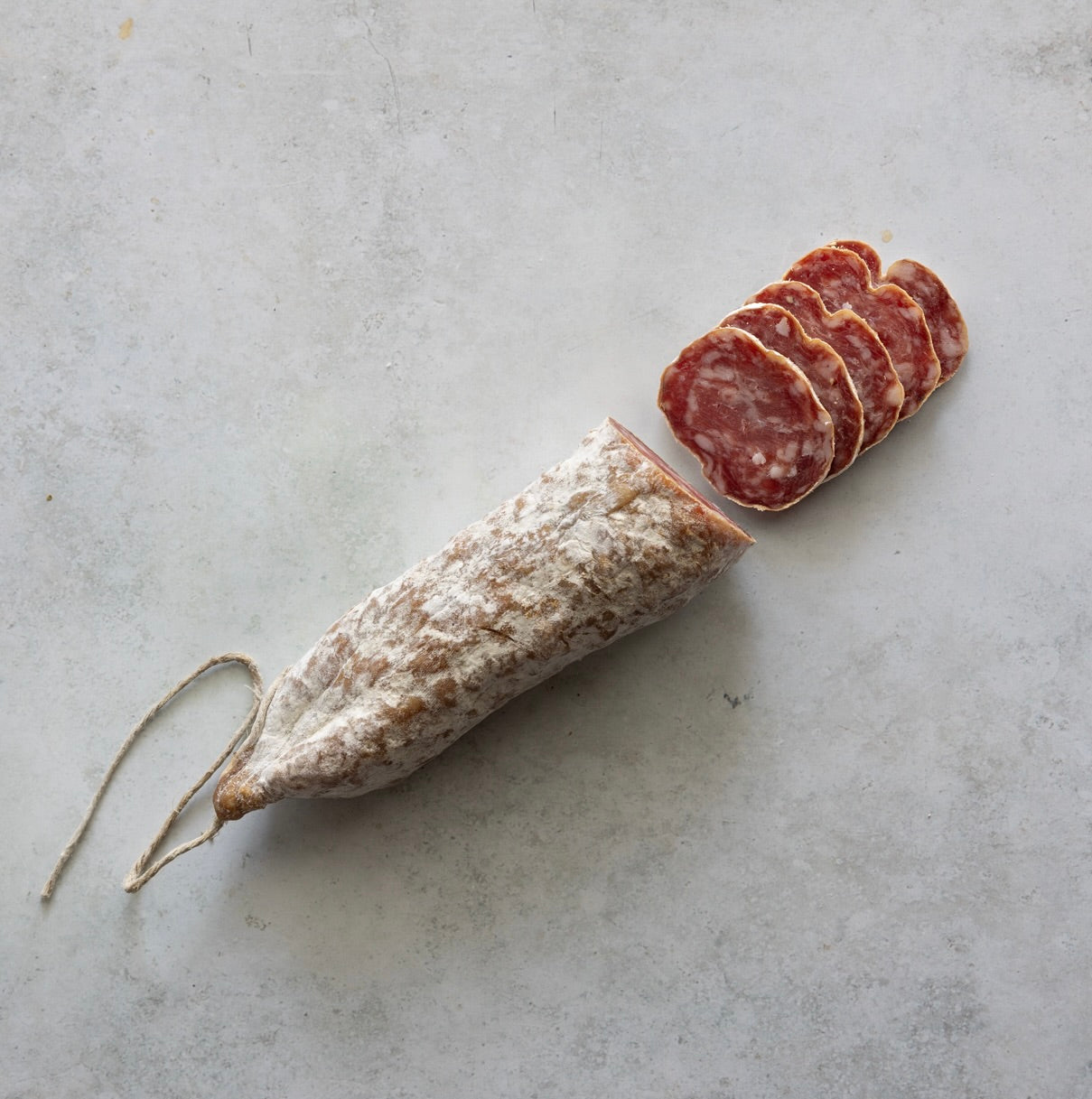
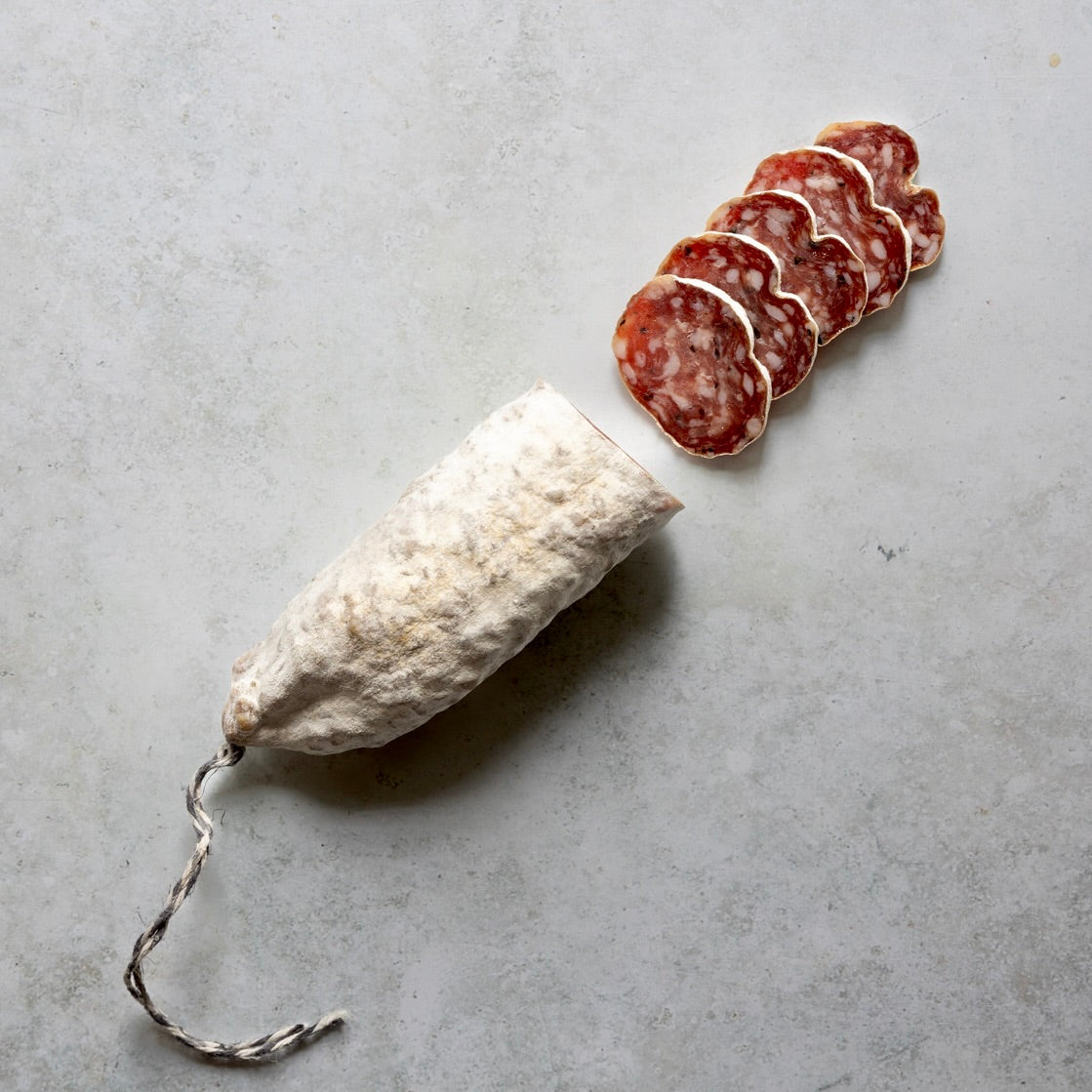
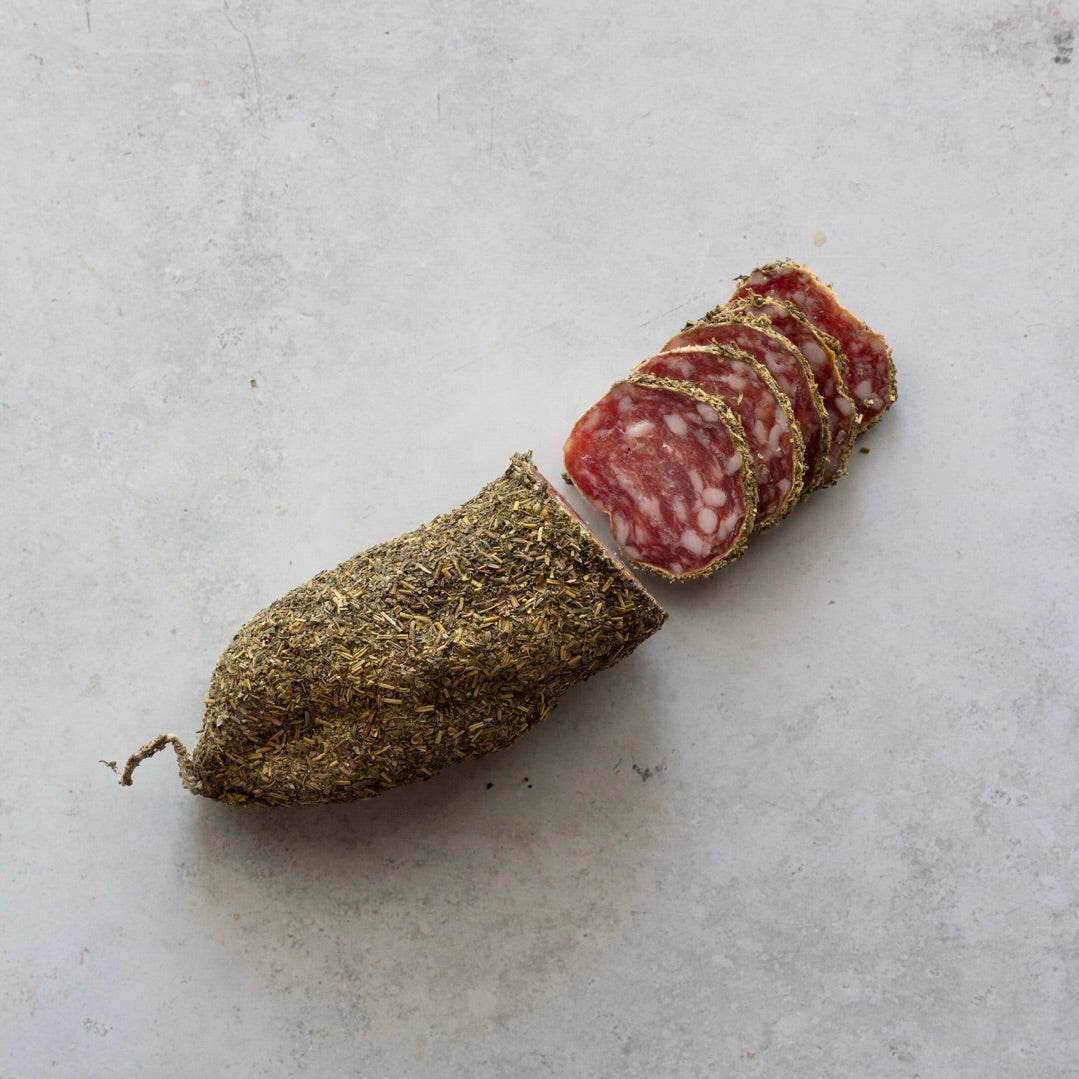
What makes a good saucisson?
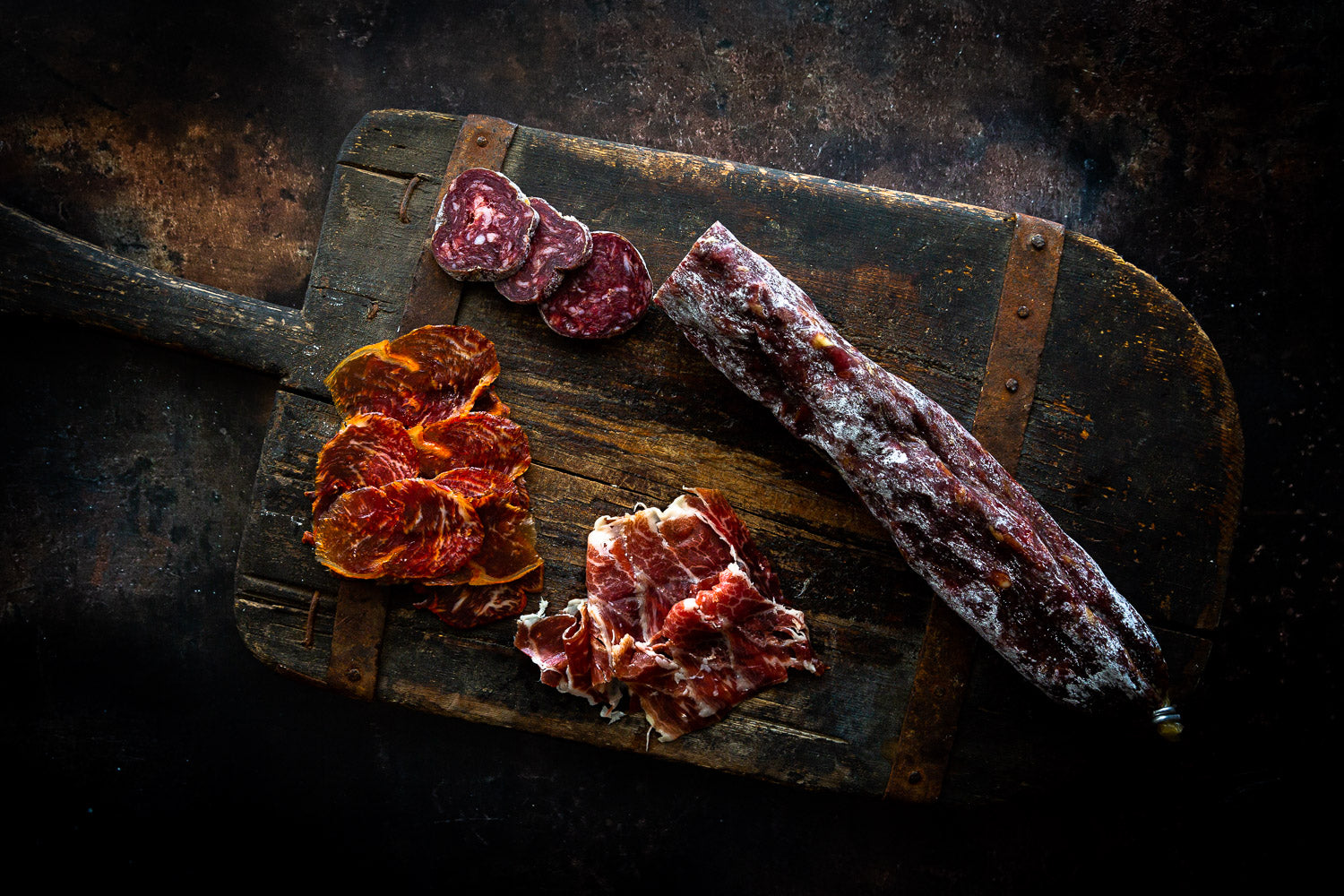
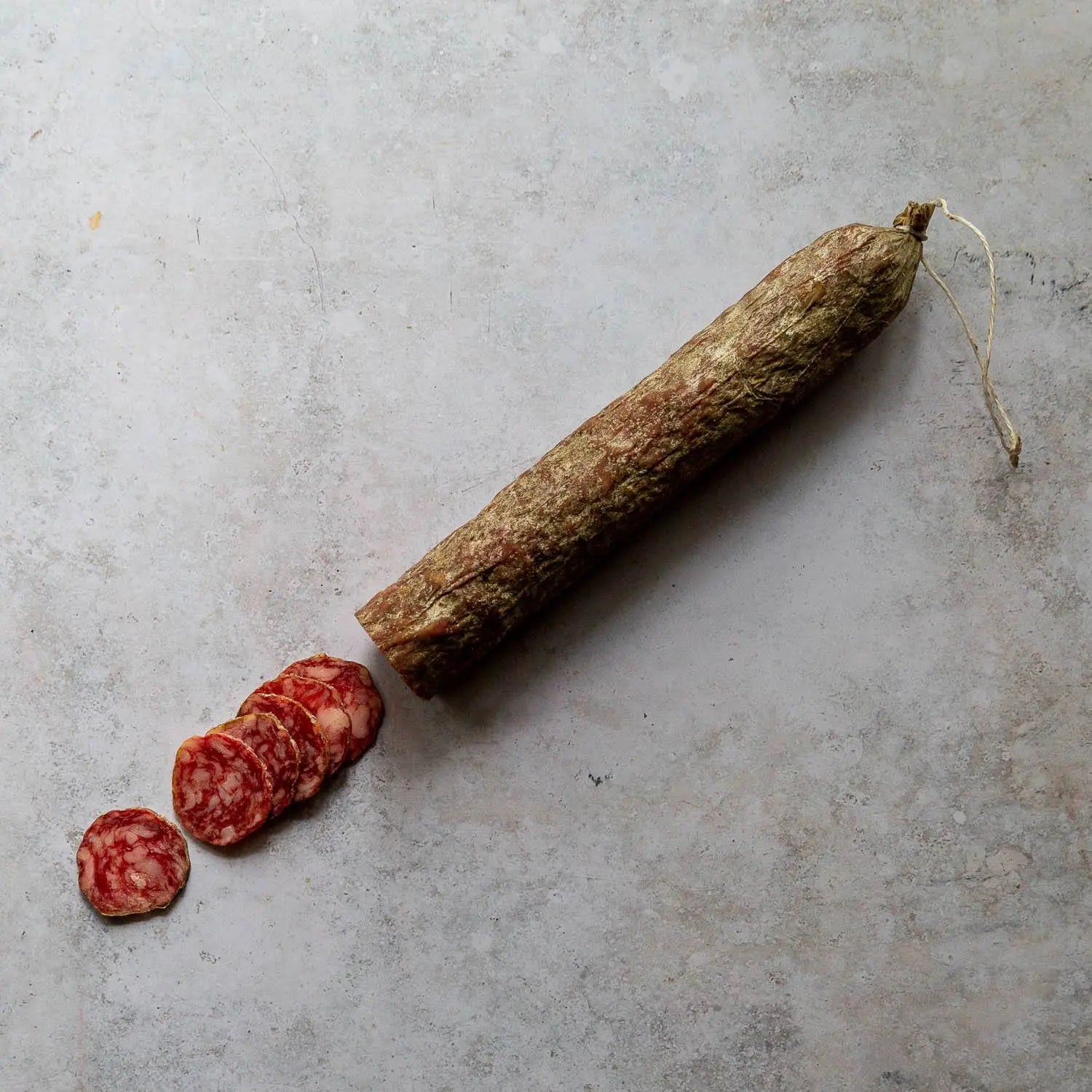
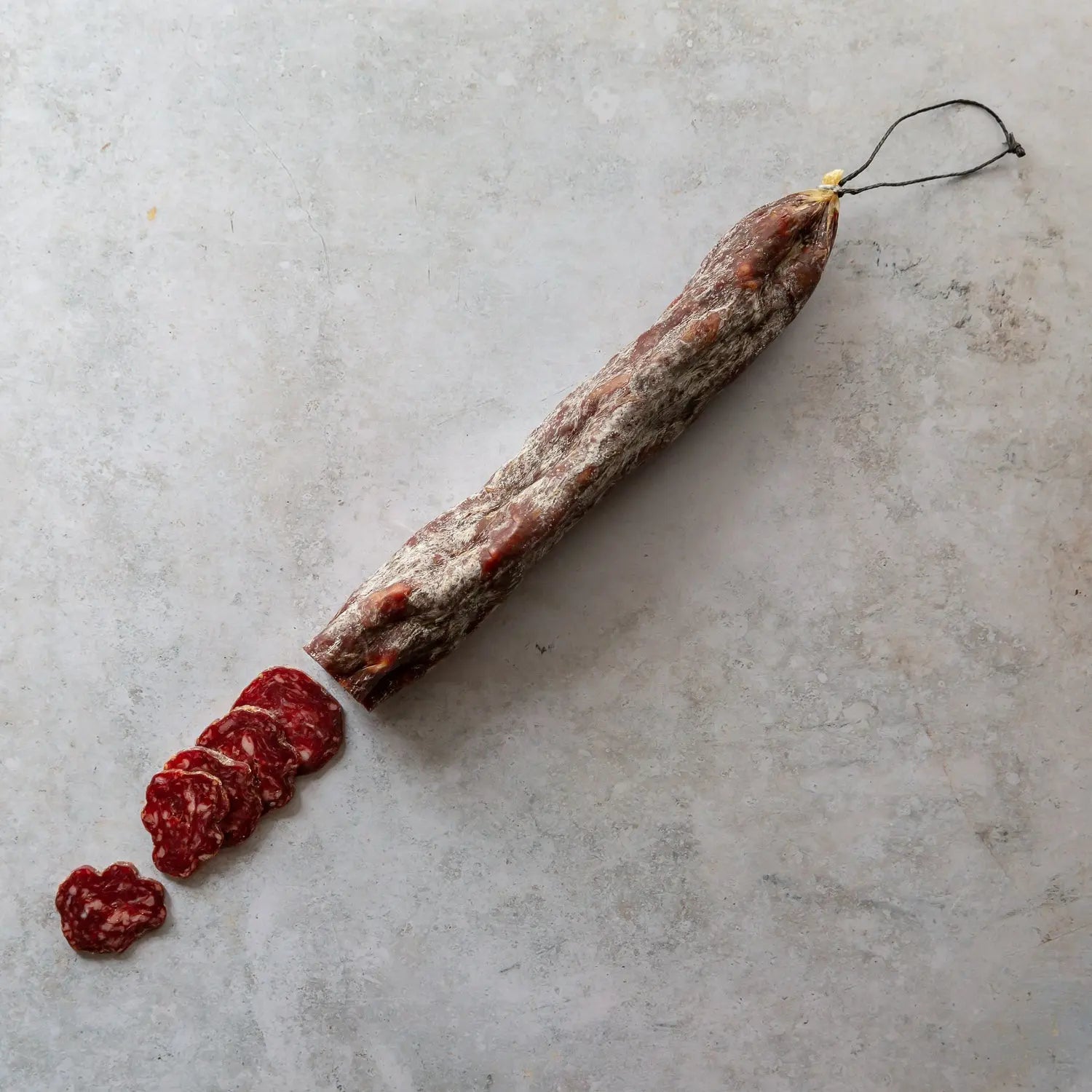
Time and pork quality. A proper saucisson is dry-cured over weeks or months — the meat slowly loses moisture, concentrating the flavour as natural fermentation develops complexity. The pork should be high quality with good fat content, packed in natural casings, and seasoned with real ingredients rather than flavourings. Our Targe saucissons from Auvergne are made to this standard — dense, well-cured, and available in a rotating selection of varieties including black truffle, hazelnut, and herbs de Provence. The difference between an artisan saucisson and a vacuum-packed supermarket version is immediately obvious from the texture alone.
-
What is nduja and how do I use it?
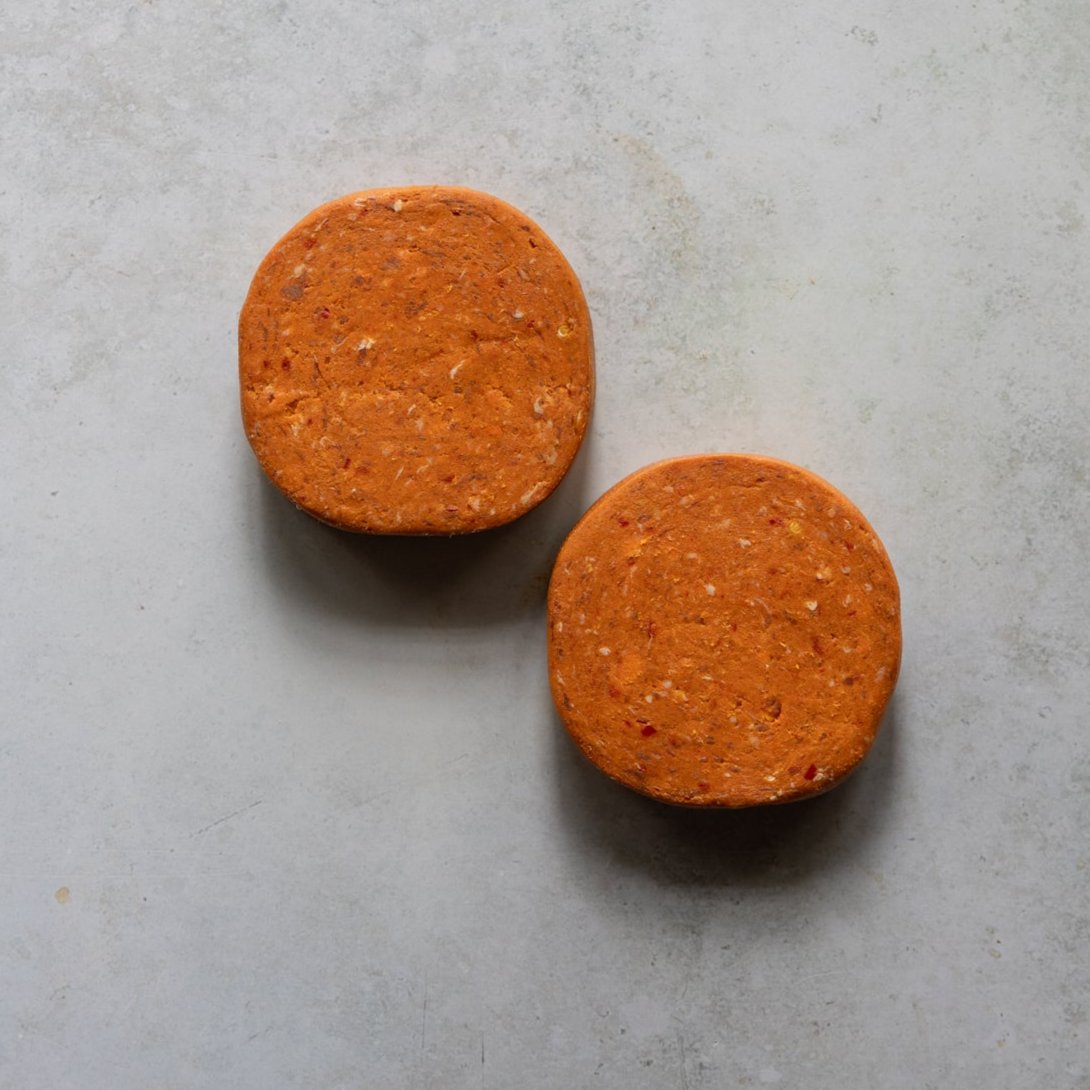
Nduja is a soft, spreadable pork salami from Calabria in southern Italy, heavily spiced with Calabrian chilli. It's intensely flavoured and melts when heated, making it one of the most versatile ingredients in the collection. Spread it on toast, stir it into pasta sauces, melt it over pizza, fold it into risotto, or use it as a base for a quick sauce with tinned tomatoes. A small amount adds serious depth and heat to almost any dish.
-
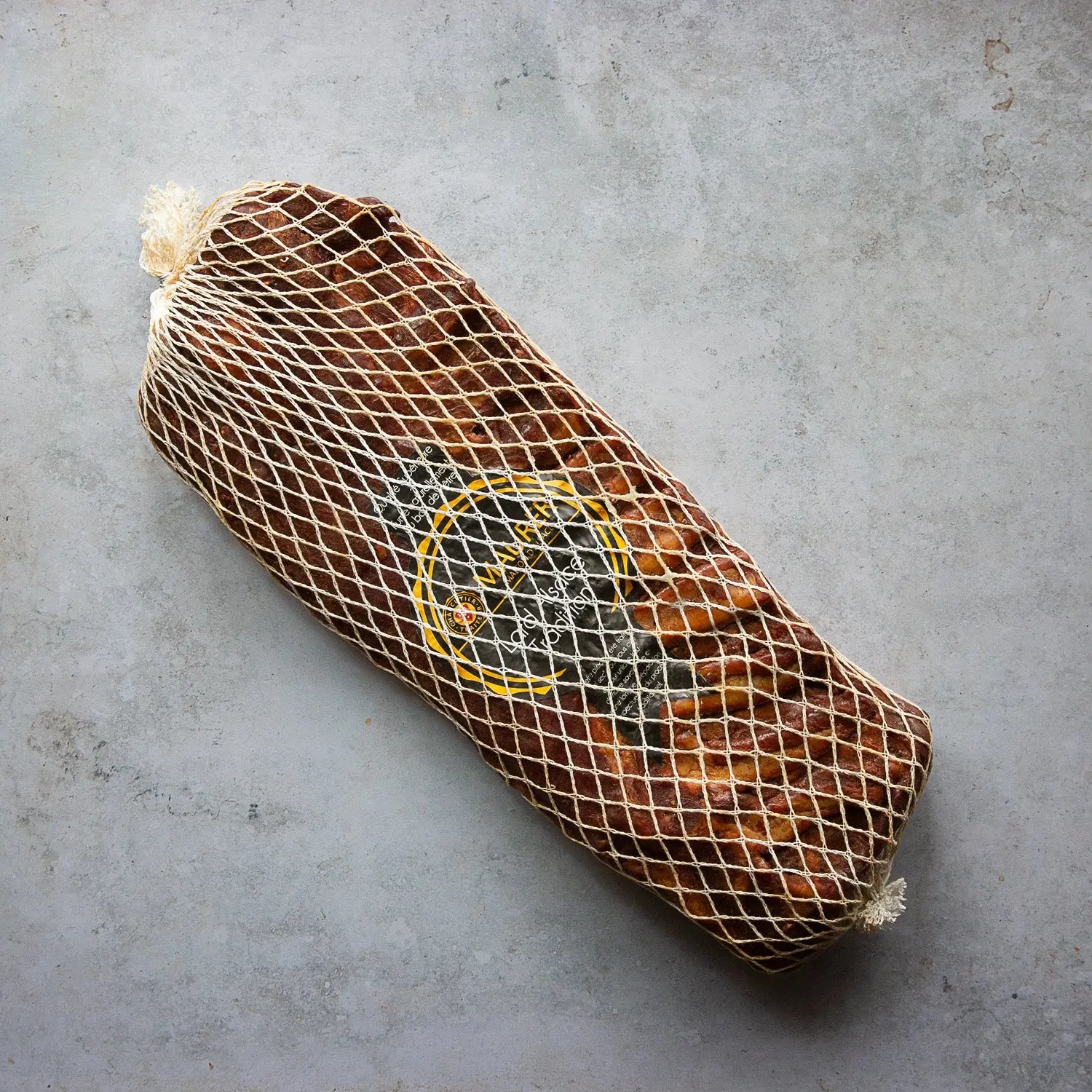
What is the difference between pancetta and guanciale?
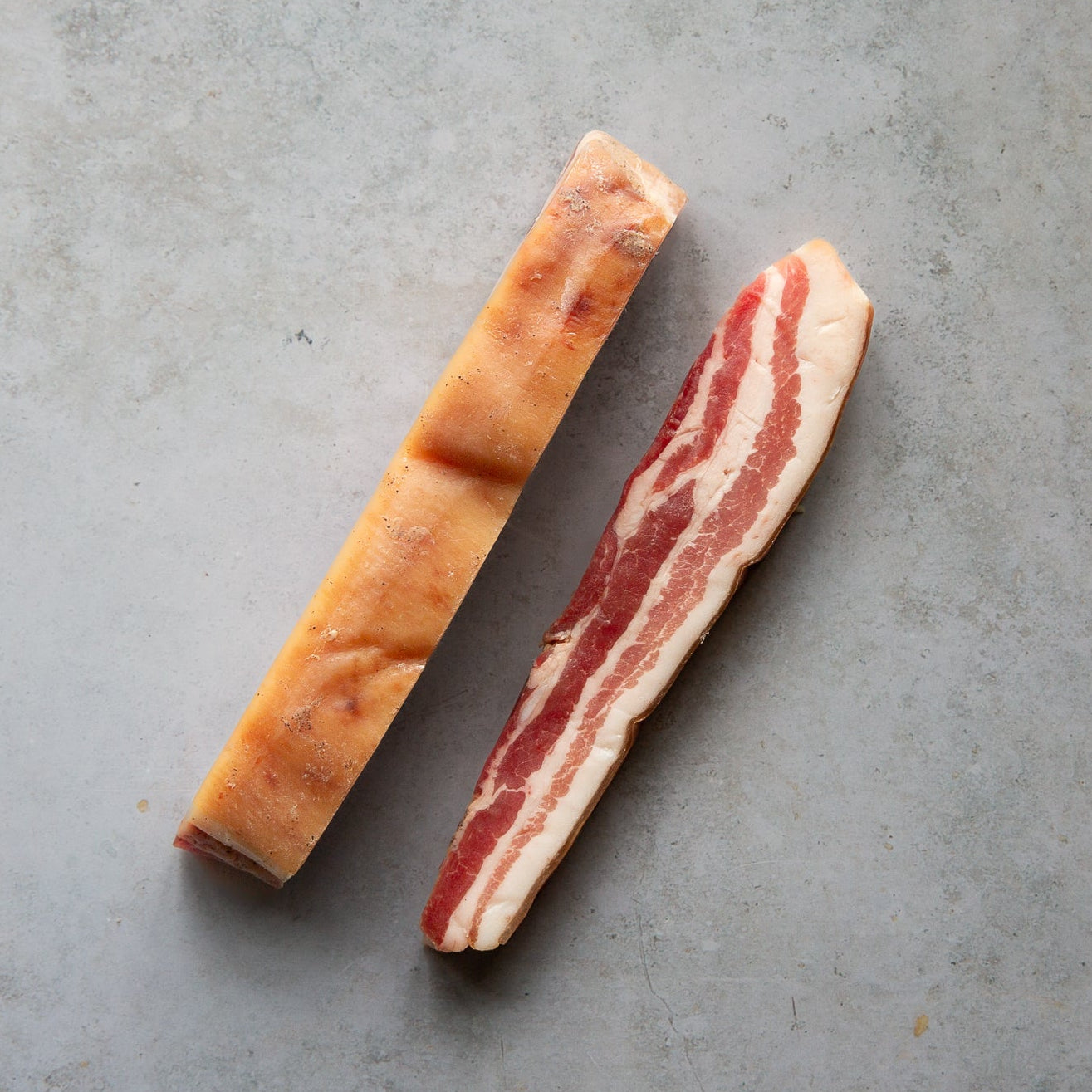
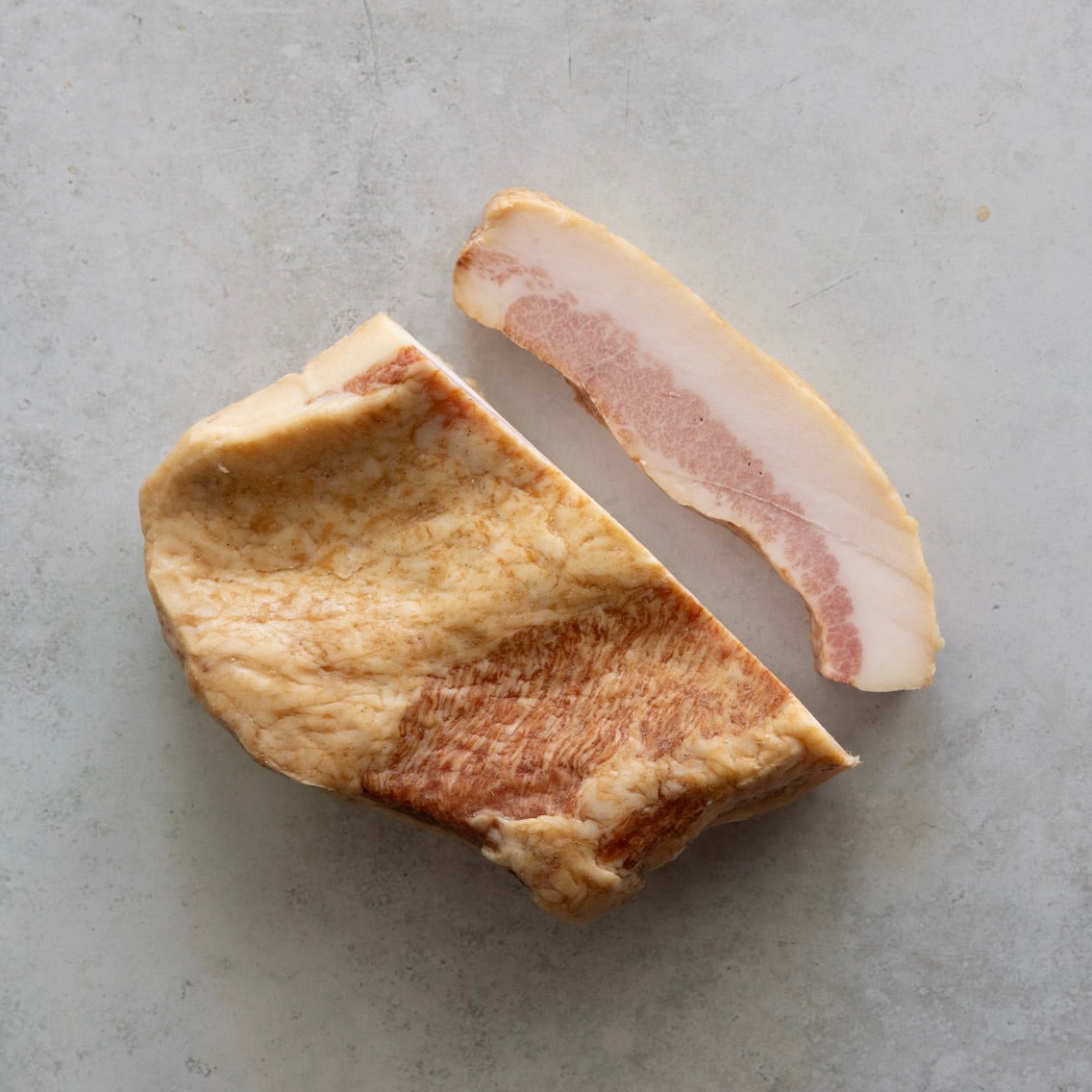
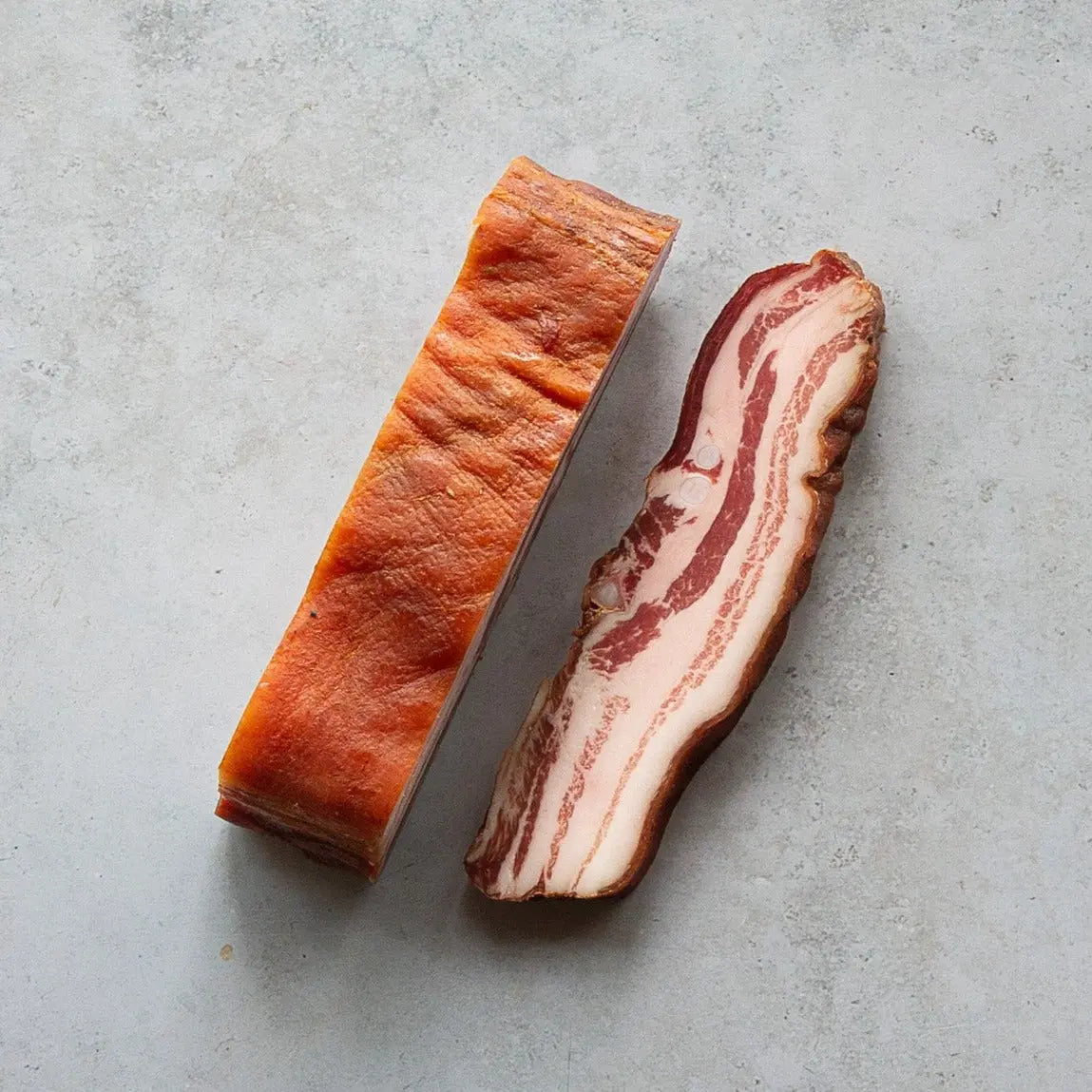
Both are cured Italian pork products but from different cuts. Pancetta comes from the belly — similar to bacon but cured in the Italian style, often rolled and sometimes smoked. Guanciale comes from the jowl (cheek) — it's fattier, richer, and more flavourful than pancetta. Guanciale is the correct choice for authentic carbonara and amatriciana, where the melting fat and savoury depth of the jowl are essential to the dish. Pancetta is more versatile for general cooking — lardons, soups, pasta, and as a cooking fat.
-
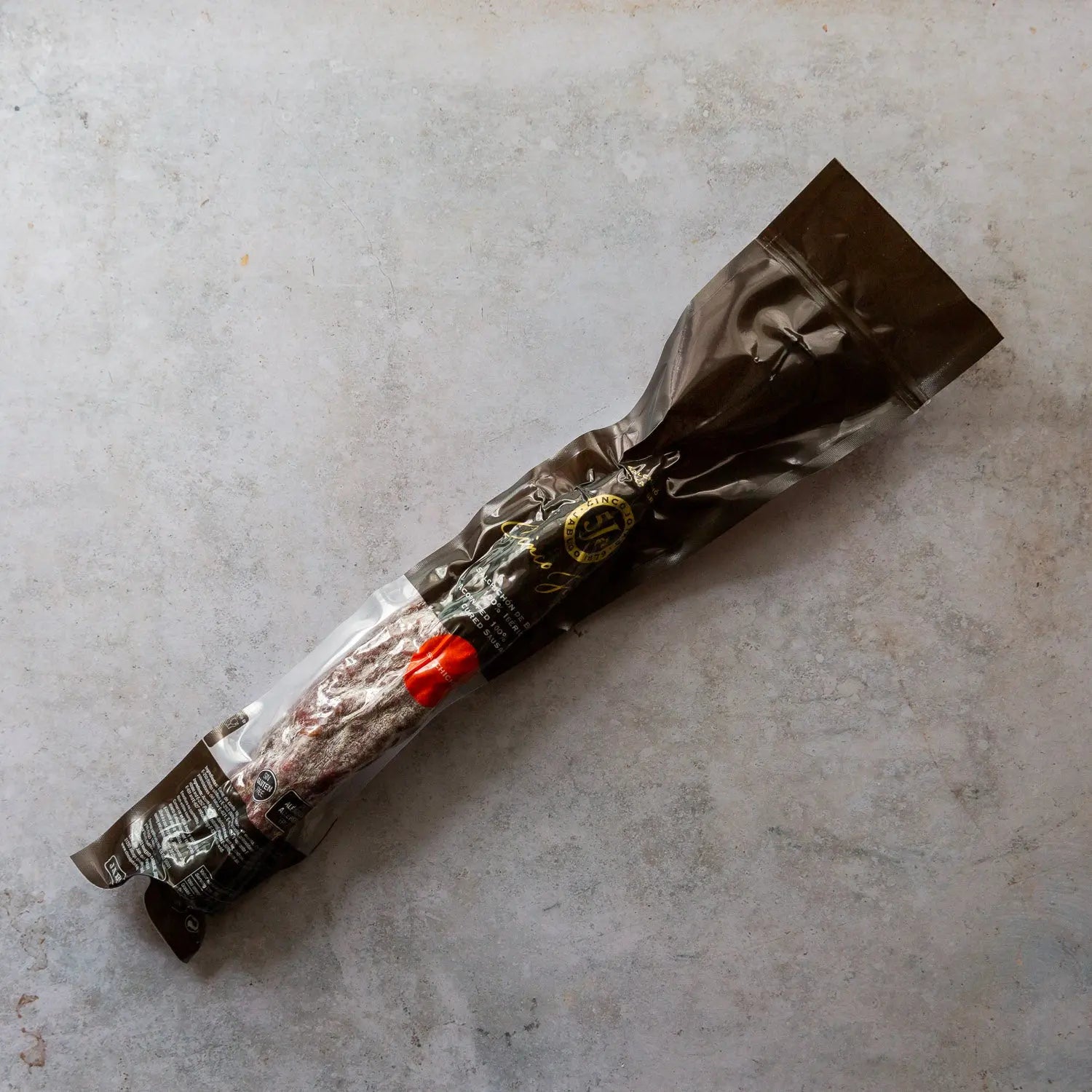
What is Cinco Jotas Ibérico salami?
A dry-cured salami made from the same 100% Ibérico de Bellota pigs that produce Cinco Jotas' celebrated jamón. The pork is naturally marbled with the distinctive sweet, nutty fat that develops from the acorn-based diet during the montanera. The salami is dense, deeply flavoured, and quite different from standard cured sausages. Slice thinly and serve at room temperature. For the full Cinco Jotas jamón and cured Ibérico range, see the Jamón Ibérico collection.
-
How should I store charcuterie?
Cooking sausages are perishable — refrigerate on arrival and use within the timeframe on the packaging, or freeze straight away. Cured products like saucisson, salami, pancetta, and guanciale have longer shelf lives but should still be refrigerated. Once sliced or opened, wrap tightly in cling film or greaseproof paper and store in the fridge. Cured meats are always best served at room temperature — take them out of the fridge 15–20 minutes before eating to allow the flavour and texture to develop fully.