

Cara Cara Oranges
Choose options
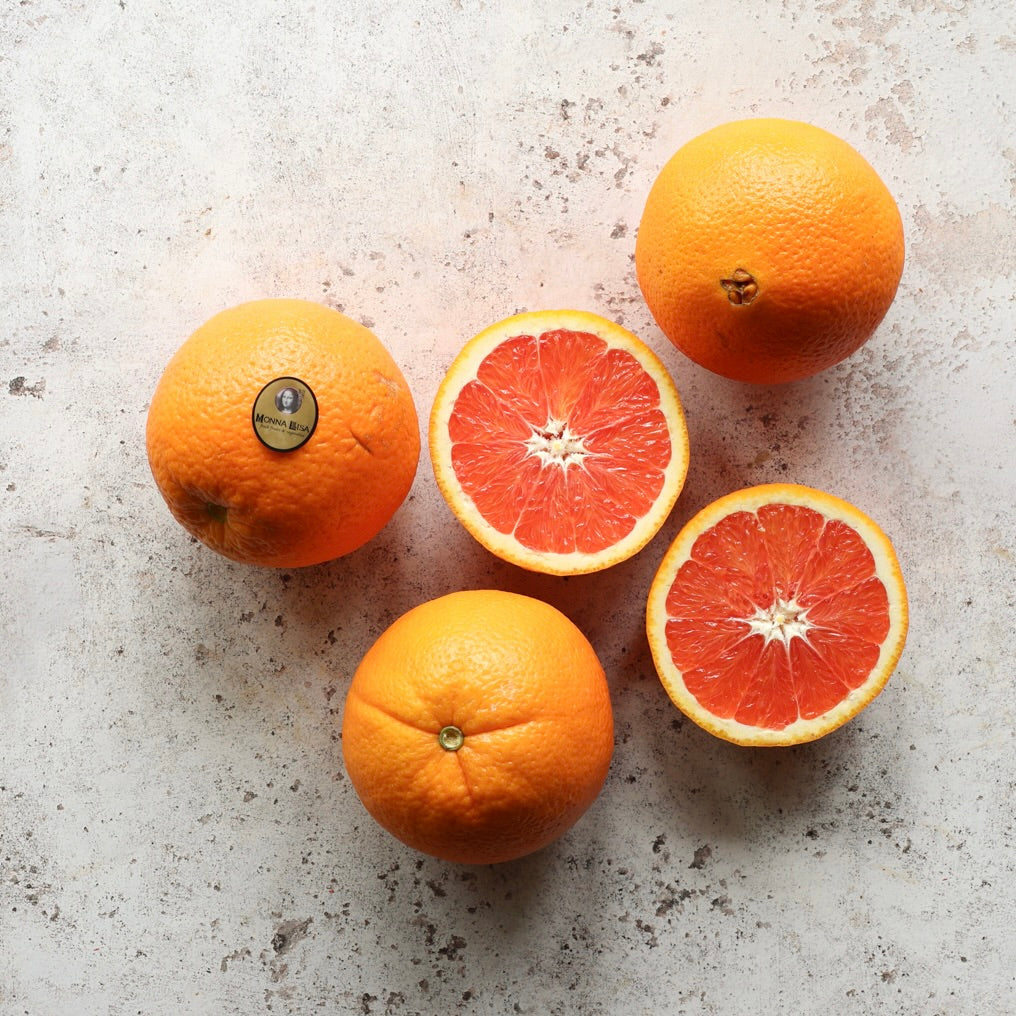
Cara Cara is a navel orange mutation first discovered in 1976 at the Hacienda de Cara Cara in Valencia, Venezuela. What makes it distinct is the flesh — a deep salmon-pink, closer in colour to a ruby grapefruit than a standard navel. The pigmentation comes from lycopene, the same carotenoid responsible for the red in tomatoes and watermelon. It is unusual to find lycopene in citrus at all; most orange and grapefruit colour comes from beta-carotene and other xanthophylls, not lycopene. The Cara Cara is one of very few citrus varieties where lycopene is the dominant pigment.
The flavour follows from the chemistry. Lower citric acid than a conventional navel gives a rounder, less sharp sweetness, and the lycopene contributes a faint berry-like undertone — often described as cranberry or cherry — that you do not get from other oranges. They are seedless, easy to peel, and the segments hold together well, which makes them as practical as any good navel for eating out of hand.
These are grown in Spain and arrive firm, juicy, and at full colour. The pink flesh makes them visually striking when sliced into salads or used as a garnish, and the juice — naturally pink — is worth squeezing on its own.
Best eaten fresh at room temperature — take them out of the fridge 15–20 minutes before serving to let the flavour open up. Peel and segment by hand, or slice into rounds for a more visual presentation that shows off the pink flesh.
For a simple winter salad, arrange sliced Cara Cara rounds on a plate with shaved fennel, a few black olives, and a drizzle of good olive oil. A pinch of flaky salt and a scattering of fresh mint or basil finishes it. The low acidity means the fruit works without any added sweetness.
The juice is worth squeezing on its own — naturally pink, noticeably sweeter and less tart than regular orange juice, and striking in a glass. Use it in vinaigrettes where you want citrus sweetness without sharp acidity, or as the base for a citrus curd. The segments also hold up well in a fruit salad or as a garnish for desserts, particularly anything involving chocolate, where the berry undertone in the Cara Cara complements the bitterness.
Origin: Spain