

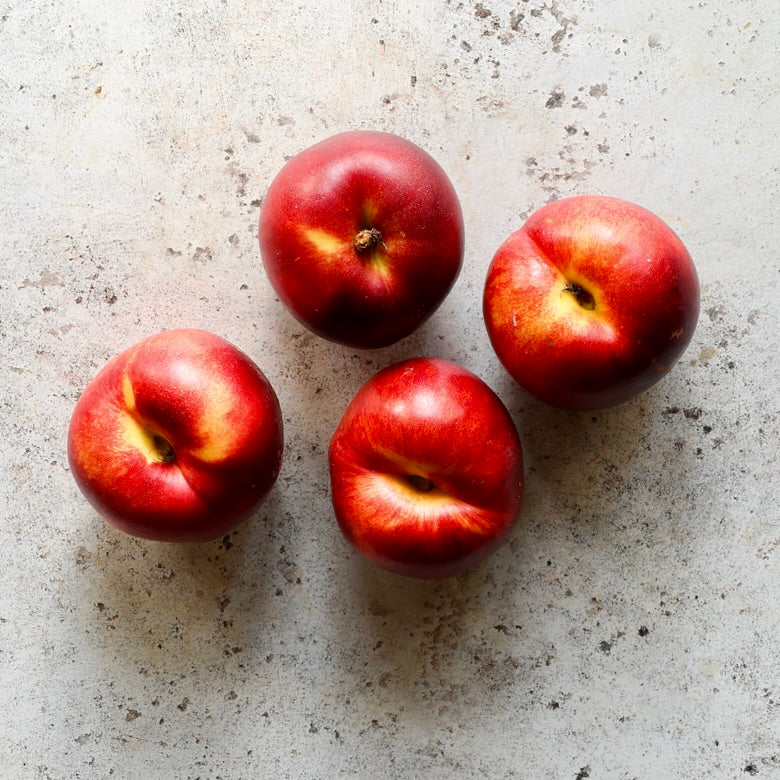
Golden Nectarines
Choose options
Yellow-fleshed nectarines from Seville — the same Guadalquivir valley growing region that produces much of Spain's stone fruit through the summer months. The Andalusian climate is well suited to nectarines: long, hot days build sugar in the fruit, while the diurnal temperature swing — warm days and cooler nights — slows respiration and allows that sugar to accumulate rather than being burned off. This is the same principle that makes altitude-grown fruit sweeter, and it is why southern Spanish stone fruit tends to arrive with higher Brix levels than fruit from more temperate growing regions.
Nectarines and peaches are the same species — Prunus persica. The only genetic difference is a single recessive gene that determines whether the skin produces the fuzz (trichomes) characteristic of a peach or the smooth, glossy skin of a nectarine. Everything else — flesh colour, flavour profile, sweetness, acidity — is determined by cultivar rather than by whether the fruit is fuzzy or smooth. Yellow-fleshed nectarines like these tend to be sweeter and less acidic than white-fleshed varieties, with a rounder, more honeyed flavour and a firmer texture that holds up well when sliced.
These are best eaten at room temperature. Stone fruit held in the fridge develops a mealy, cottony texture as the cold disrupts the cell structure — a phenomenon called chilling injury, which is irreversible. If they arrive firm, leave them on a counter for a day or two until they give slightly at the shoulder when pressed. Once ripe, eat within a couple of days.
Origin: Seville, Spain
Ingredients: Golden nectarines (Prunus persica).