

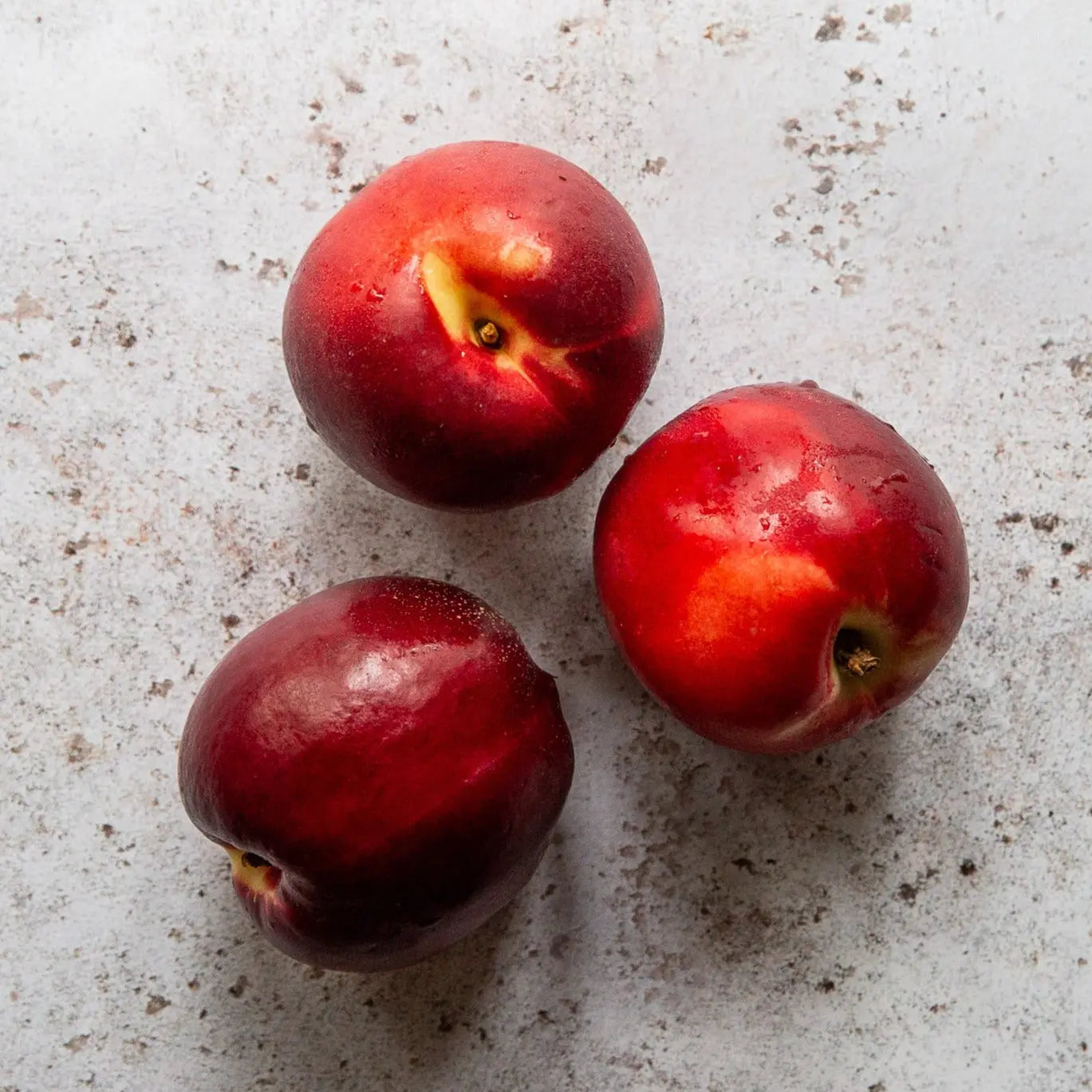
White Nectarines
Choose options
A smooth-skinned stone fruit with pale, cream-white flesh and a flavour profile quite different from its yellow-fleshed counterpart. White nectarines carry a higher sugar-to-acid ratio than yellow varieties, which gives them a sweeter, more floral character with less of the sharp tang. The acidity is still present but sits further back, making the overall impression gentler and more perfumed.
These are Spanish-grown, varieties Imperial Gold and Carna Blanca, harvested from June through September. Spain's long, hot summers and dry growing conditions suit stone fruit well — the combination of heat and controlled irrigation concentrates sugars in the flesh while maintaining the firm, dense texture that distinguishes a good nectarine from a mealy one.
Nectarines are genetically almost identical to peaches — the smooth skin is the result of a single recessive gene variant rather than any significant botanical difference. The absence of fuzz is not just cosmetic; it also means the skin is thinner and more delicate, which makes white nectarines slightly more susceptible to bruising and marking during transport. Minor surface blemishes are normal and do not affect the fruit inside.
If the fruit arrives firm, leave it in the paper bag it was packed in at room temperature. The bag traps ethylene — a gas the fruit produces naturally as it ripens — which accelerates the process. Adding an apple or banana to the bag speeds things up further. Once ripe, the flesh should give slightly under gentle thumb pressure near the stem end, and the fragrance will be noticeably stronger. Refrigerate only once fully ripe, and bring back to room temperature before eating for the best flavour.
Origin: Spain.
Ingredients: White nectarines (Prunus persica var. nucipersica).