

Parmigiano Reggiano PDO, 30 Months Aged
Choose options
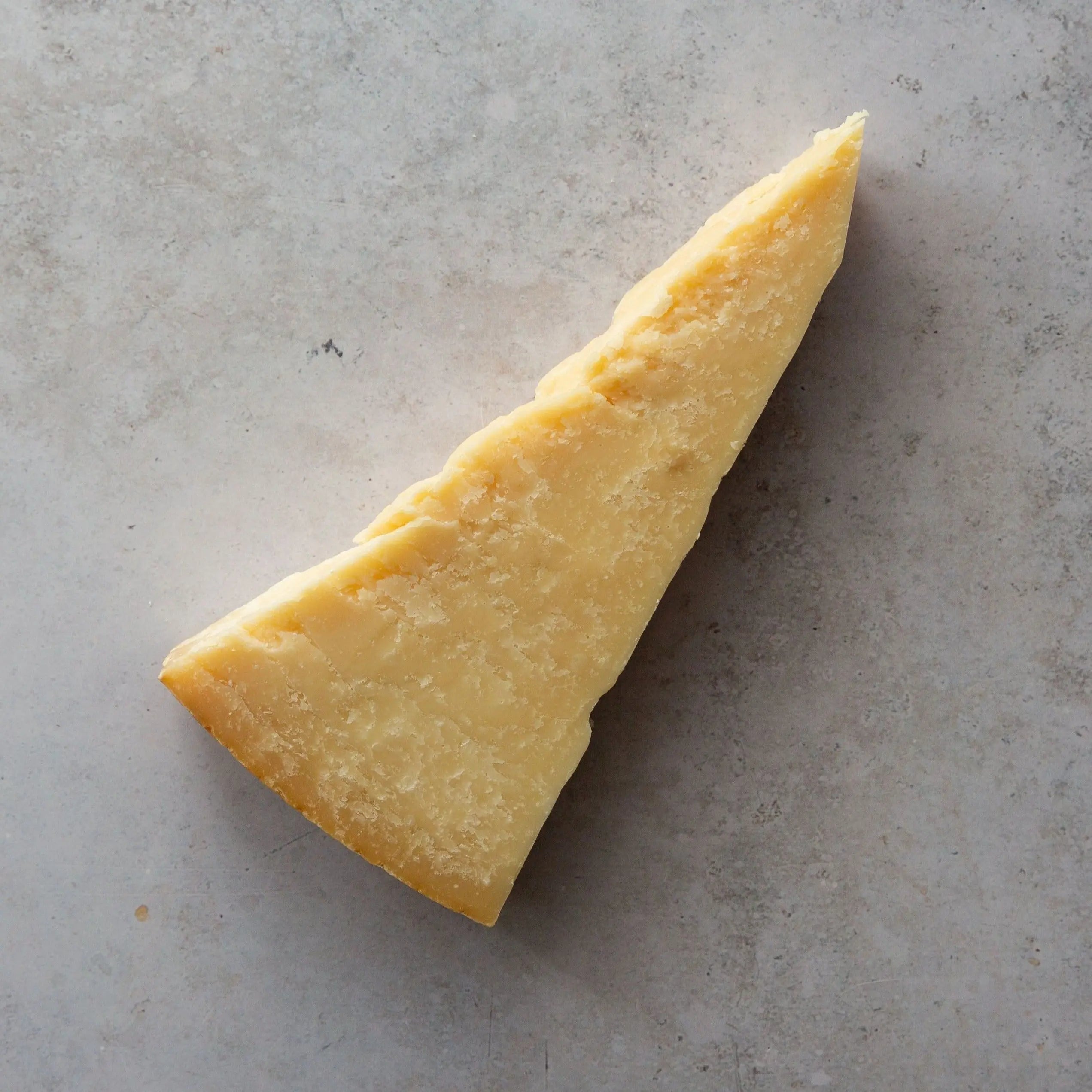
Parmigiano Reggiano with a full two years of maturation — the point at which the cheese has developed enough complexity to be genuinely interesting, while retaining a balance and versatility that longer-aged wheels begin to trade away. At 30 months, the paste is pale straw-coloured, crumbly and granular, with the characteristic white crystalline specks of tyrosine — an amino acid that forms naturally as the proteins in the cheese break down during ageing. Those crunchy crystals are not a flaw; they are a direct indicator of proper maturation and enzymatic activity.
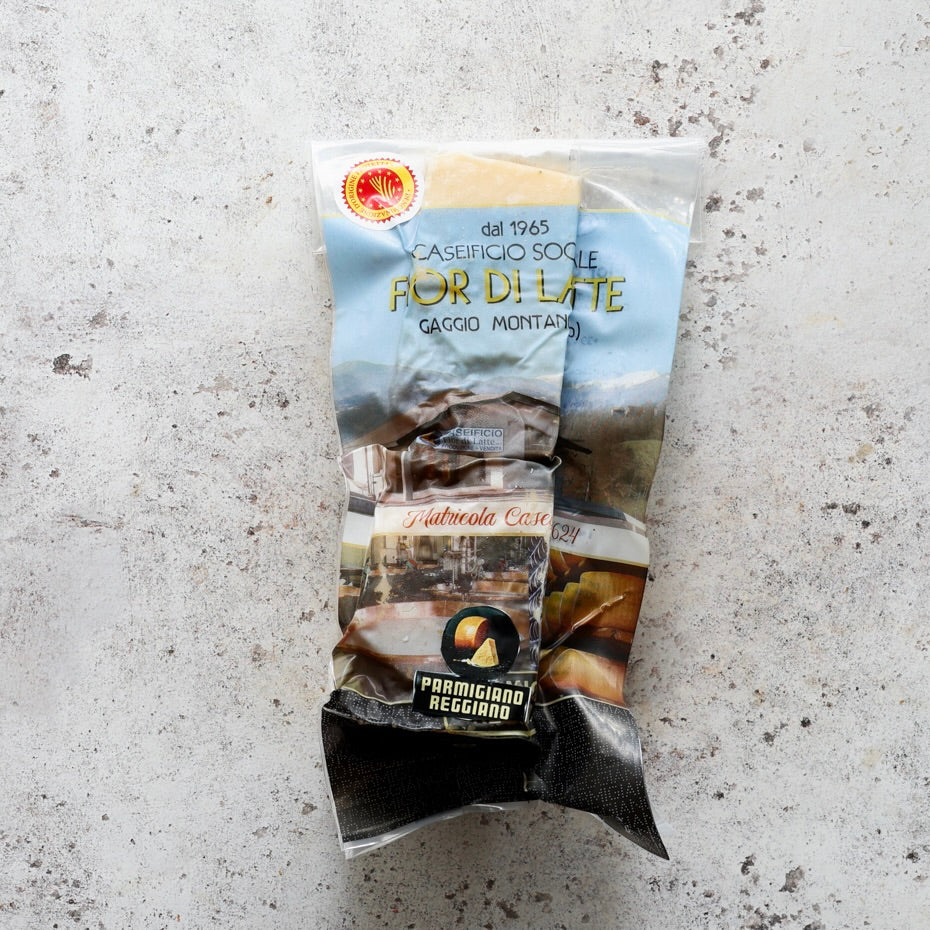
This is PDO cheese, which means every stage of production is regulated: the milk must come from cows raised in the defined production zone (the provinces of Parma, Reggio Emilia, Modena, Bologna west of the Reno, and Mantua east of the Po), fed on locally grown forage with no silage, fermented feeds, or animal flour permitted. Each wheel requires approximately 550 litres of milk. The curd is formed using natural whey starter from the previous day's production and calf rennet, cooked to 55°C, then shaped, salt-brined by osmosis, and left to mature. Every wheel carries a unique alphanumeric code traceable to its dairy of origin.
At 30 months, the flavour profile sits in a well-balanced middle ground — nutty and savoury with notes of dried fruit and a suggestion of broth-like umami depth. The texture is firm enough to break into shards or grate cleanly, but still has a slight give when cut. This is the age most commonly used in professional Italian kitchens as a versatile all-rounder: grated over pasta, risotto, and soups; broken into chunks for a cheese board; or eaten on its own with a drizzle of aged balsamic.
A note on ageing stages: Parmigiano Reggiano changes character significantly as it matures. At 12–18 months, the cheese is smoother and milder, with notes of fresh milk and yoghurt — closer in texture to a good cheddar. At 30–36 months, the paste hardens further, the flavour intensifies with deeper fruit and nut character, and the granular texture becomes more pronounced. Beyond 40 months, the cheese becomes exceptionally concentrated — complex flavours of almond, chestnut, toasted caramel, and spice develop, with a dry, crunchy texture that makes it a cheese to eat in small pieces rather than grate. The 24-month sits at the midpoint: developed enough to have real depth, flexible enough to work in almost any context.
Origin: Italy (PDO).
Ingredients: Milk, salt, rennet. Minimum 32% dry matter fat content.
Allergens: Milk