

Fresh Sweet Chestnuts
Choose options
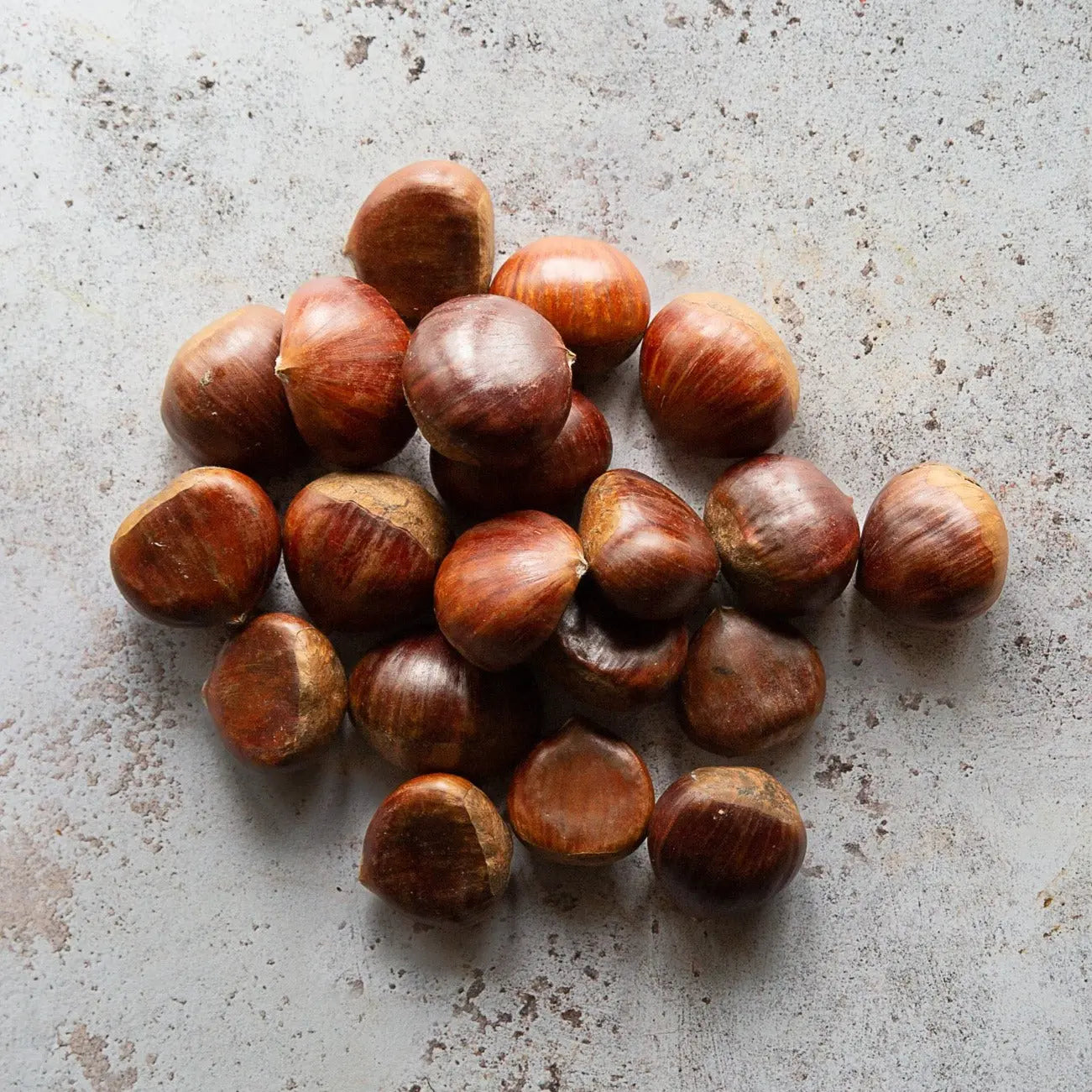
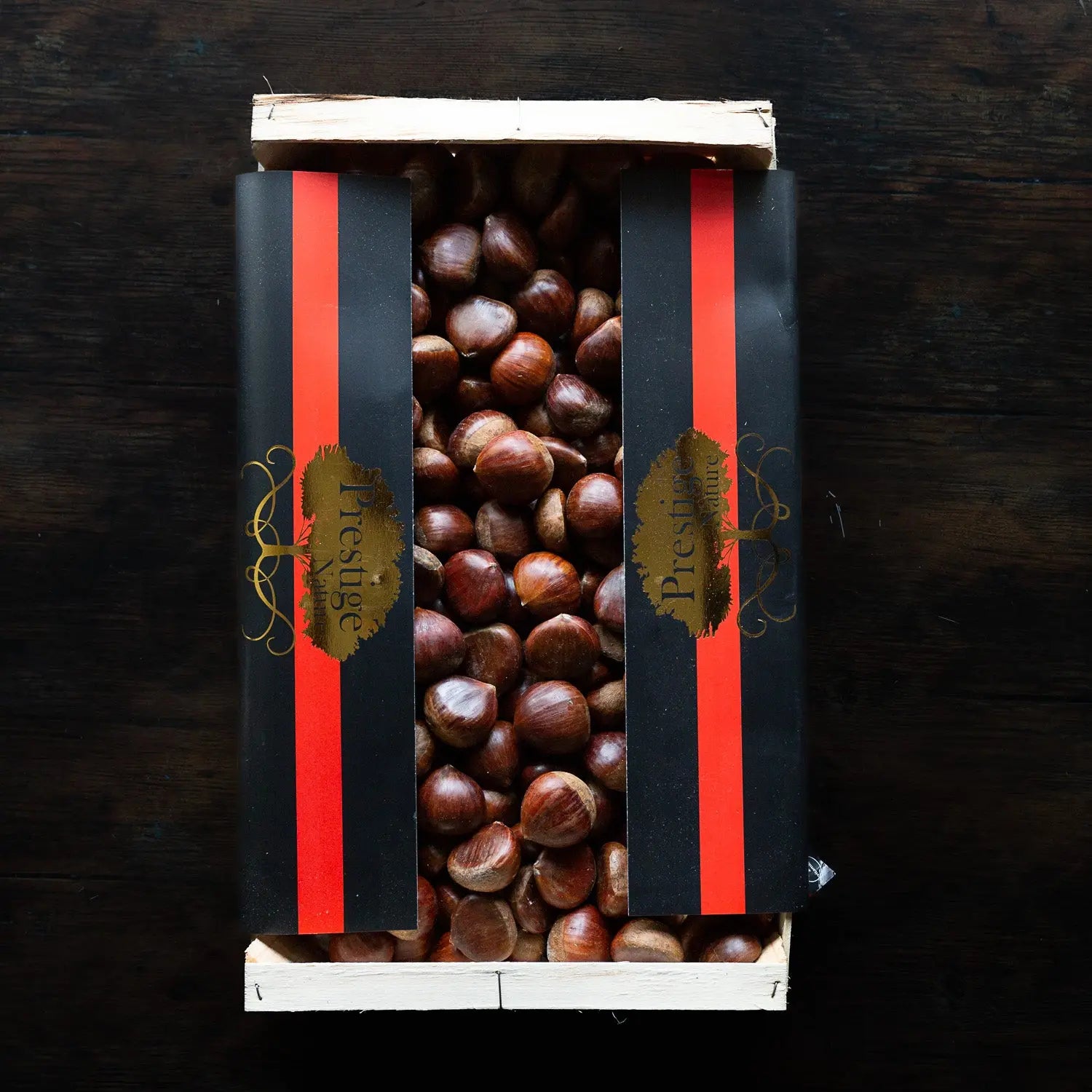
Fresh sweet chestnuts (Castanea sativa) from France, sold under the Prestige marque. Sweet chestnuts are unusual among nuts in that they are high in starch and low in fat — the opposite of almost every other nut. A walnut or hazelnut is predominantly oil; a chestnut is closer in composition to a grain or a potato. This is why chestnuts have historically been milled into flour in regions where wheat was difficult to grow — in Corsica, in parts of the Cévennes, and across the Apennines in Italy, chestnut flour was a staple carbohydrate for centuries. It is also why fresh chestnuts behave differently in cooking from other nuts: they soften and become creamy when heated rather than staying crunchy, and they can be boiled, mashed, and puréed in ways that would not work with any other nut.
In French commerce, a distinction is drawn between a marron and a châtaigne. A marron is a chestnut where the kernel inside the shell is a single, undivided piece; a châtaigne has a kernel divided by an internal membrane into two or more sections. Marrons are preferred for confectionery and for any application where you want a whole, intact nut — marrons glacés, for instance, require a single undivided kernel.
The flavour of a fresh chestnut — roasted, boiled, or steamed — is sweet, starchy, and gently nutty, with a creamy texture when cooked through. They are best used within a week or two of purchase; unlike hard-shelled nuts they have a high moisture content and will dry out or develop mould if stored too long at room temperature. Keep in the fridge.
Origin: France
Ingredients: Fresh sweet chestnuts (Castanea sativa).
Storage: Refrigerate. Use within 1–2 weeks.