


RIEDEL Veritas Cab Sauv - 4 Glass & Decanter Set
Choose options
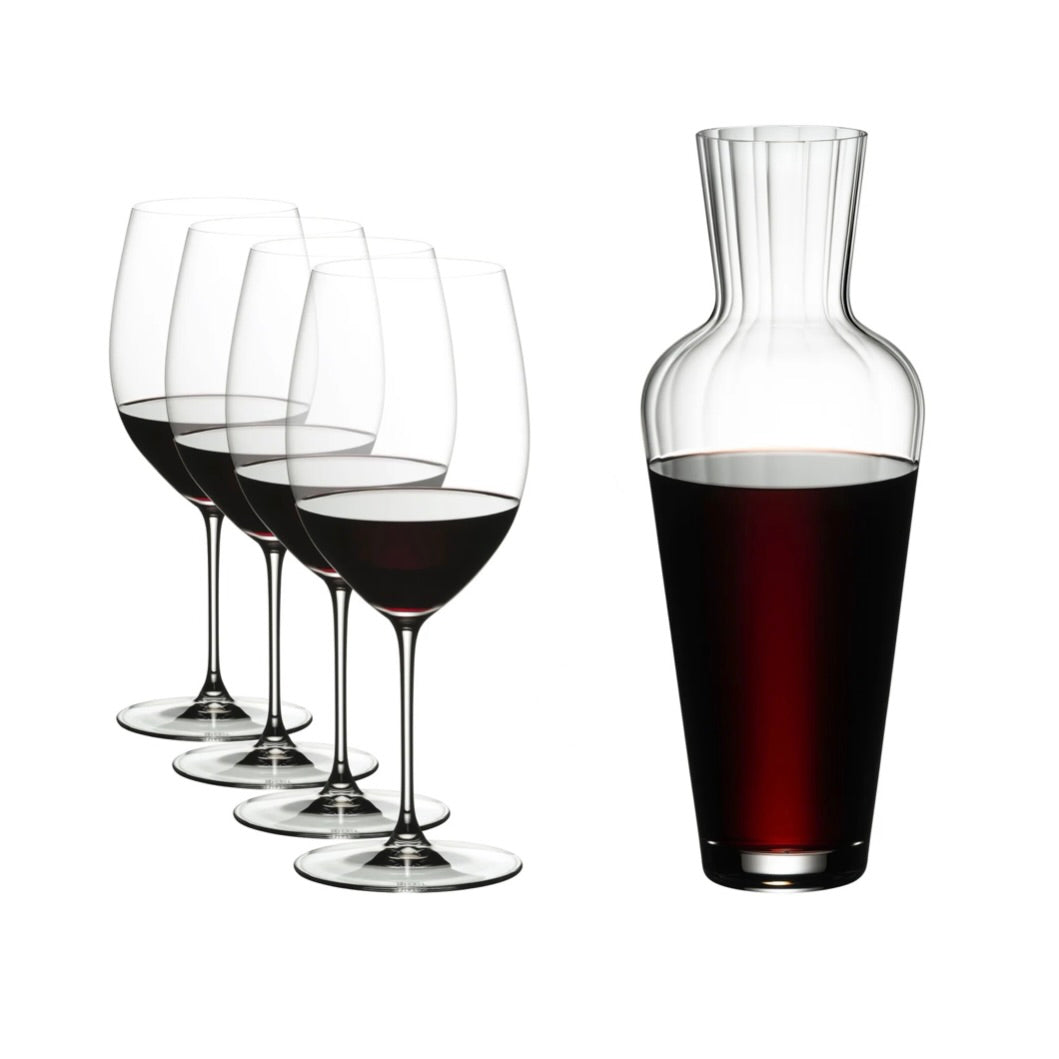
Four glasses shaped for Cabernet Sauvignon and Merlot, and a decanter that takes a full bottle with room to move. Riedel introduced Veritas in 2014: the bowls follow the hand-blown Sommeliers shapes, blown thin by machine so they can be made to the same measurements every time. They are light, and lighter than they look.
The bowl is tall and comparatively narrow, drawing in to a cut rim. Cabernet and Merlot carry firm tannin and a lot of aroma, and the shape holds that aroma over the wine and delivers it in a narrow stream rather than all at once. It is also larger than most people expect and the pour is smaller: Riedel put the serving measure at 125ml, which in a bowl this size looks sparse and is not. Anything more and you lose the air above the wine that the shape exists to hold.
The Mosel decanter takes a standard bottle with air above it and room to swirl. Young Bordeaux and Bordeaux blends benefit from an hour in it; older bottles want less, and want decanting mainly to leave the sediment behind. The shape is plain and the glass is clear, so you can watch the wine and see when it has thrown a deposit.
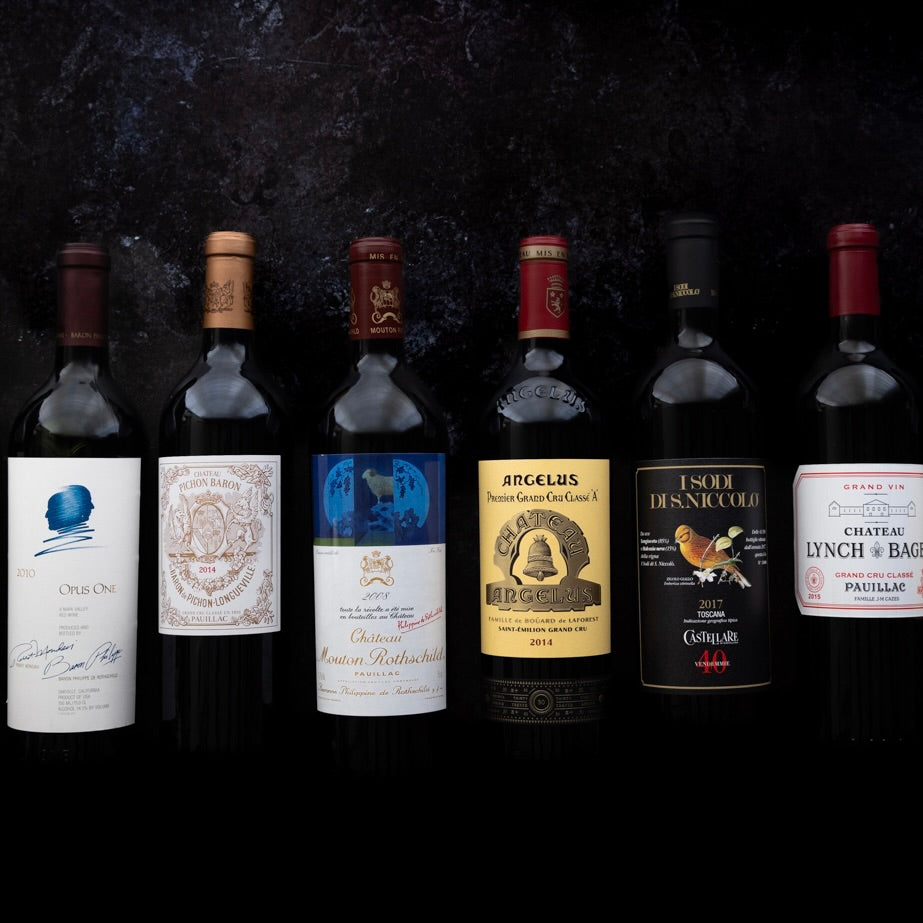
It suits Cabernet Sauvignon, Merlot and Bordeaux blends across the Médoc, Pauillac, Margaux, St Julien, St Estèphe, Pessac-Léognan, Pomerol and St Émilion, along with Cabernet Franc, Petit Verdot, Carménère, Montepulciano and Brunello di Montalcino.
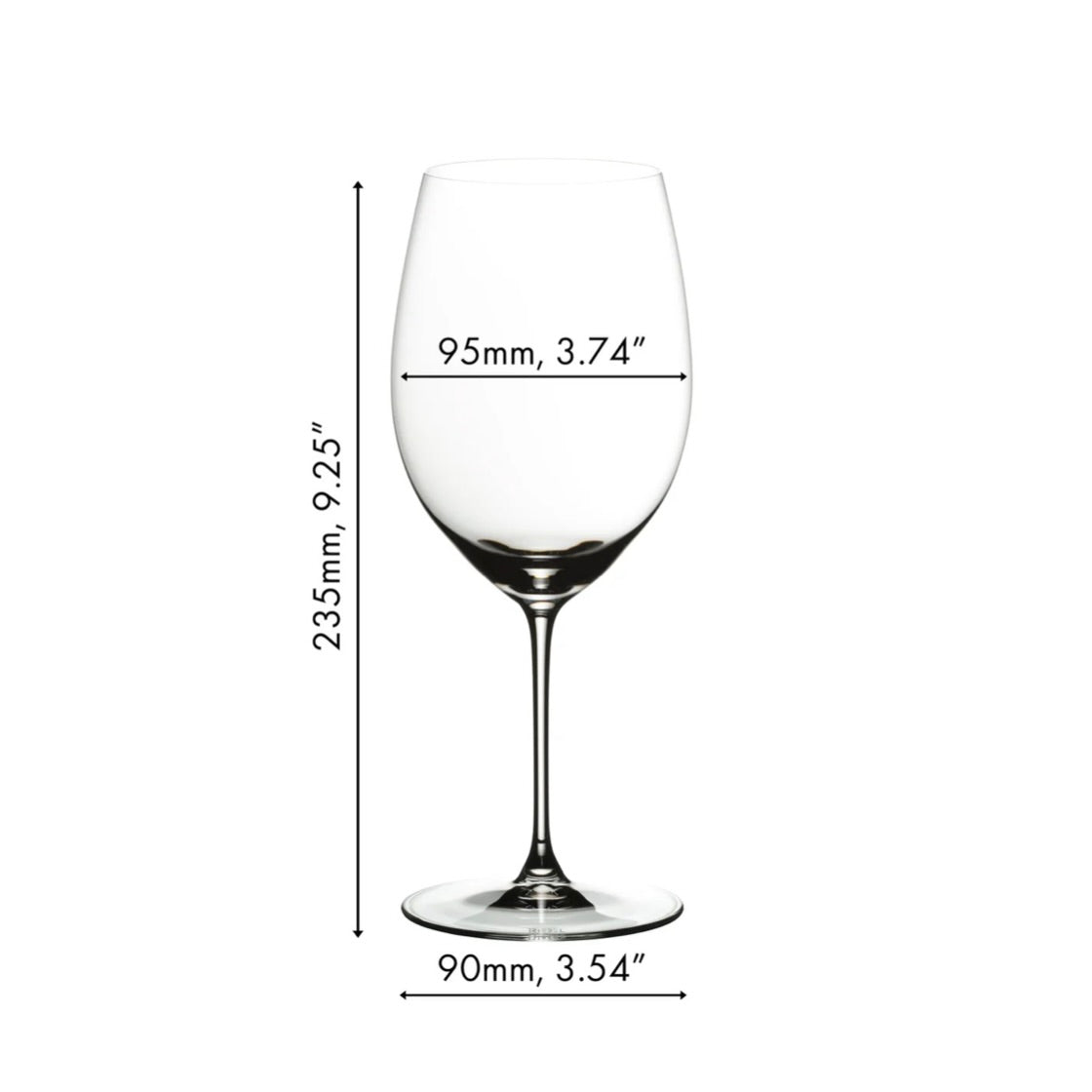
Four glasses and one decanter. The glasses are 235mm tall and 95mm at the widest point, holding 625ml to the brim against Riedel's serving measure of 125ml. The decanter is 285mm tall and 108mm across, and takes a standard 750ml bottle. Both are premium machine-made crystal glass.
Riedel have been making glass since 1756, when the family founded a glassworks in Bohemia. They were dispossessed of it after the Second World War and began again in Austria, buying the Kufstein glassworks in 1956; Georg Riedel, the tenth generation, and his son Maximilian, the eleventh, run the company now. Claus Riedel, the ninth, was the first to design a glass around what was going into it rather than around how it could be decorated, stripping the form back to bowl, stem and base. His 1973 Sommeliers collection was the first stemware shaped for particular wines, and every serious glassmaker has followed since. The mouth-blown glasses are still made by hand at Kufstein; the machine-made ranges come from the factory at Weiden in Germany.
Dishwasher safe on a low temperature, with space around each piece so nothing touches. If you wash by hand, use hot water and no detergent, which leaves a film that dulls aroma. Dry with a linen cloth and store the glasses upright rather than on the rim. Rinse the decanter straight after use, and for staining use a decanter cleaner rather than anything abrasive.