

Poulet de Bresse AOC
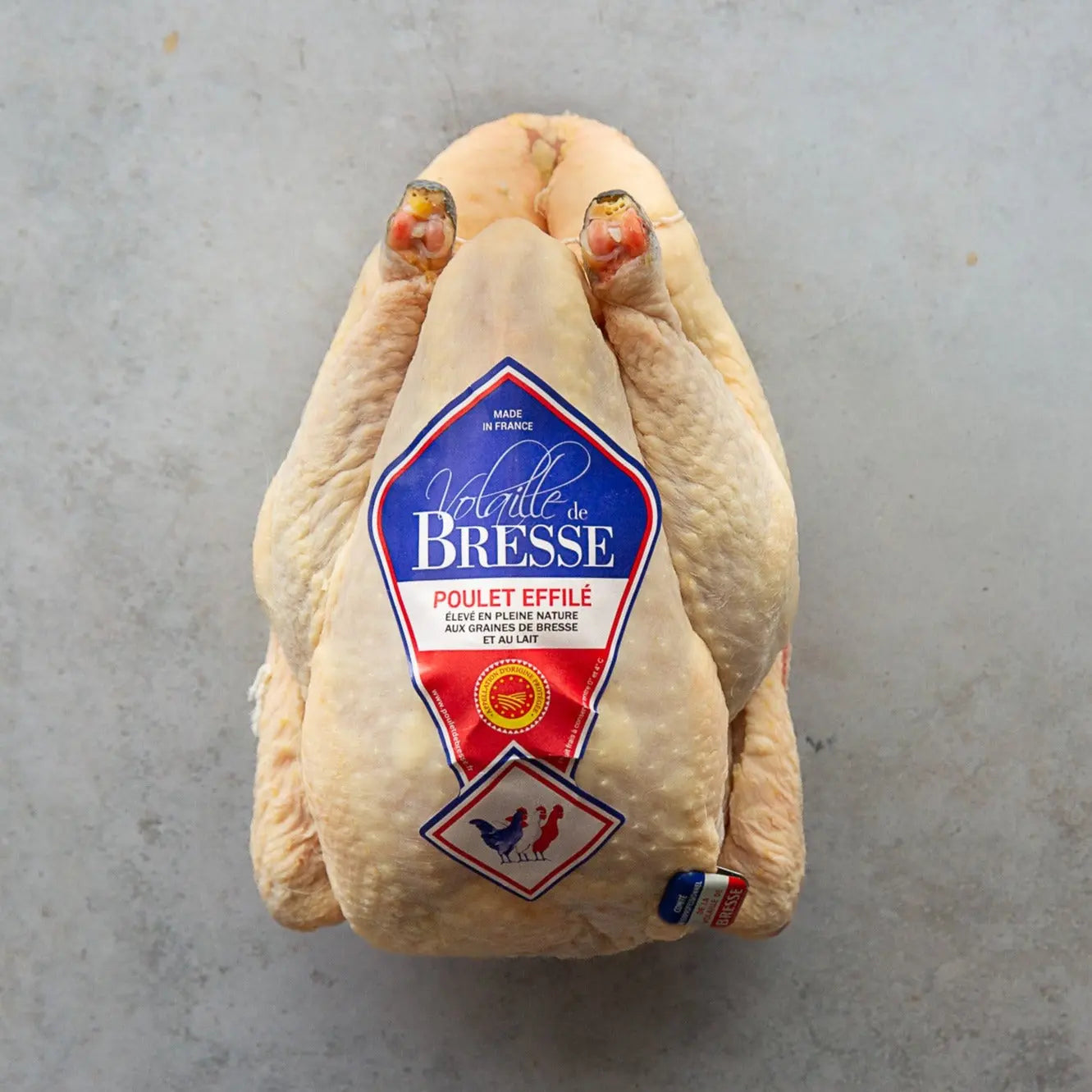
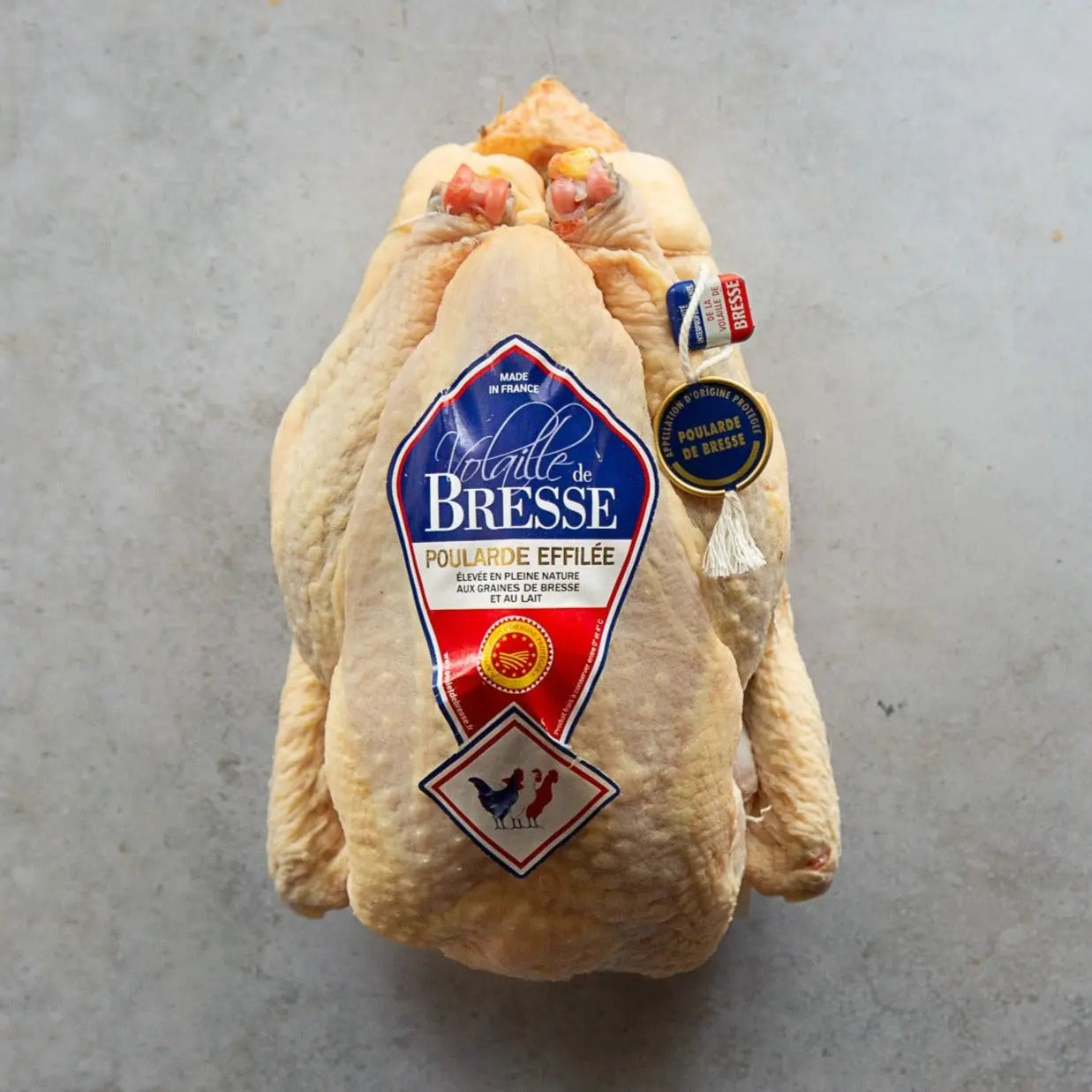
The benchmark French poultry · The only AOC chicken in the world
The Only Chicken with AOC Status
Poulet de Bresse is the only chicken in the world with AOC (Appellation d'Origine Contrôlée) status — the same legal protection that governs Champagne, Roquefort, and Comté. It is not a brand. It is not a marketing label. It is a legally defined agricultural product, with every stage of production — from hatching to slaughter — controlled by French agricultural authorities. There is no equivalent anywhere else in the world.
The designation was granted in 1957. It governs a specific breed (the Gauloise Blanche de Bresse) raised in a specific region (the Bresse, spanning the départements of Ain, Saône-et-Loire, and Jura in eastern France), to a single strict standard from which there is no deviation. Bresse stands alone.
The Breed
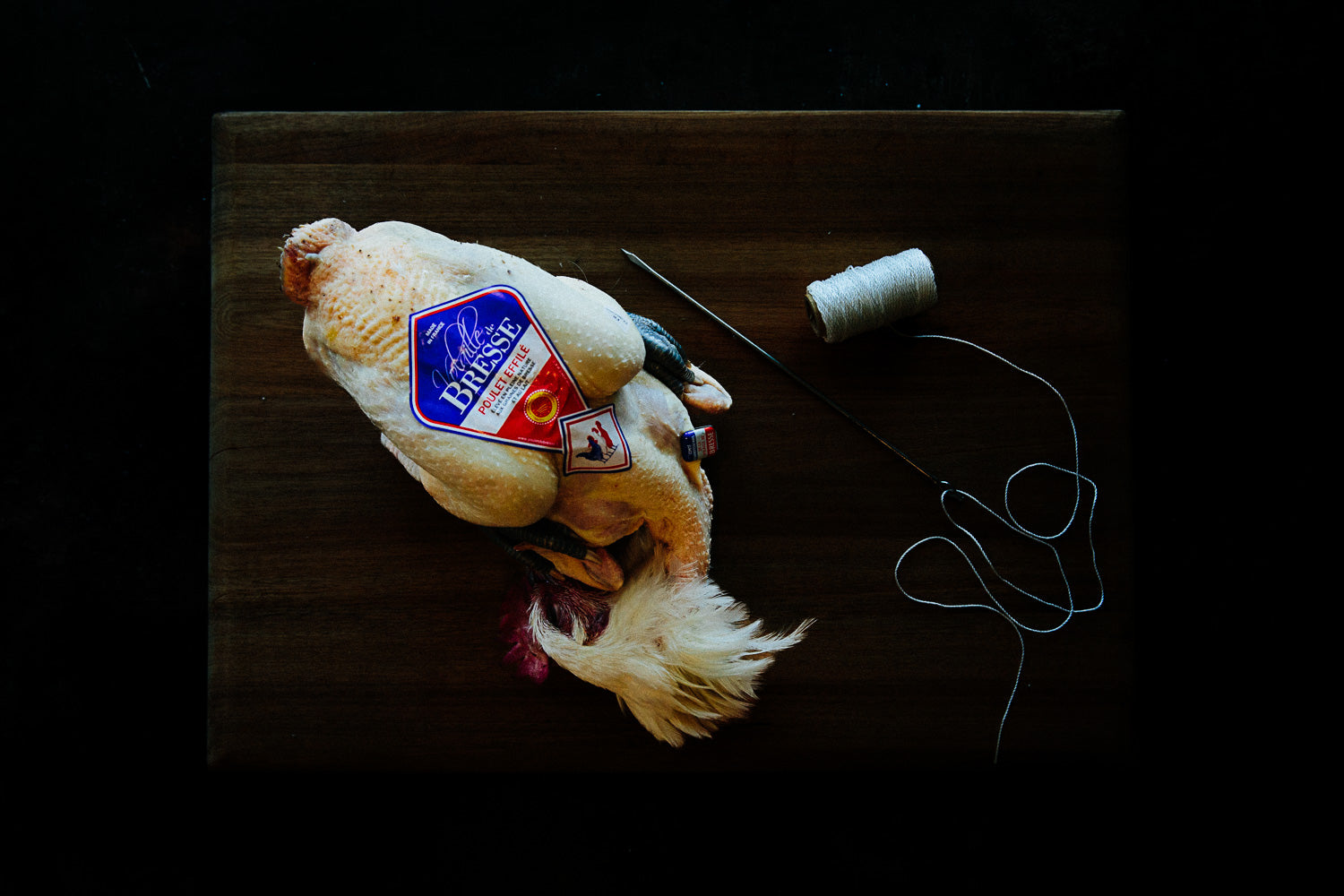
The bird is immediately recognisable: white plumage, steel-blue legs, and a bright red comb — the colours of the French flag, by accident or design. It is the only domestic chicken to carry that combination, and the only one to carry it under legal protection.
White feathers. Blue legs. Red comb. Marbled fat. Almost veal-like tenderness. A nutty depth no other bird carries.
How the Birds Are Raised
Bresse birds are raised free-range with a minimum of 10 square metres of pasture per bird — a stocking density radically lower than even the strictest Label Rouge programmes. They are fed cereals and dairy products from around five weeks of age, on a deliberately low-protein diet that encourages them to forage for insects, seeds and grasses in the field. This foraging is not incidental; it is part of the AOC specification and directly contributes to the complexity of the finished flavour.
In the final stage before slaughter, the birds are finished on a diet of maize and milk for 10 to 15 days, traditionally inside small wooden coops called épinettes. This finishing develops the characteristic marbling of fat through the flesh that gives Bresse its distinctive richness and succulence.
Poulets are slaughtered at a minimum age of four months — roughly three times the lifespan of a standard commercial chicken, and meaningfully longer than the 81-day minimum that defines Label Rouge.
The Range
Poulet de Bresse AOC
The classic Bresse chicken — the bird that holds the AOC designation in its purest form. Firm but tender flesh, deep nutty flavour, thin white skin, remarkable juiciness from the marbled intramuscular fat. The standard against which all other chicken is measured.
Poularde de Bresse AOC
The larger hen — a young female bird matured to a greater weight under the same AOC standard. More flesh, more marbling, greater depth still. The bird for the long lunch, the centrepiece roast, the proper Sunday in winter.
AOC and Label Rouge — The Difference
Two designations matter in French poultry. AOC is the higher of the two — a legal protection of place, breed and method, enforced by the French state and reserved for products with deep regional roots. Bresse stands alone in holding it for poultry.
Label Rouge is a different certification. It governs how a bird is raised — minimum age of 81 days, outdoor access, restricted diet, natural growth rates — but does not tie production to a single region or breed. Many of our other premium chickens and guinea fowl carry Label Rouge, and it is a genuine mark of quality. It is not, however, the same thing as AOC. Bresse sits above it.
Cooking
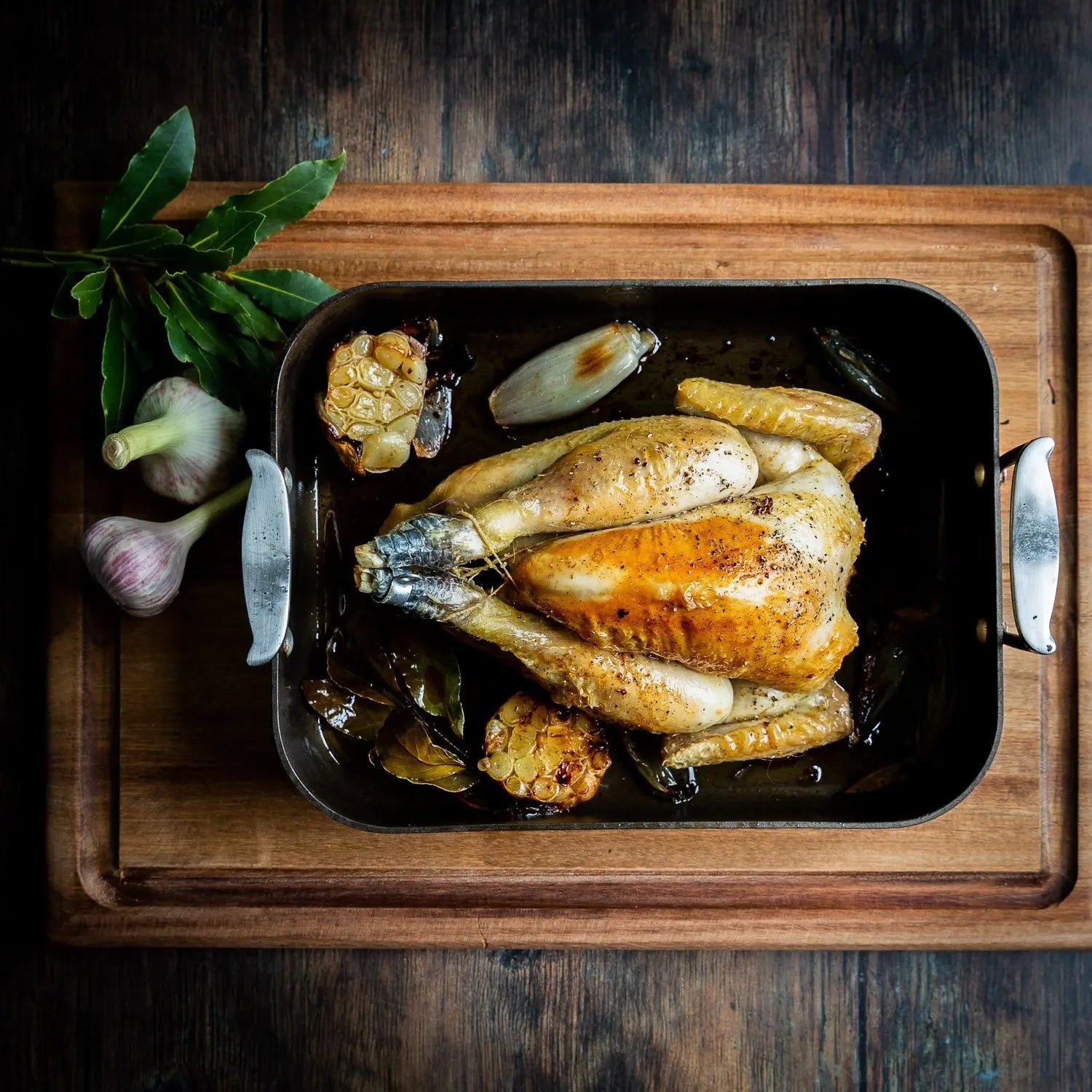
Bresse is the chicken that needs the least done to it, because the quality of the bird does the work. Sea salt, butter, herbs, a hot oven — the recipe stops there.
Roasted whole: The traditional preparation. Bring the bird to room temperature, season inside and out, rub with butter, roast at 200°C until the internal temperature at the thickest part of the thigh reaches 74°C. Rest for 15–20 minutes loosely covered. Carve and serve with the pan juices, sea salt and a green vegetable. The classic Sunday roast in its proper form.
Poule au pot: The traditional French farmhouse preparation. Submerge in cold water with vegetables (leek, carrot, onion, celery, bay) and a generous pinch of salt. Bring slowly to a bare simmer — never boil — and poach gently. Lift out, carve, serve with the broth, the vegetables, mustard and crusty bread. The right way to extract the most from a serious bird.
Sauté and finished in a pan sauce: Joint the bird into legs, thighs, wings and breast crowns. Sauté skin-side down in butter until deeply browned, finish in the oven, build a classic velouté or wine-and-cream sauce in the pan. Serve with rice or potatoes.
Save the carcass for stock. A Bresse carcass makes some of the finest poultry stock in the world — long, deep, gelatinous, the foundation of consommé, risotto, sauce, and a dozen other things.
Delivery
Frozen, in insulated packaging, by next-working-day UK courier. Orders placed before 2pm dispatch same day. Free weekday delivery over £225.