Preserved Seafood










Basket
Your Basket is empty
Tinned fish at the level it was always meant to be
There is tinned fish, and then there is conservas. The premium preserved seafood tradition of the Atlantic and Mediterranean coasts — Spain, Portugal, France, Italy — is a category of its own. Properly made preserved seafood is not a compromise on fresh; it is a finished delicacy, prepared at the height of season from the best raw material, by canneries that have been doing the same work for generations. In the kitchens of San Sebastián, Lisbon, Galicia and Sicily, a tin from a serious house has always been understood as a luxury. It is only recently that the rest of the world has caught up.
FINE & WILD's preserved seafood range gathers the producers we consider the most respected in this tradition. The list rotates with what is genuinely worth carrying — and with the small, slow, hand-prepared production runs that define the category. When a tin appears here it is because we believe it deserves the space.
The work behind a tin from a proper artisan cannery is considerable. The fish are bought at the morning market and prepared the same day they are landed. Cleaning, trimming, filleting and packing are all done by hand. Production runs are deliberately small, often closed each year to protect quality. The packing medium — olive oil, olive oil with brine, escabeche, marinade — is treated as part of the product, not as a filler. The very best tins age slowly and improve in the jar, in the same way as a wine improves in the bottle.
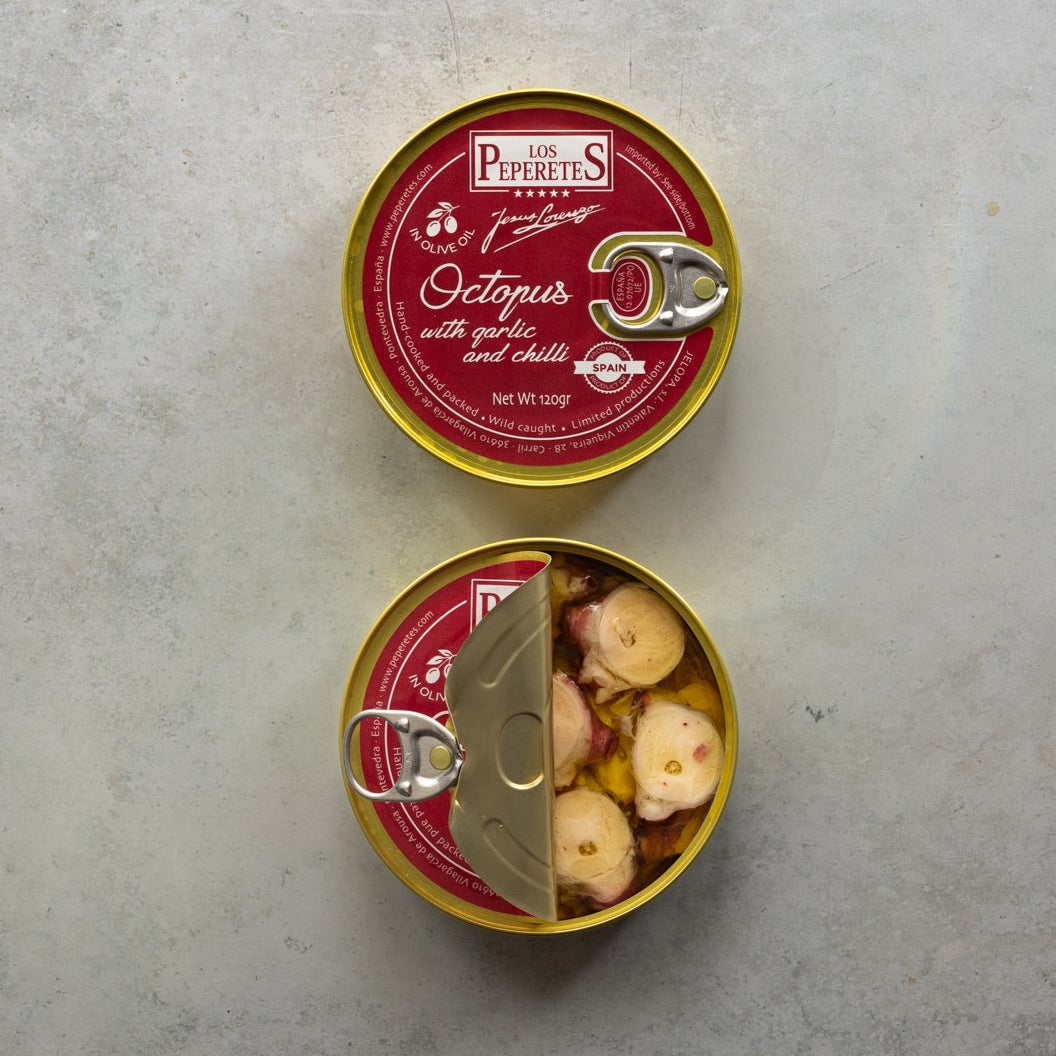
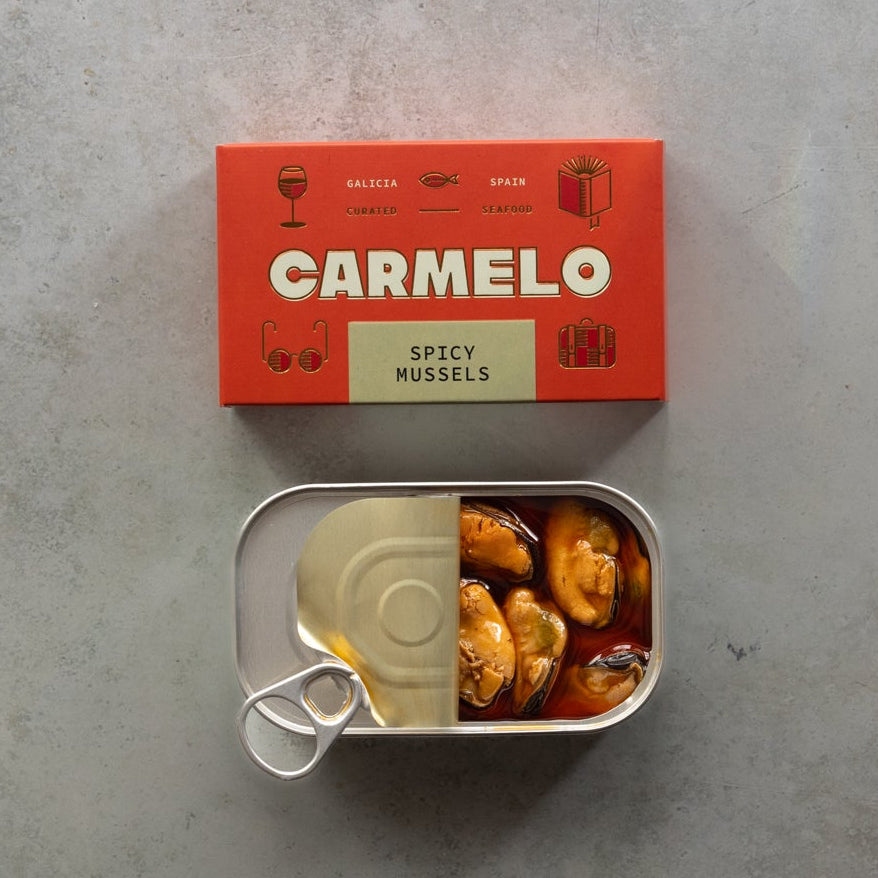
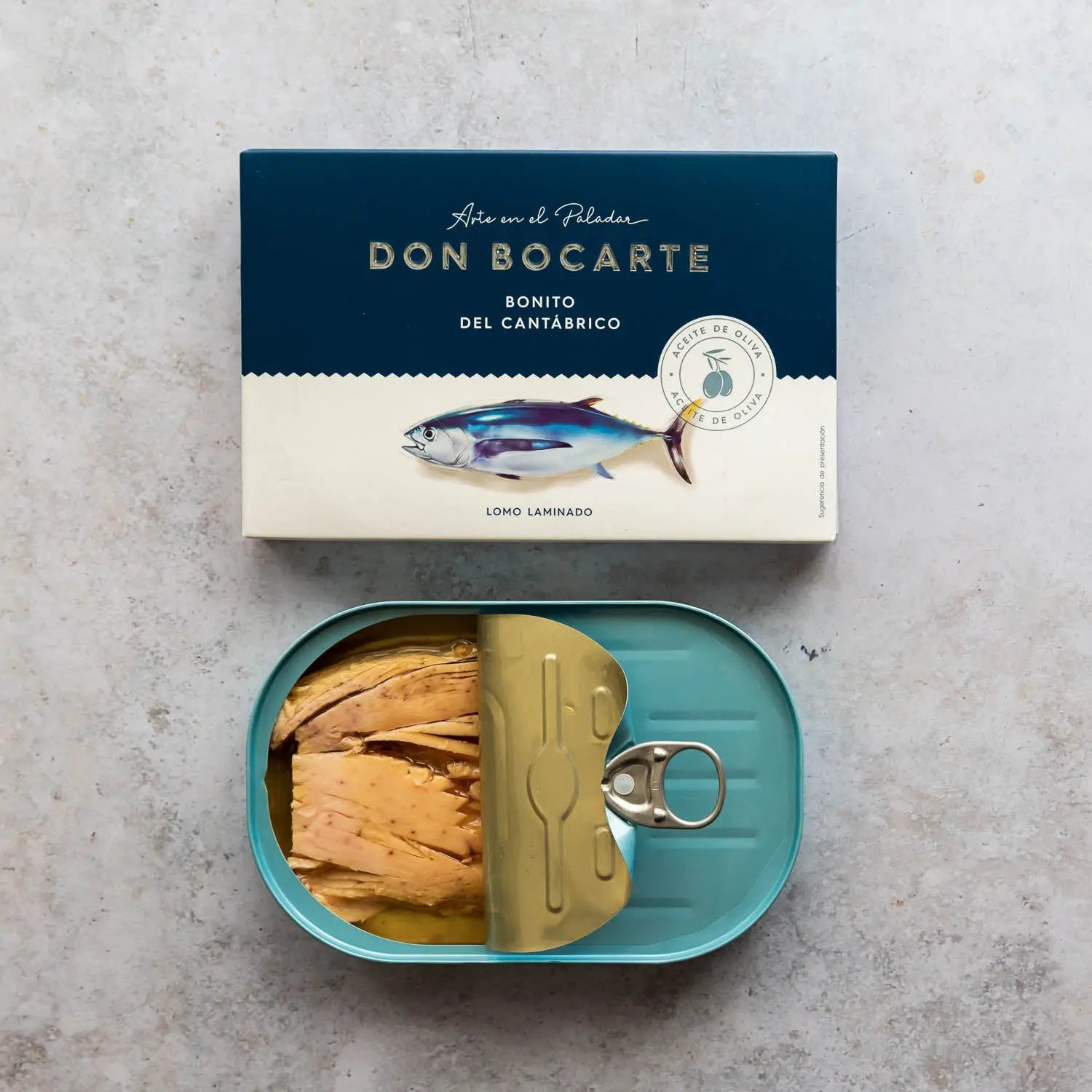
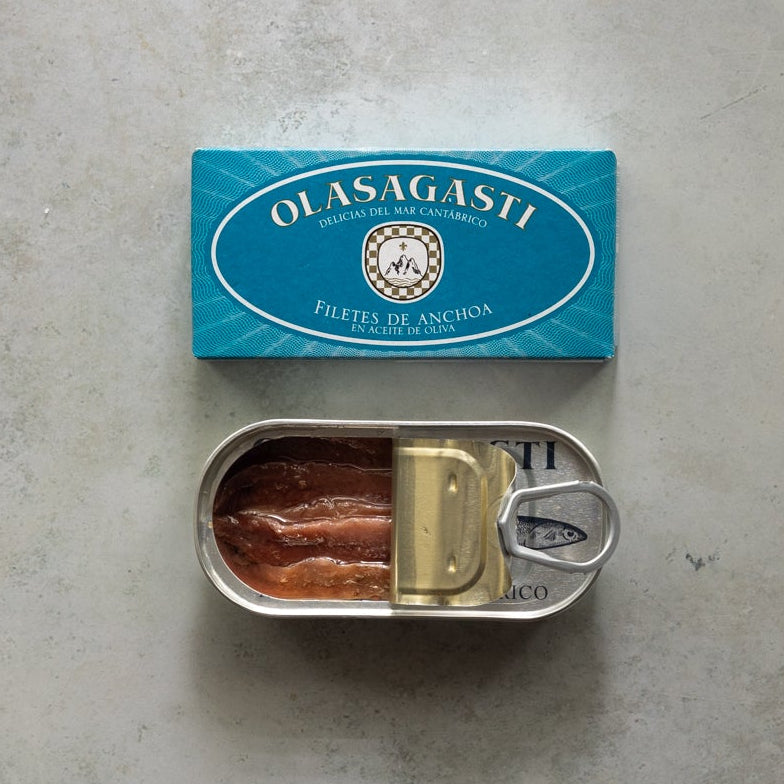
The fish themselves are selected for size, condition and fat content. Sardines from Pinhais are larger and oilier than the everyday catch; bonito loins from Olasagasti are intact and tender; octopus from Los Peperetes is wild-caught from Galician waters; mussels in escabeche from Carmelo are firm and plump rather than collapsed. The eating experience justifies the work — by a margin that is clear within a single bite.
A serious tin is a complete dish in its own right. Open, drain nothing, serve with bread, lemon, olives and a glass of something cold. That is the Iberian and southern Italian tradition — the aperitivo, the pintxo, the petisco — and it is the most rewarding way to eat preserved seafood that has been properly made.
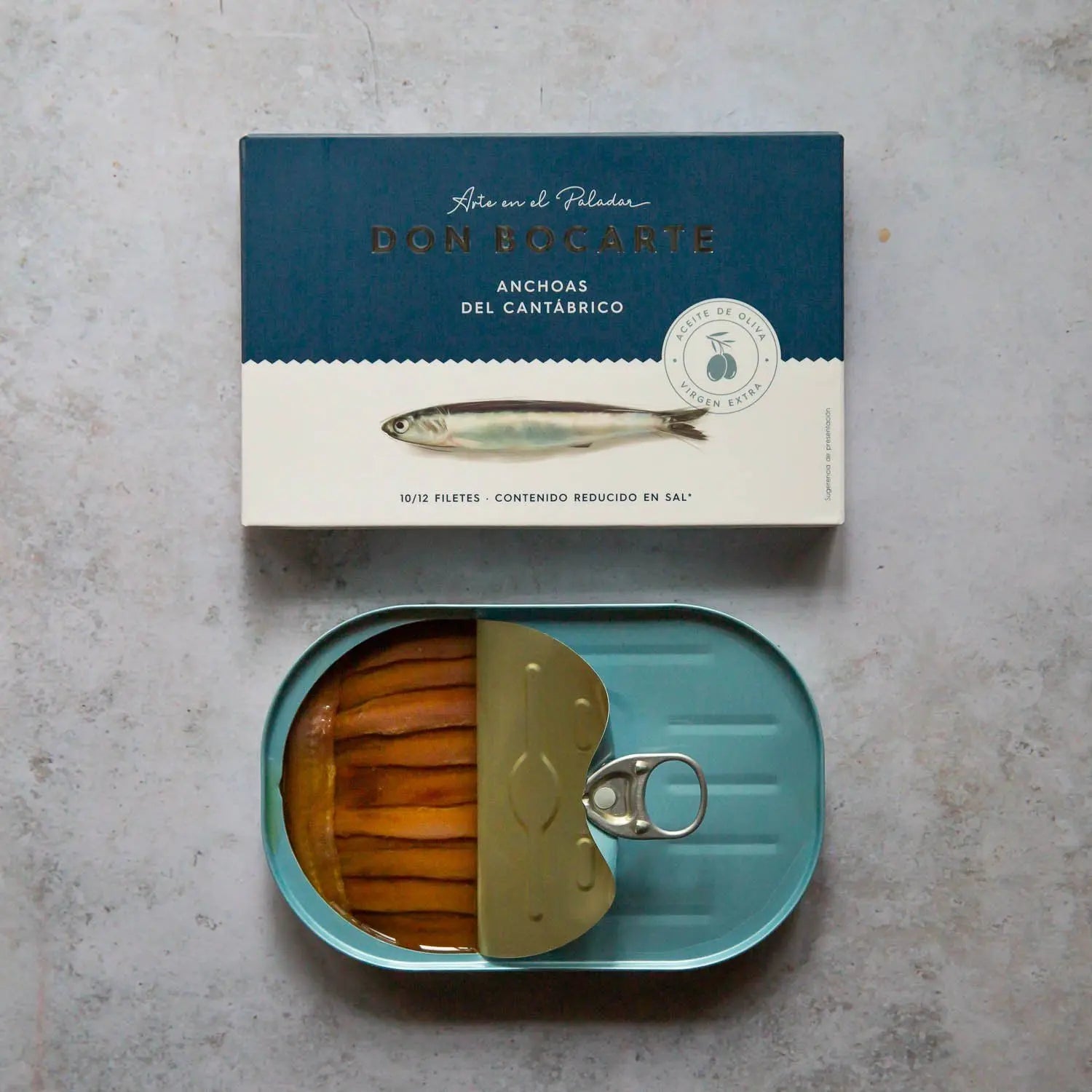
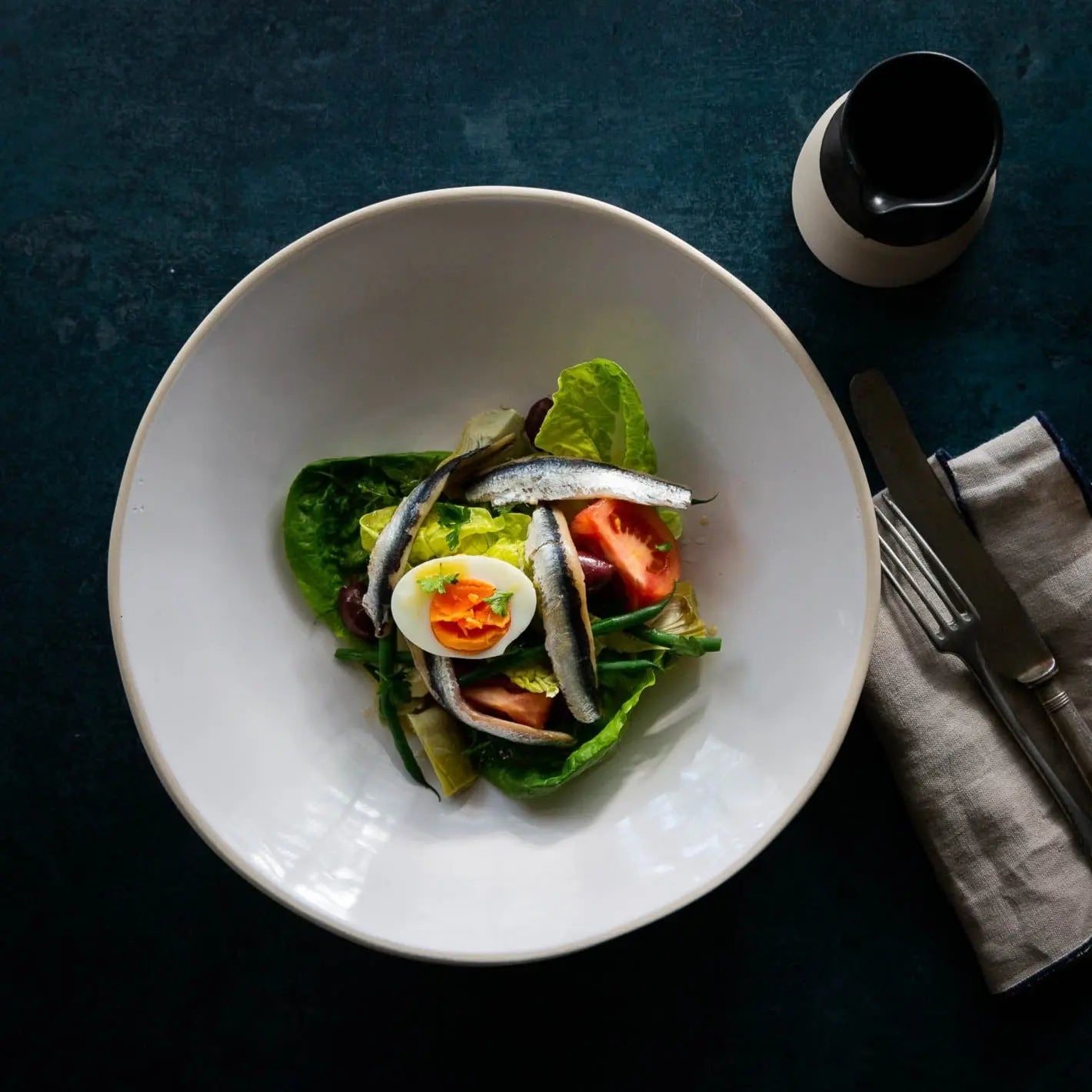
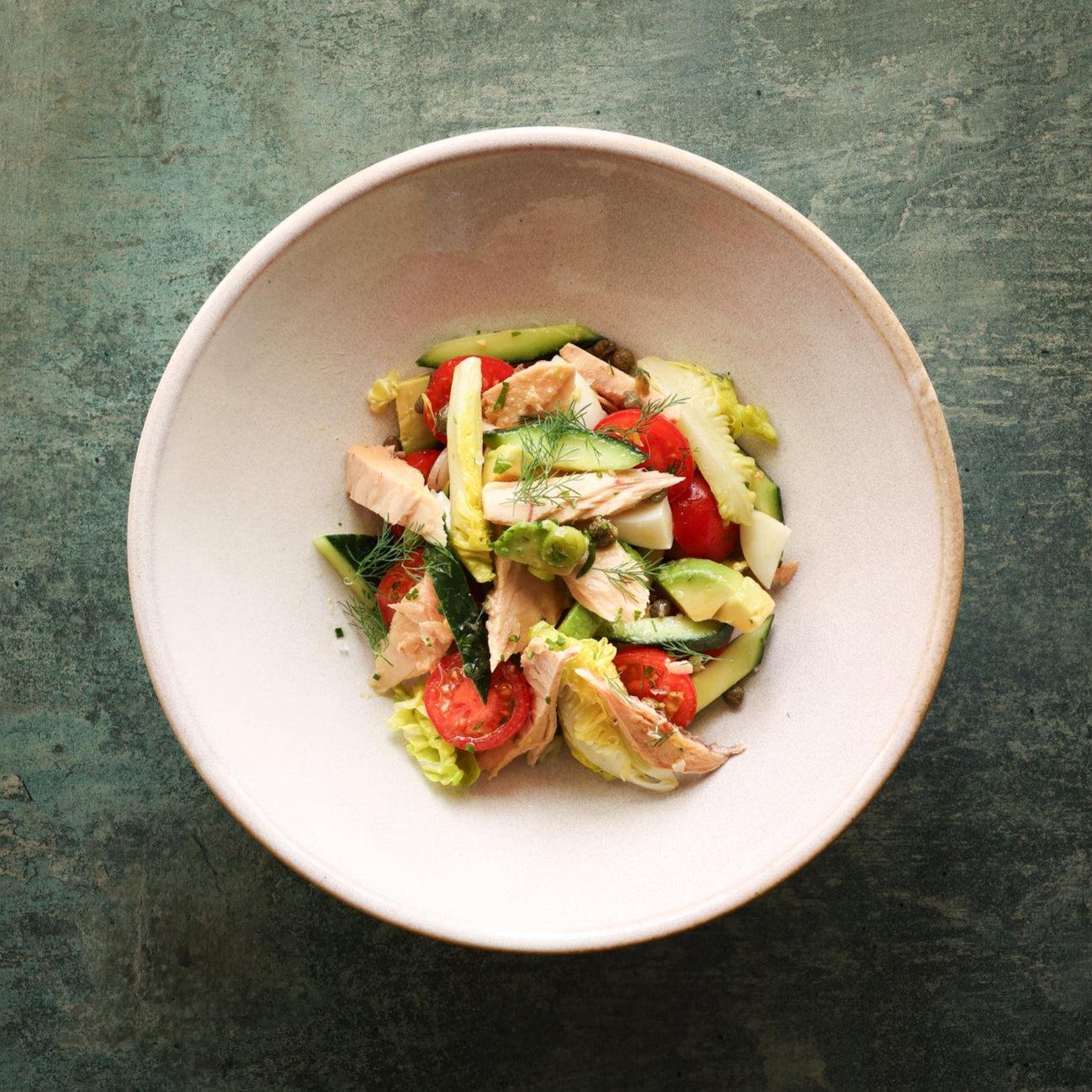
Beyond the open-and-serve approach, the tin is a working ingredient. Anchovy fillets dissolved into olive oil and garlic are the foundation of bagna càuda, Caesar dressing, pasta puttanesca and a lamb roast. Tuna loins flaked over a salad of ripe tomato become a Basque lunch. Mussels in escabeche tossed through hot pasta become a 10-minute supper. The oil in every tin is a finished dressing — never drained away.
The producers in this section come from a small number of historic preserved-seafood regions, each with its own specialism and identity.
Galicia, north-west Spain — the Rías Baixas and the Atlantic coast around Cambados. The home of conservas gallegas: octopus, mussels in escabeche, razor clams, cockles, and the broader tradition of preserving the day's catch in oil and marinade for service in the bars of Vigo, Pontevedra and Santiago.
The Basque Country and Cantabria — the spring anchovy season of the Bay of Biscay and the summer tuna season that follows. The salt-cured Cantabrian anchovy, the Bonito del Norte, and the Donostiarra-style anchovy preparations of San Sebastián. Olasagasti and the wider Basque tradition.
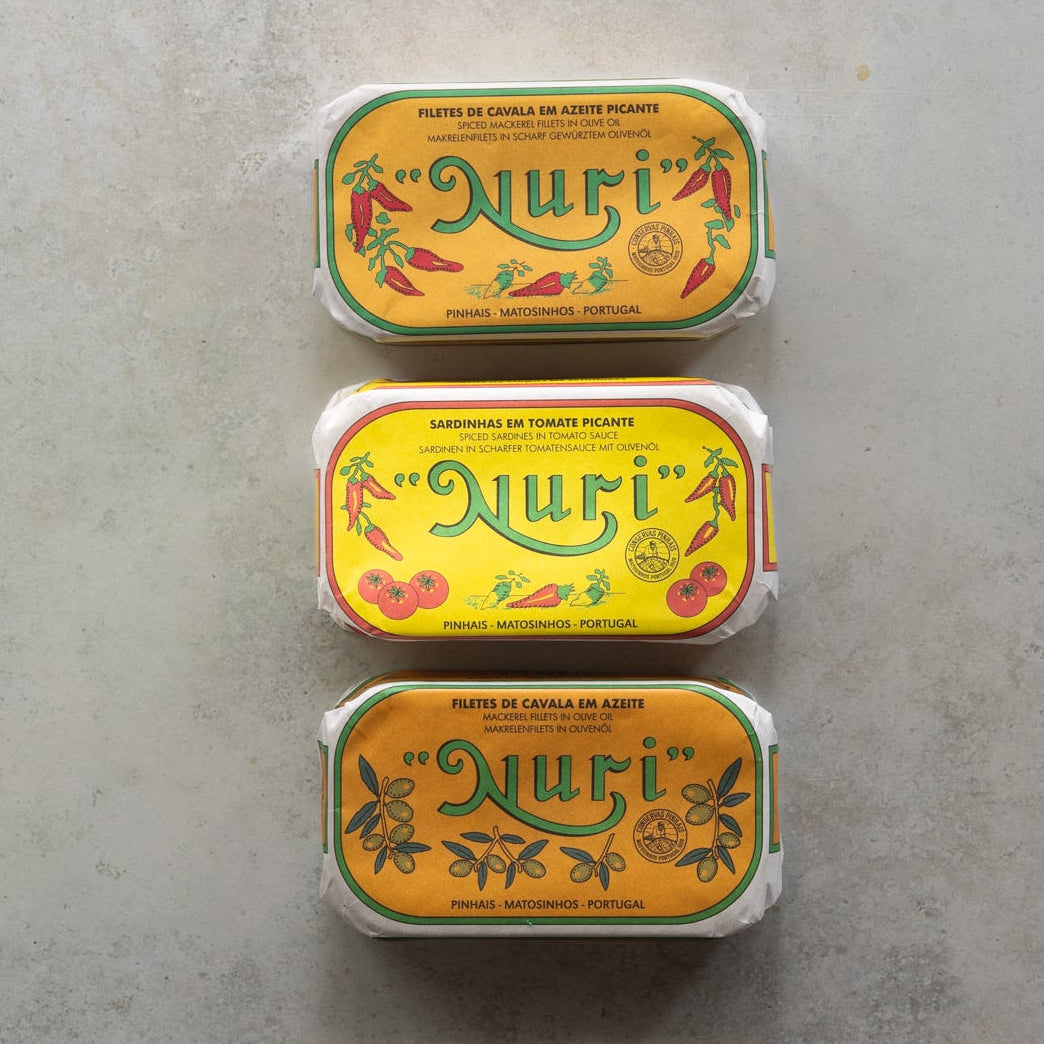
Portugal — Pinhais in Matosinhos, the cult Portuguese cannery that has been hand-preparing sardines and mackerel under the NURI brand since 1920. Hand-wrapped vintage paper, 37 manual production steps per tin, the same processes that built the brand's worldwide reputation among collectors and chefs.
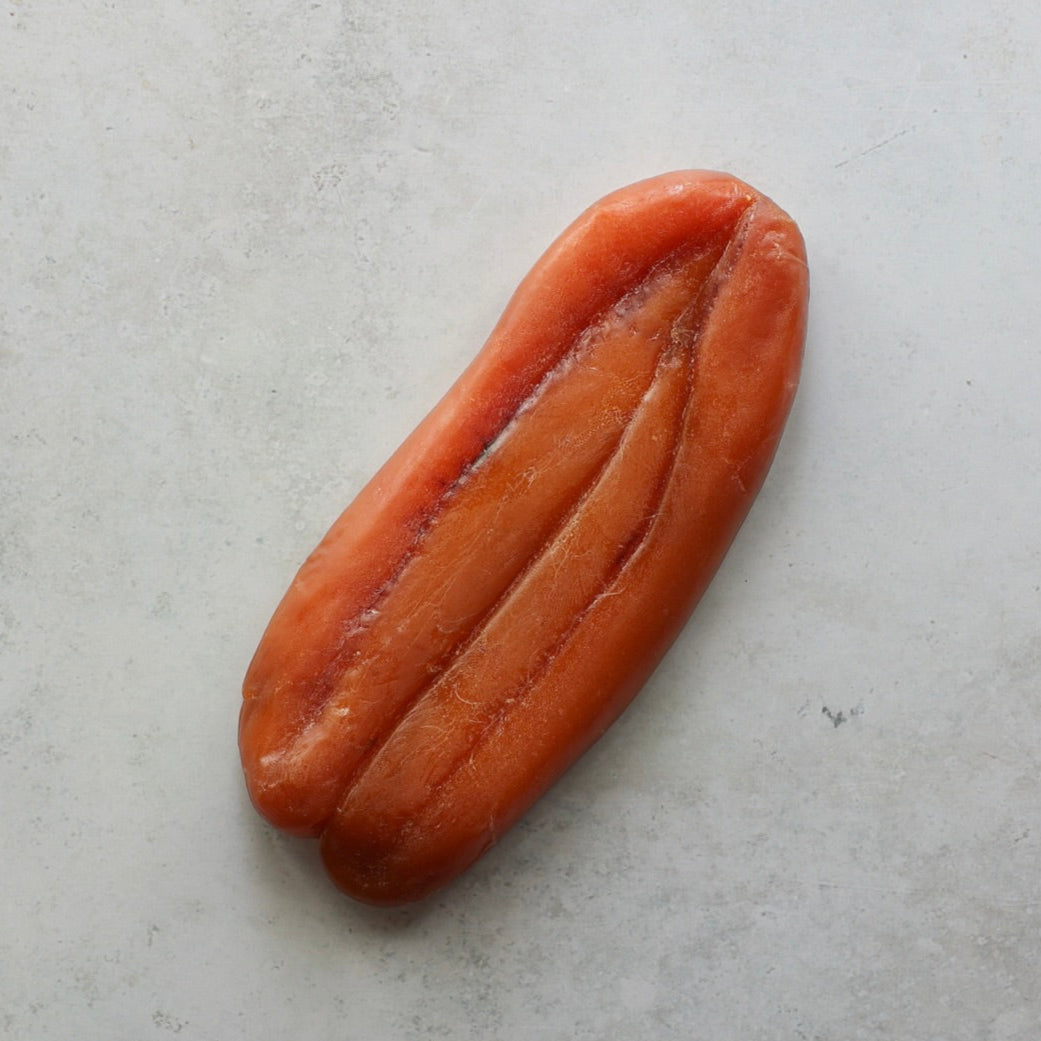
The Mediterranean and Sicily — wild-caught tuna, swordfish, anchovies and bottarga from the great fishing traditions of the southern Italian coast. The Italian preserved-fish category is smaller than the Iberian but no less serious.
Most tinned fish in this section is shelf-stable and stores in the cupboard for years before opening. The serious tins genuinely improve with time — collectors lay them down and open them on anniversaries, in the same way as fine wine. Once opened, refrigerate and consume within 3 days. Decant any unused fish back into its own oil and seal tightly. The oil is part of the product; do not throw it away.
Serve at room temperature, not chilled — the oil seizes and the flavour closes down when cold. Bring the tin out 15 minutes before opening, lift the fish gently, drizzle the oil over, and let the rest of the table do the work.
Insulated packaging, next-working-day UK courier. Orders before 2pm dispatch same day. Free weekday delivery over £225.