

Nadorcott Mandarins
Choose options
Nadorcott is a mandarin variety with an unusual origin story. It was discovered as a chance seedling in Morocco — a natural hybrid, most likely of a Murcott tangor — and the name is a combination of Nador (the Moroccan city near where it was found) and Murcott (its presumed parent). It was subsequently patented and is now grown commercially across the Mediterranean, particularly in Spain, where Valencia's citrus-growing infrastructure and climate suit it well.
What makes Nadorcott commercially significant is its position in the citrus calendar. Clementines dominate the early mandarin season — roughly November through January — but by February their quality tails off as the fruit passes peak. Nadorcott is a late-season variety that reaches maturity as clementines decline, extending the window for high-quality easy-peel citrus through the late winter and into spring. This means that when a good mandarin becomes difficult to source, the Nadorcott is often the best option available.
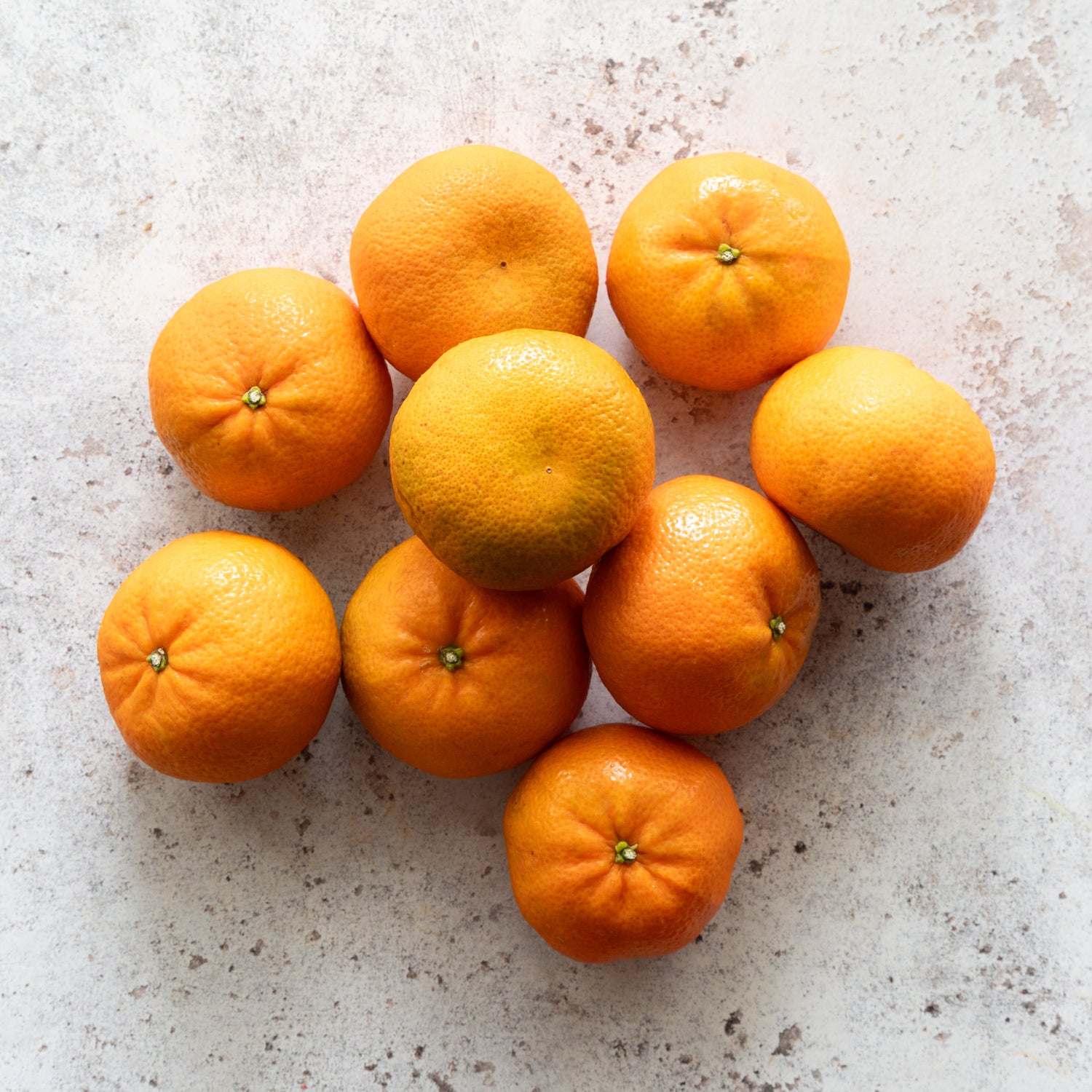
The fruit itself is medium-sized with a deep orange skin that peels cleanly — the rind separates from the flesh easily without tearing or leaving excessive pith behind. The segments are seedless or very nearly so, juicy, and notably sweet with enough acidity to stop the sweetness from being flat. The flavour is more complex than a standard satsuma — there is a richness to it, almost honeyed, that sits between a clementine and a tangerine without being quite the same as either.
The peel is thin and aromatic, with a good concentration of essential oils. It zests well if you want to use it, though most people will eat these out of hand. Store at room temperature for up to a week, or in the fridge for longer — citrus is less sensitive to cold storage than stone fruit and can be chilled without significant flavour loss.
Origin: Valencia, Spain
Ingredients: Nadorcott mandarins (Citrus reticulata)