




Asparagus
Asparagus
Asparagus is one of the most unforgiving vegetables to buy badly. The window between field-fresh and tired is short, which is why the variety and the grower matter as much as the season itself.
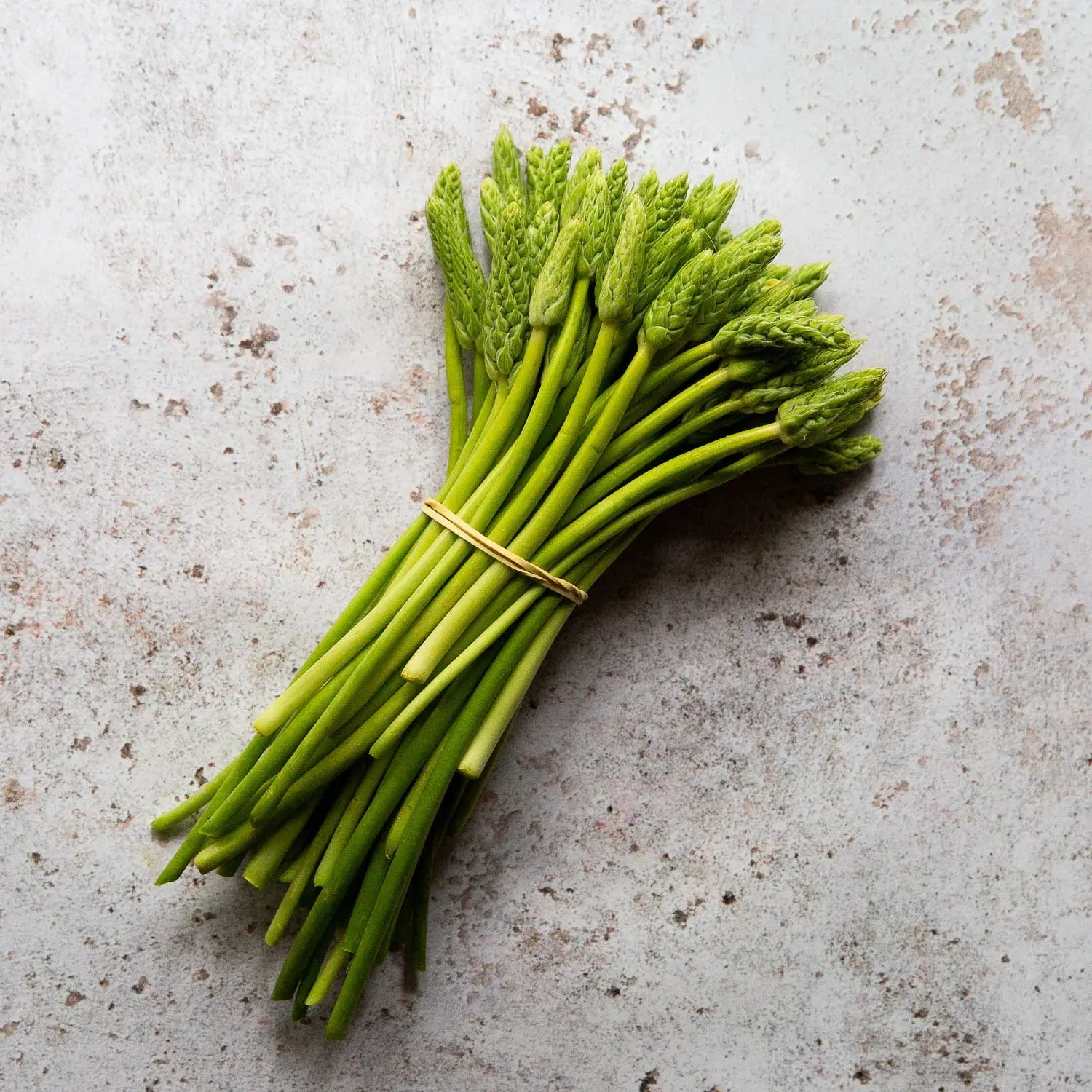
We source directly from two specialist French producers — La Délicate for white asparagus and Jérôme Galis for green — both of whom grow for quality rather than yield, and both of whom supply some of the best restaurant kitchens in Europe. When English asparagus is at its peak, we also bring in select quantities of home-grown green spears.
Our Producers
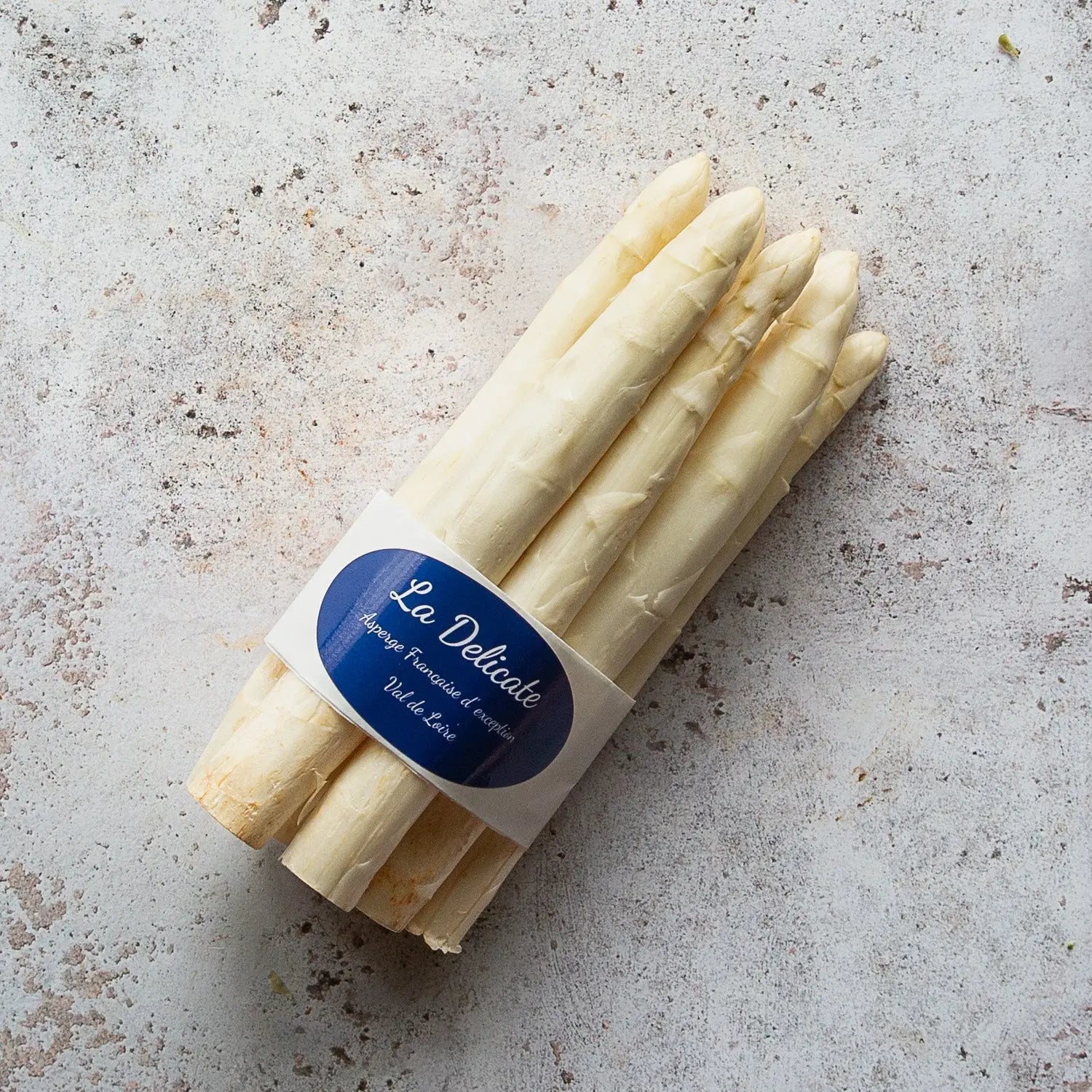
La Délicate is a dedicated white asparagus operation based in the Loire region of France. White asparagus is grown under mounded soil to keep the spears from developing chlorophyll — a more labour-intensive process that produces a milder, more delicate flavour and a texture closer to tender than crisp. Their growing practices are responsible and traceable, with a commitment to quality over volume.
Jérôme Galis farms in the Gard département of southern France, growing green asparagus characterised by tight tips, firm texture, and the clean, grassy intensity that comes from slow growth in well-drained soil. His asparagus is harvested to order during the season and reaches us within 24 to 48 hours of cutting.
The Varieties
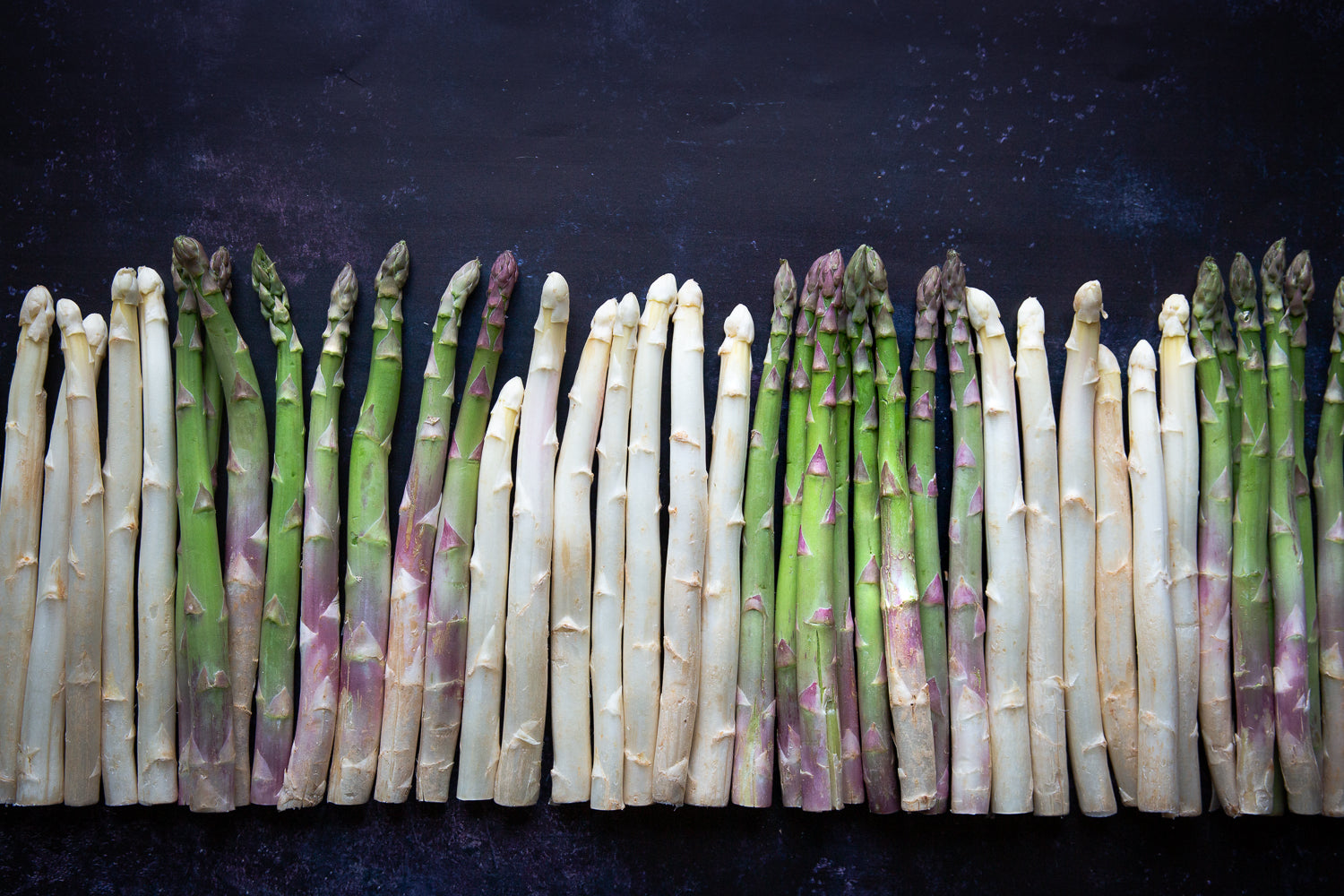
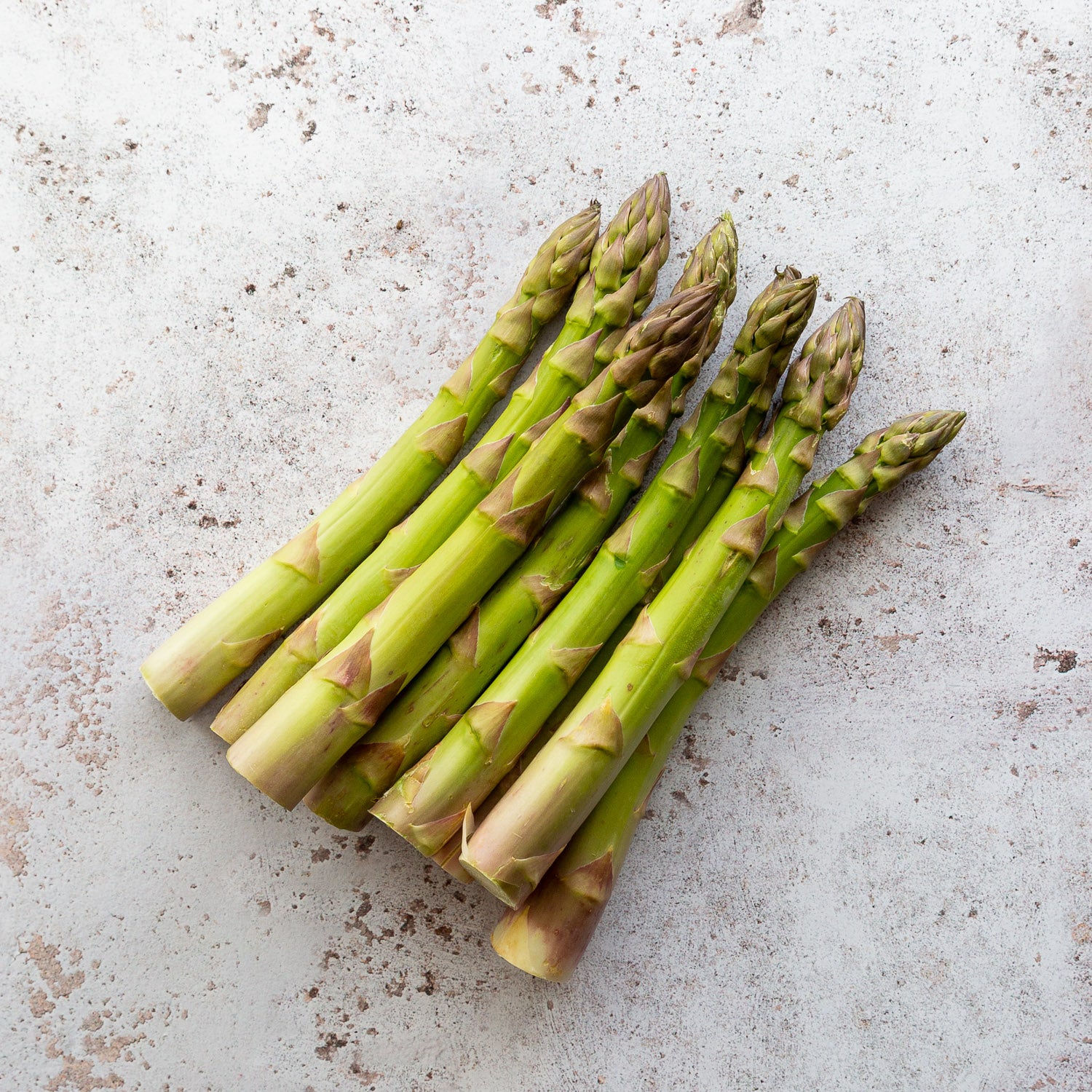
Green Asparagus
The most common variety in the UK and the most versatile in the kitchen. Firm, bright, and slightly bitter when raw, green asparagus develops a clean savouriness under heat — whether grilled, roasted or blanched. Our French green from Jérôme Galis is characterised by tight tips, firm texture, and the intensity that comes from slow growth in well-drained southern French soil.
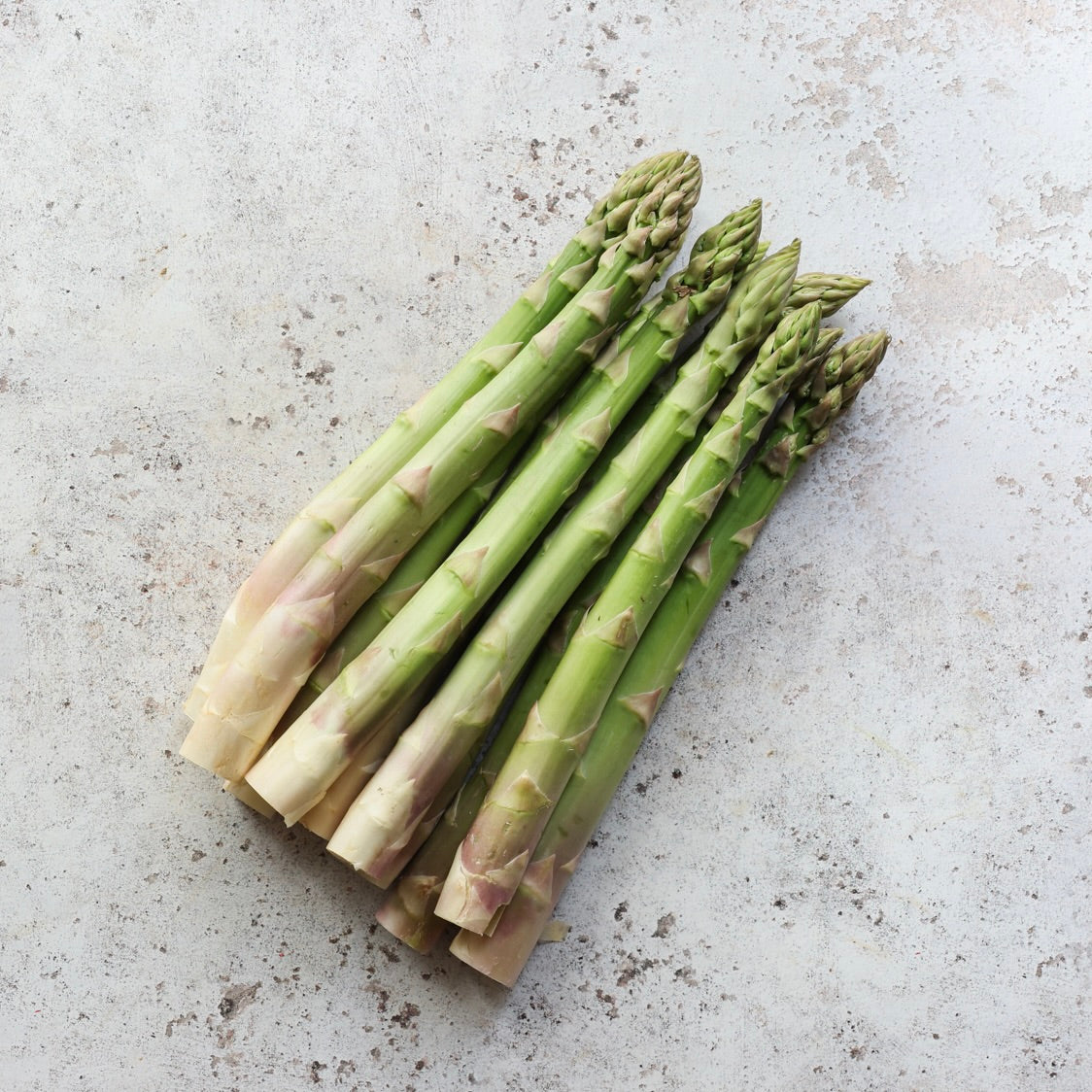
White Asparagus
Green asparagus deprived of light throughout its growth. Grown under mounded earth, the spears are cut before they breach the surface. The result is a completely different eating experience — pale ivory in colour, tender rather than crisp, with a flavour that is mild, slightly sweet, and faintly bitter at the base. A fixture of French and German spring cooking, particularly good with hollandaise, butter sauces and cured ham.
Selecting Quality Asparagus
Fresh asparagus is easy to identify. Look for tight, firm tips — any splaying or softening at the tip is a sign of age. Stems should feel rigid and snap cleanly rather than bend. Cut ends should look moist, not dried out or fibrous. For white asparagus specifically, the skin should be smooth and slightly waxy, without browning or soft patches.
We source to these standards and dispatch within 24 hours of receipt to minimise the time between harvest and kitchen.
How To Cook
Green
Snap off the woody base — the spear will break naturally at the right point. For grilling or roasting, toss in olive oil and a pinch of salt, cook at high heat until lightly charred in places, around 8 to 12 minutes depending on thickness. For blanching, 2 to 3 minutes in heavily salted boiling water, then immediately into ice water to stop the cook. Asparagus should retain a little resistance.
White
Peel it. Unlike green, the outer skin of white asparagus is fibrous and unpleasant if left on. Use a vegetable peeler from tip to base, working gently. White takes longer to cook than green — 8 to 12 minutes in simmering salted water with a small knob of butter added. It should be fully tender but not collapsing.
Recipes & Pairings
Asparagus is one of the few vegetables that genuinely warrants its own wine discussion. It's notoriously difficult to pair with red wine — the vegetal character tends to make most reds taste metallic. White wines with good acidity and a touch of green character work far better. Sauvignon Blanc from the Loire (Sancerre, Pouilly-Fumé), dry German Riesling from the Rheingau or Mosel, and white Burgundy are all reliable.
For white asparagus specifically, Pouilly-Fuissé is a strong match — the weight of good Mâconnais Chardonnay sits comfortably alongside butter and cream. Worth considering too is Condrieu — not the obvious choice, but its stone fruit and floral character has a natural affinity with white asparagus that surprises most people who try it.
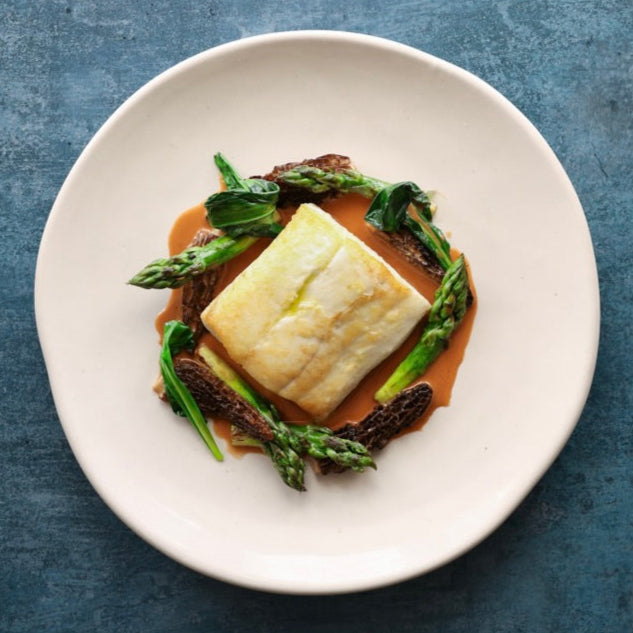
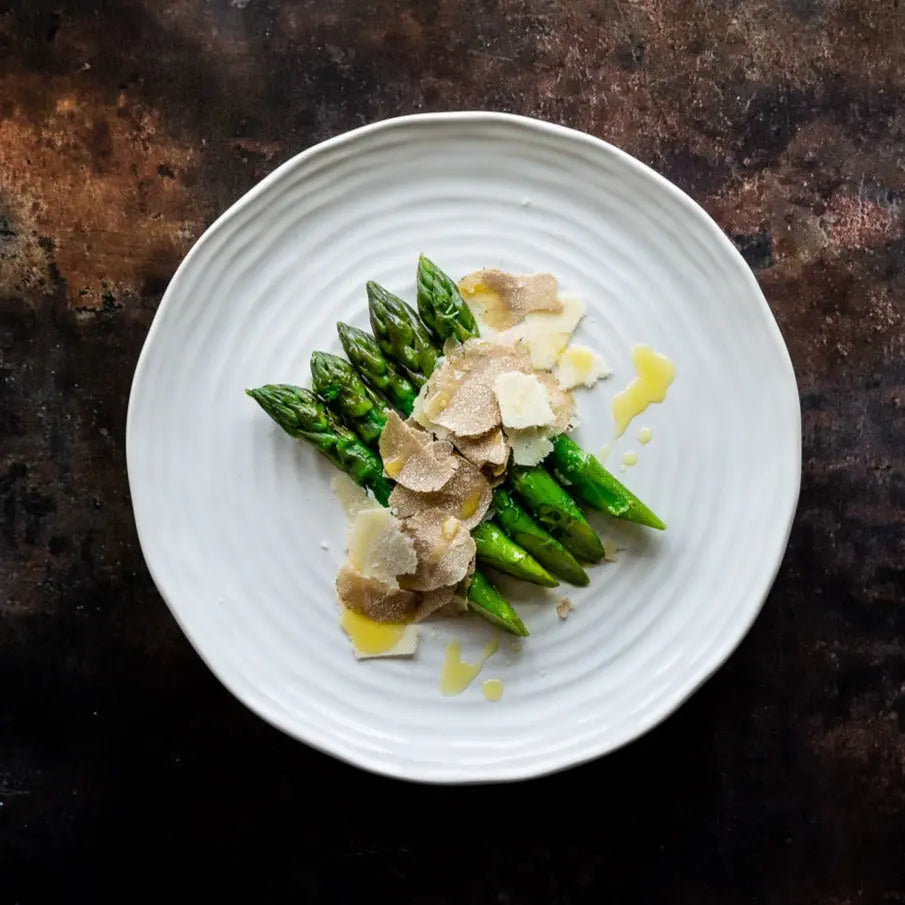
For food pairings: green asparagus with burrata and a sharp dressing; white asparagus with hollandaise or a classic mousseline. Wrapping spears in Ibérico ham or prosciutto before grilling is a straightforward way to add richness and saltiness without obscuring the asparagus itself.
For Easter and spring entertaining, asparagus bridges the gap between light starters and more substantial mains. A white asparagus soup with a soft-boiled egg, or green asparagus with smoked salmon and crème fraîche, both work well as no-effort first courses.
Storage
Asparagus deteriorates faster than almost any other vegetable once cut. The best way to store it is upright in a container with a small amount of cold water at the base — as you would a bunch of flowers — loosely covered in the fridge. This keeps the cut ends hydrated and prevents the tips from drying out. Stored this way, asparagus will hold for 2 to 3 days without significant loss of quality.
If you don't have a tall container, wrap the cut ends in a damp cloth and refrigerate in the crisper drawer. Avoid sealing in airtight packaging, which accelerates deterioration.
Use within 3 days of receipt for best results. White asparagus deteriorates slightly more quickly once peeled — peel and cook as close together as possible.
Season
The asparagus season is one of the most compressed in the culinary calendar. French asparagus, growing in a warmer climate, tends to arrive first — white from La Délicate often comes in from late February or March, with green from Jérôme Galis following shortly after. English asparagus arrives later in spring and has a shorter overall window.
We source asparagus only during this European spring season. We do not stock it year-round or from out-of-season growing regions. This means the collection will be unavailable outside the season window — but when we do stock it, it's genuinely in season rather than grown under artificial conditions.
If you're planning to cook asparagus for a specific occasion, we recommend checking availability and ordering with a few days' lead time during peak season, as popular varieties sell out quickly.
Sustainable Farming
Both La Délicate and Jérôme Galis manage their crops with long-term soil health in mind, farming for quality over yield. Asparagus is a perennial crop — once established, the same crowns produce for 20 years or more — which means responsible growers have a strong natural incentive to maintain the land rather than exhaust it.
Our sourcing is deliberately seasonal. Buying asparagus during its natural European season means it is grown in appropriate conditions, harvested at peak quality, and transported in a fraction of the time of year-round sourced imports.
Delivery
UK next-working-day delivery on orders placed before 2pm. Complimentary weekday delivery on orders over £225.