Speciality fruit is what separates a kitchen that takes ingredients seriously from one that doesn't. A Wolf's Paw apple from Mouneyrac, a Solliès black fig at the height of its short Provençal season, a Reine Claude greengage plum picked at full ripeness, a stem of Yorkshire forced rhubarb pulled in candlelight — these are ingredients with character, sourced for flavour rather than shelf life.
This collection demonstrates the breadth of what we work with across the year — apples, pears, stone fruit, figs and forced rhubarb — rather than what's necessarily in stock at any given moment. Citrus and exotics have collections of their own. Every variety here is sourced through Rungis Market in Paris or direct from named producers, principally Mouneyrac in France for apples and pears. The collection moves with the seasons: French heritage apples and Passe Crassane pears through autumn and winter; stone fruits across spring and summer; Solliès figs in late summer and early autumn; Yorkshire forced rhubarb in the depths of winter.
Heritage Apples
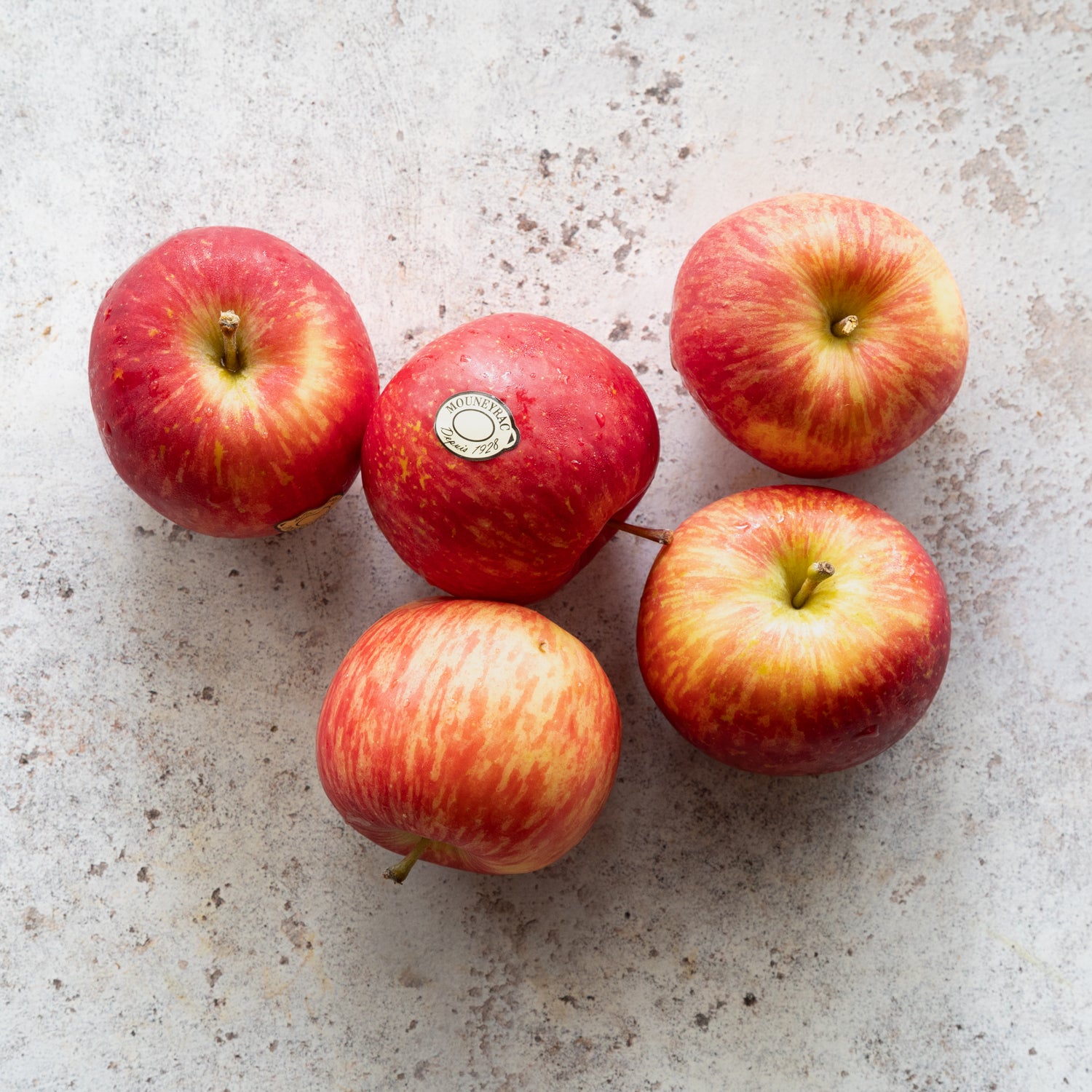
Six apple varieties feature in the collection, four of them from Mouneyrac in France.
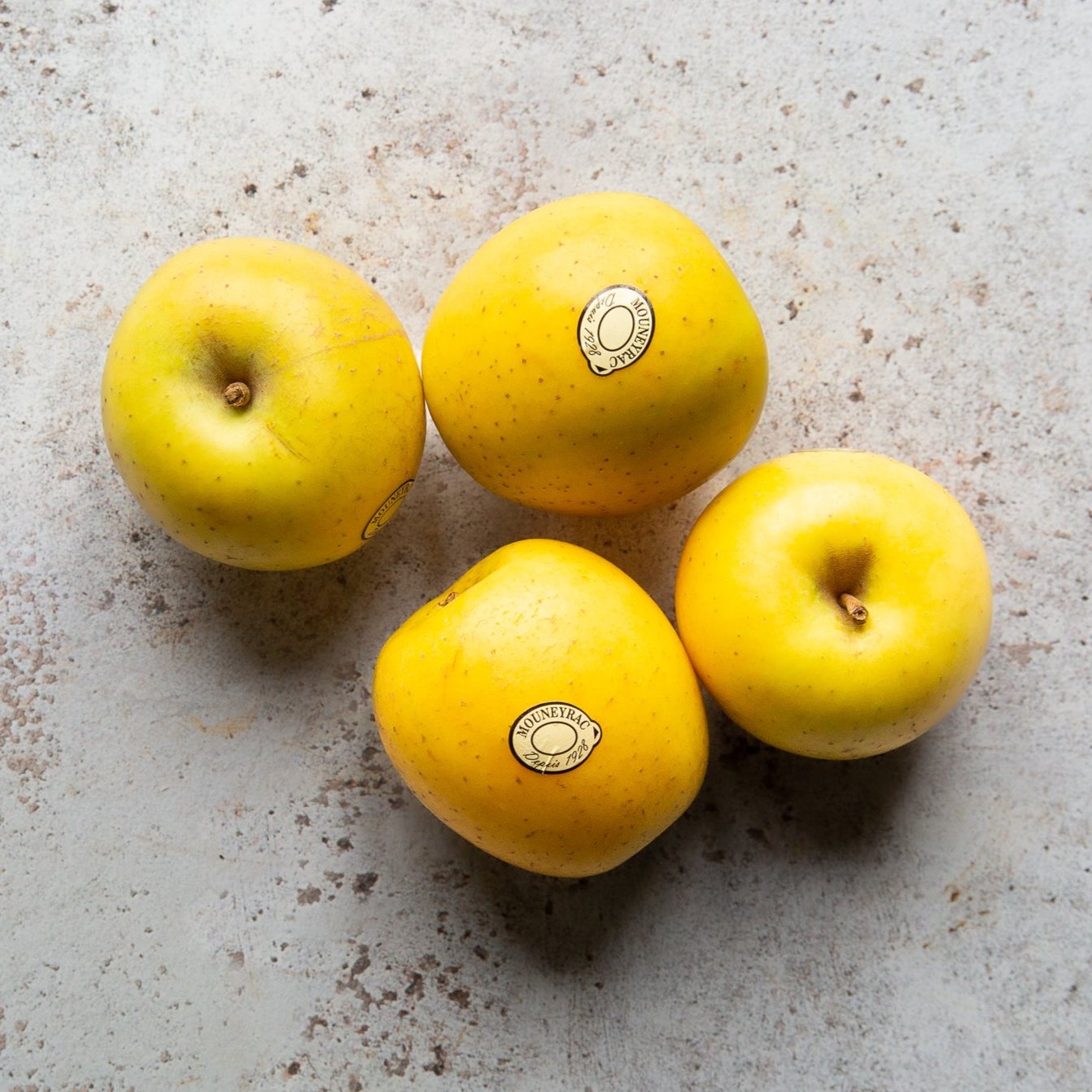
Golden Rose
A summer apple — unusually early for a French variety of this quality. Pale gold skin, crisp flesh and a clean, sweet flavour that makes it one of the best eating apples of the early season. From Mouneyrac. May to October.
Chantecler
Also known as Reinette du Mans — a classic French dessert apple with firm, dense flesh and a balanced sweet-acidic flavour. One of the defining apple varieties of the French culinary tradition. From Mouneyrac. October to April.
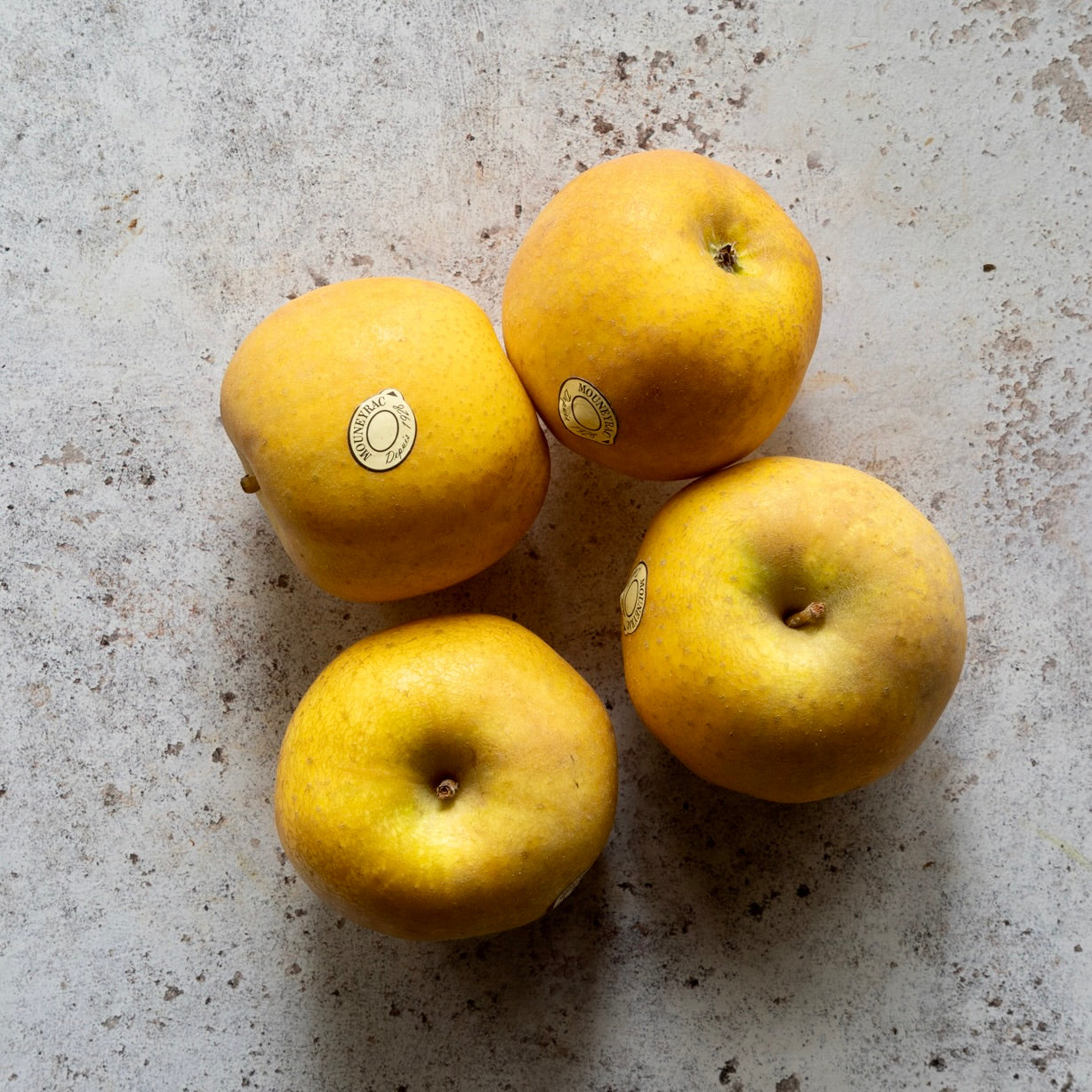
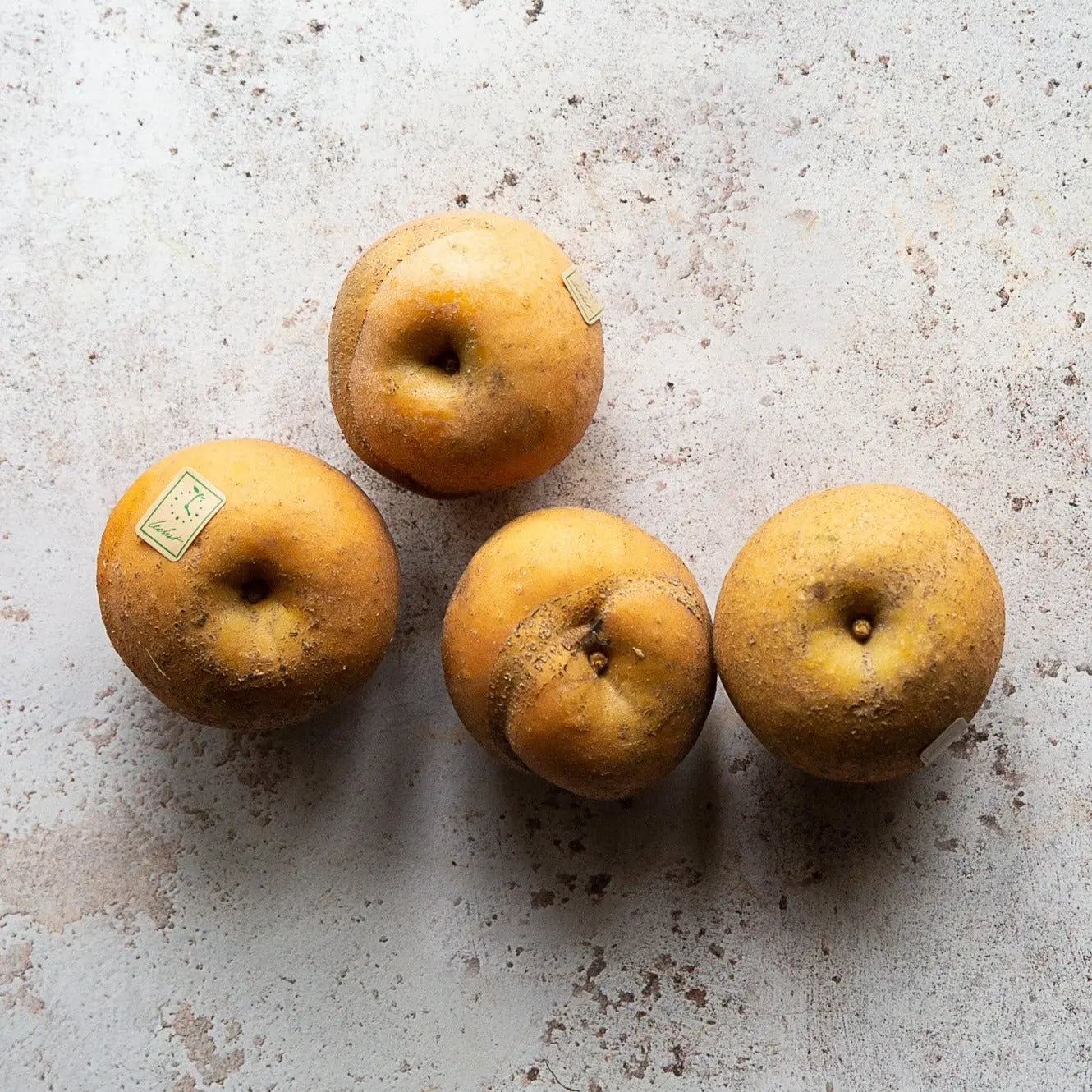
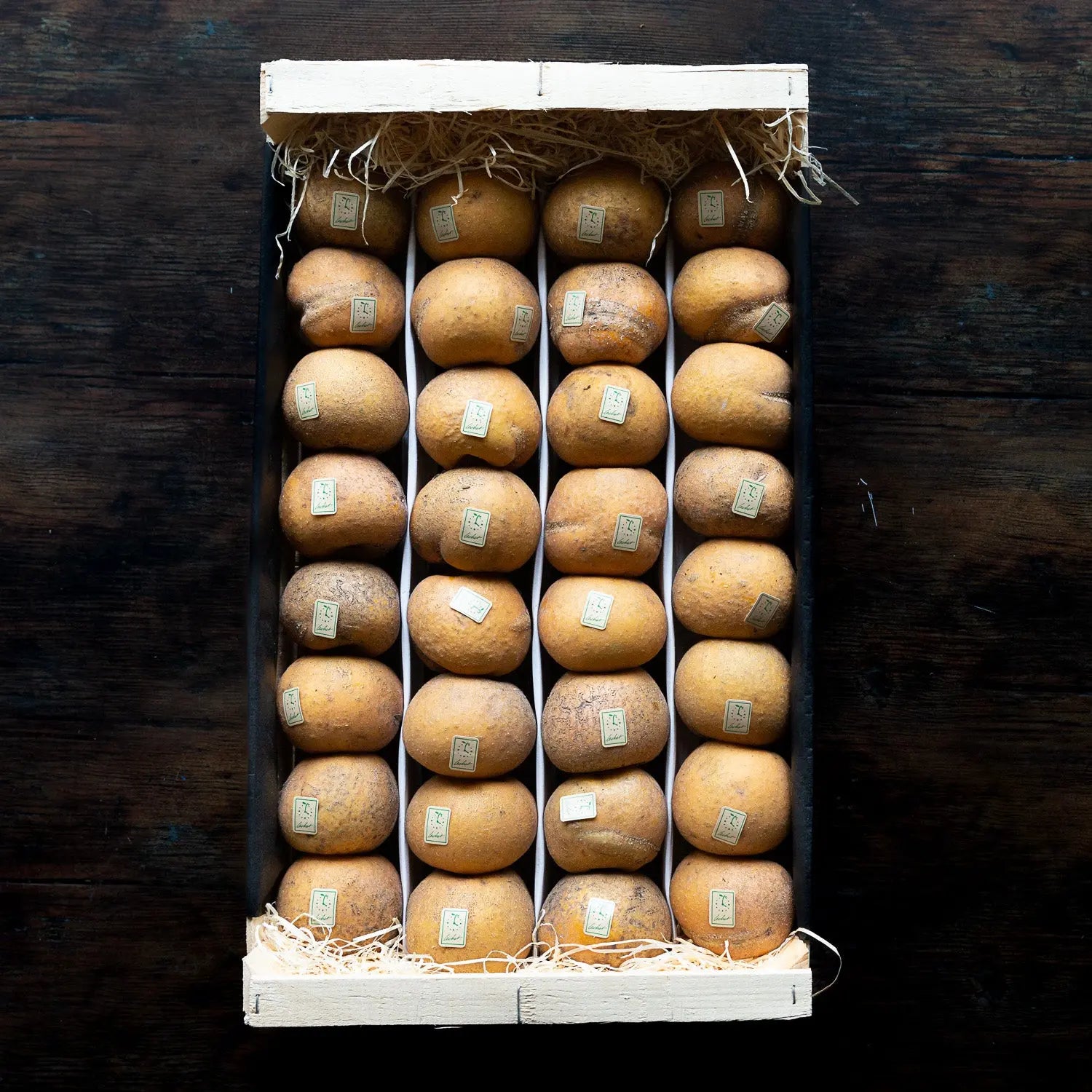
Wolf's Paw (Patte de Loup)
A rare French heritage variety, irregular in shape — hence the name — with a distinctive russeted skin and a rich, nutty flavour that develops in storage. Not a variety you will encounter outside specialist suppliers. From Mouneyrac. November to March.
Gold Rush
A late-keeping variety with a bright, high-acid flavour when first harvested that mellows and sweetens in cold storage into something more complex. Extends the French apple season well into spring. From Mouneyrac. February to April.
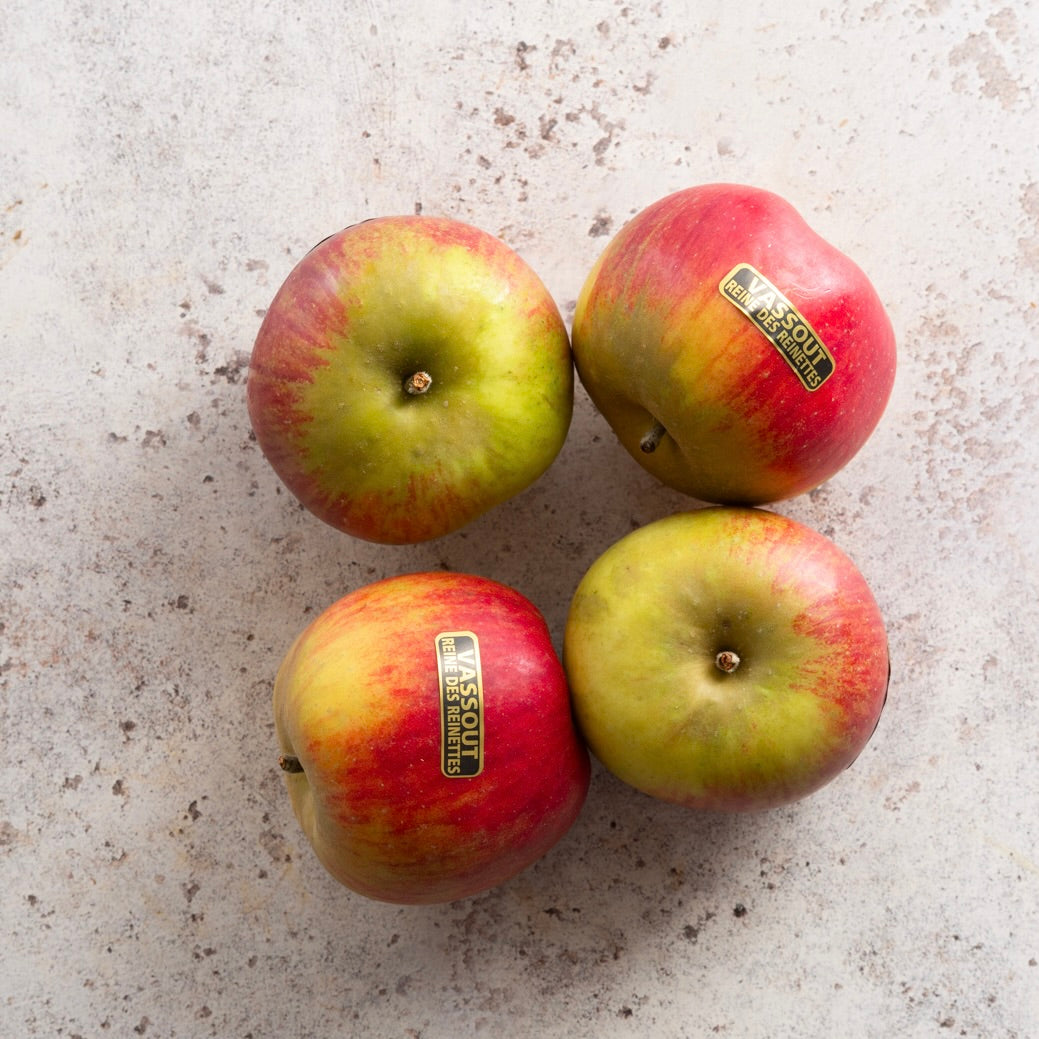
Reine des Reinettes
One of the oldest cultivated apple varieties in France — a small fruit with a green base and red and orange flush, and a rich, honeyed flavour with good acidity. Considered by many to be the finest cooking apple in the French tradition, though equally good eaten fresh. October to March.
Fuji
From New Zealand. Clean, crisp and exceptionally juicy — a straightforward, refreshing eating apple that provides reliable quality across the autumn and winter months. October to March.
Heritage Pears
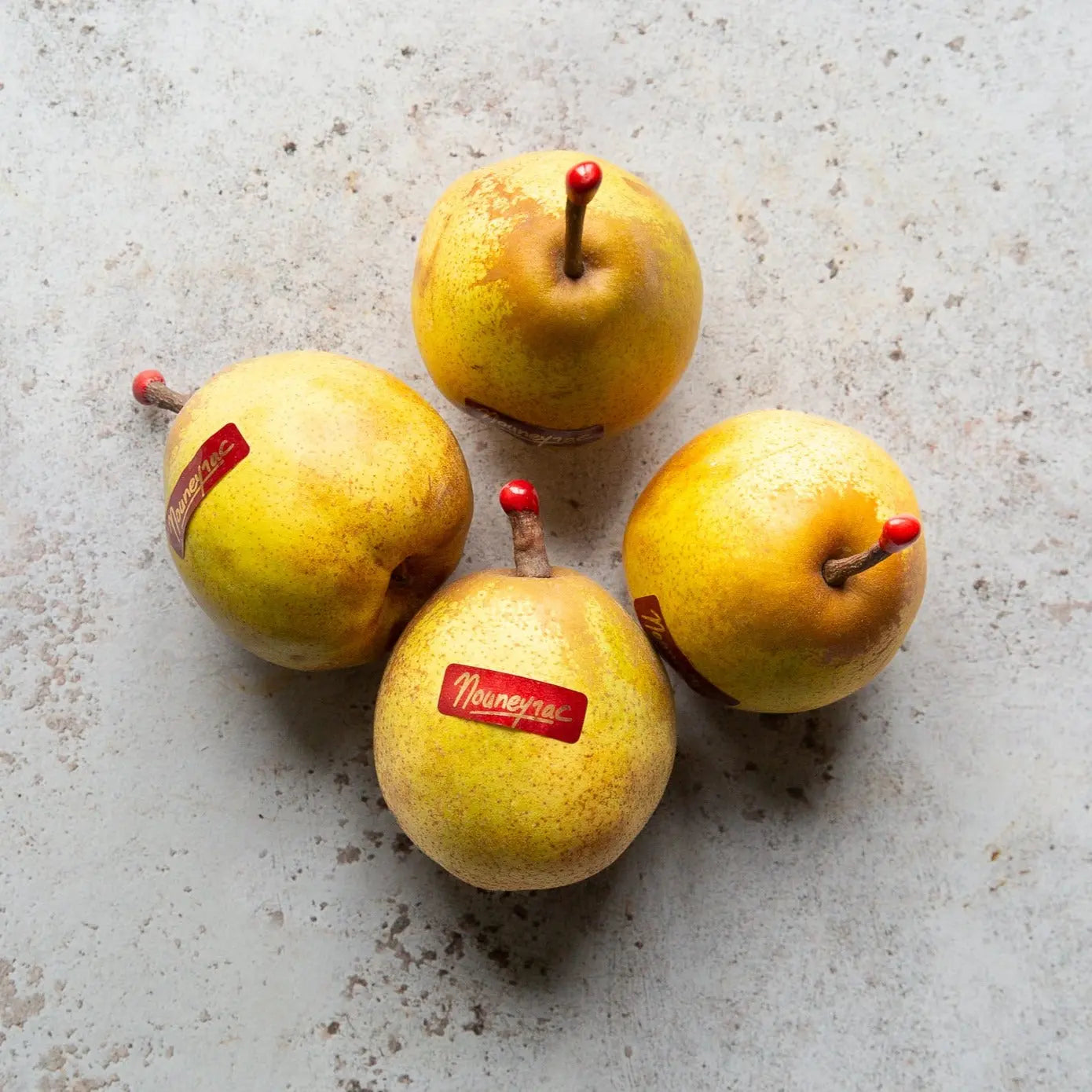
Passe Crassane
The great French winter pear — large, russeted, with a buttery, melting flesh that has no equivalent in the mainstream pear market. Requires ripening at room temperature after delivery before it reaches its full potential. Patience is rewarded. October to March.
Stone Fruits
Stone fruits are the heart of the summer range.
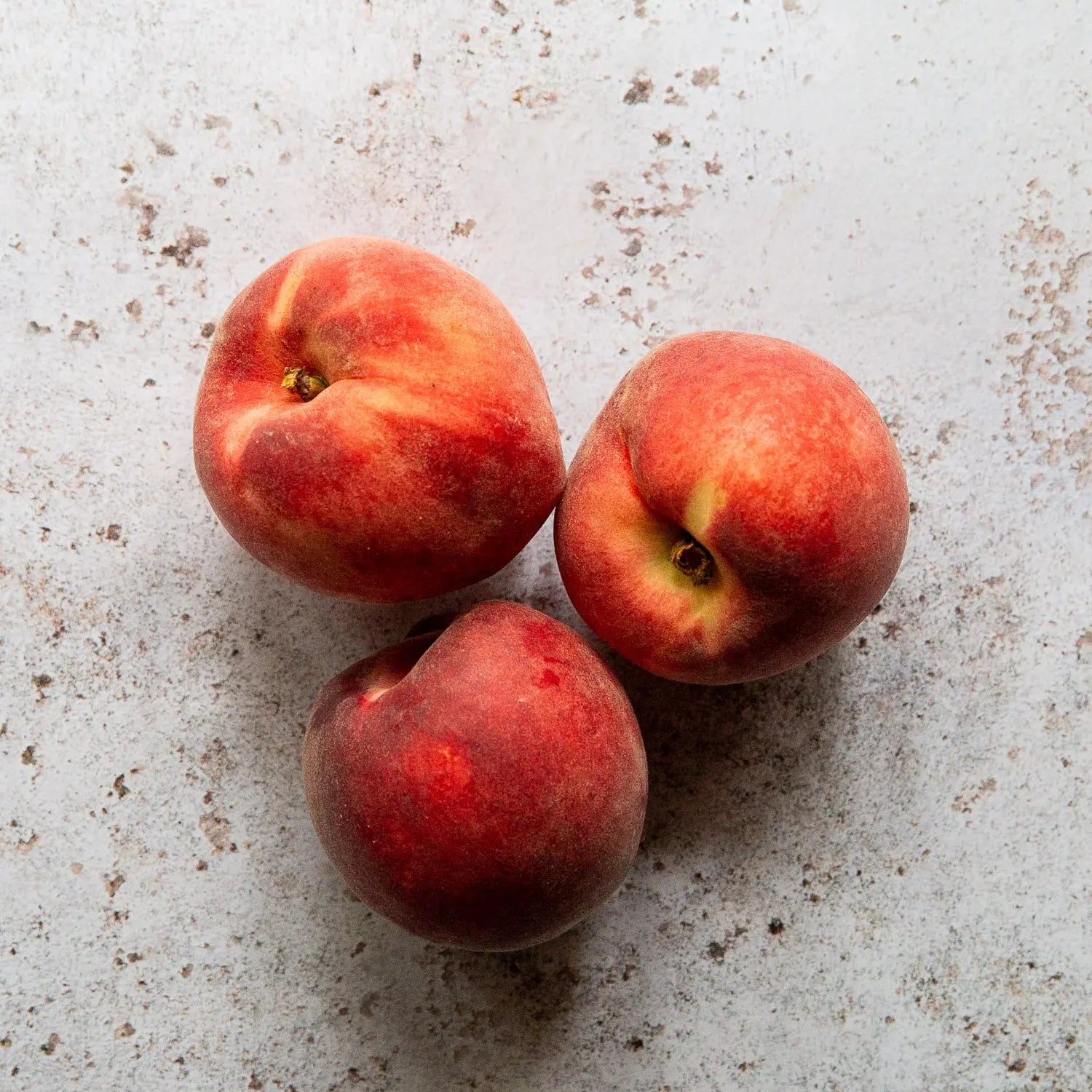
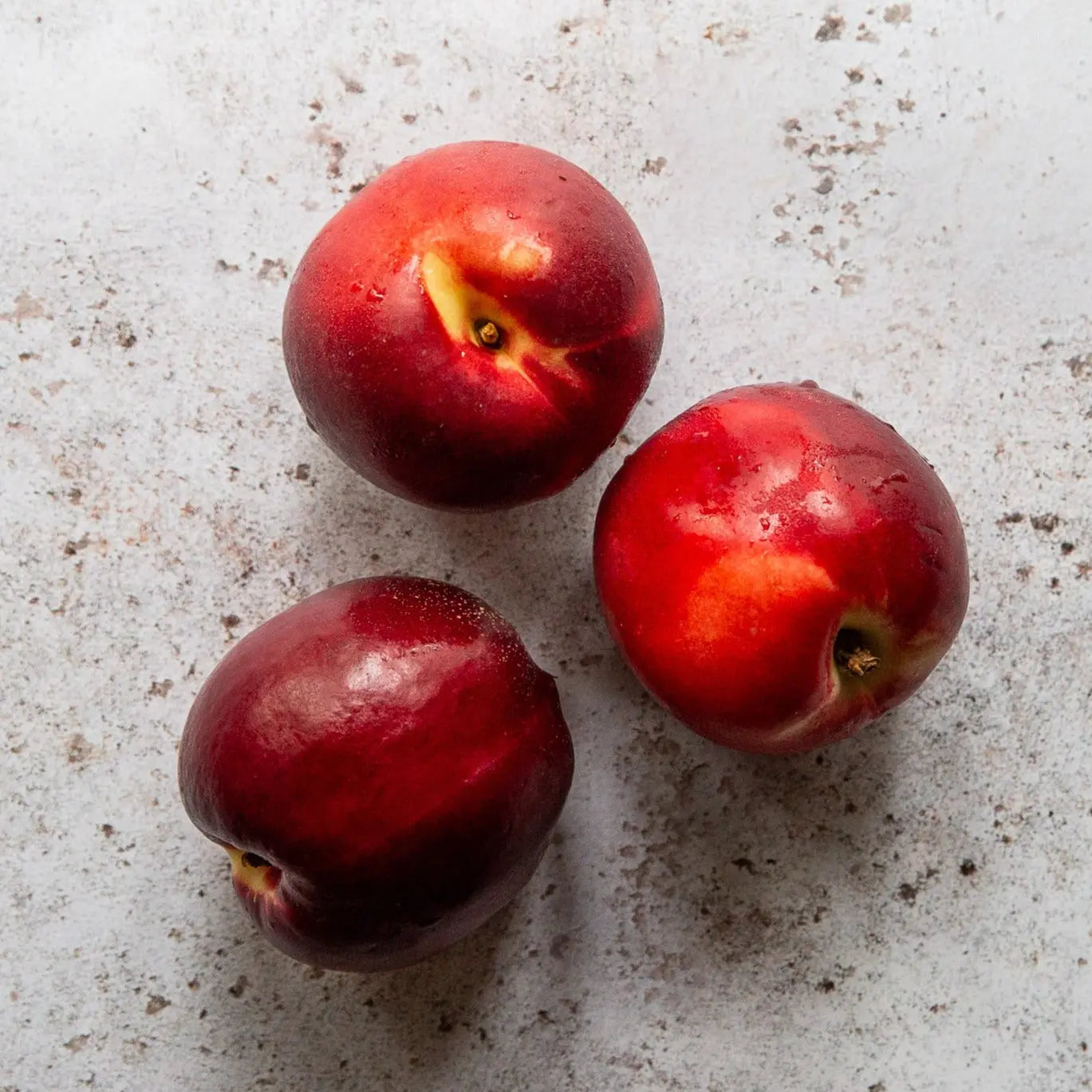
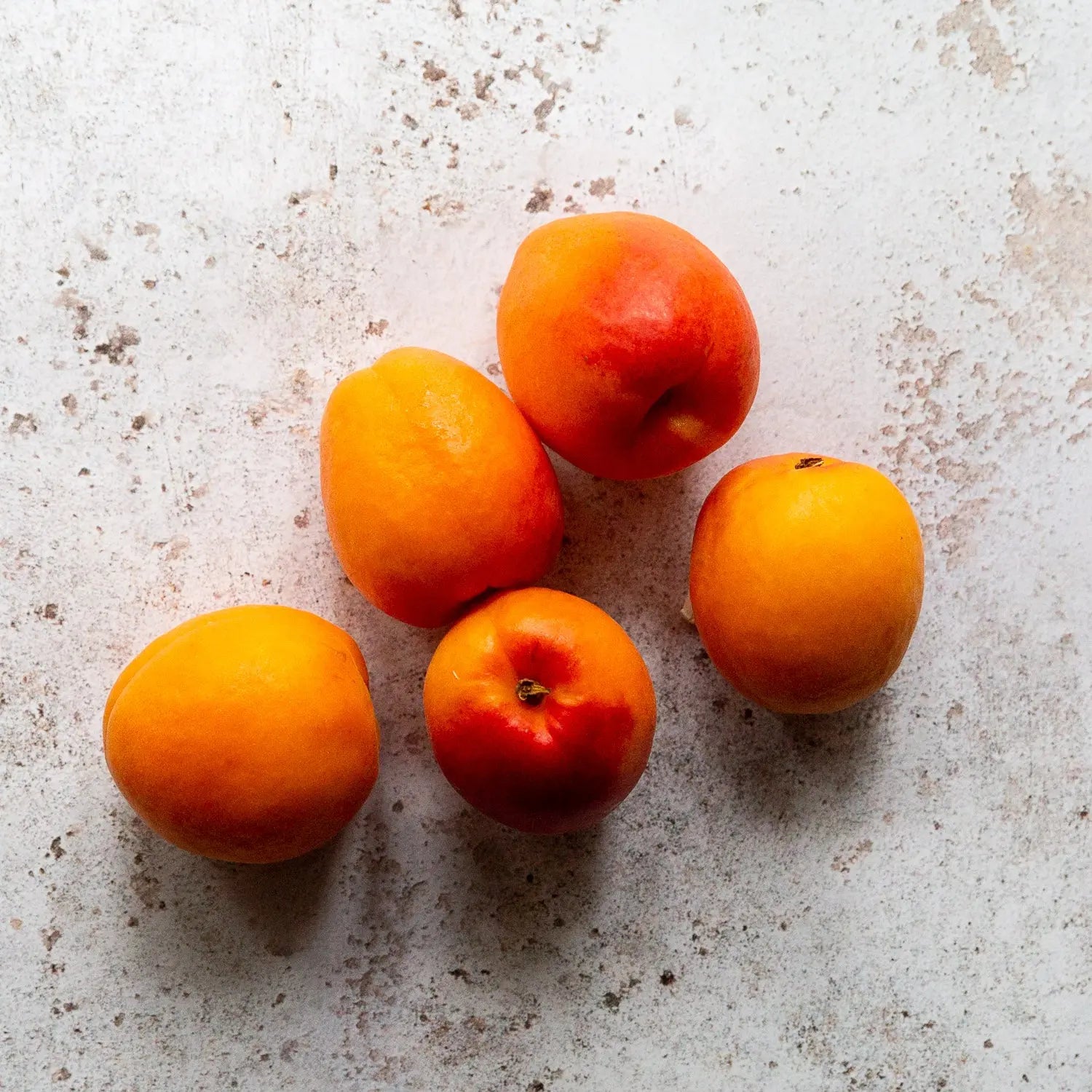
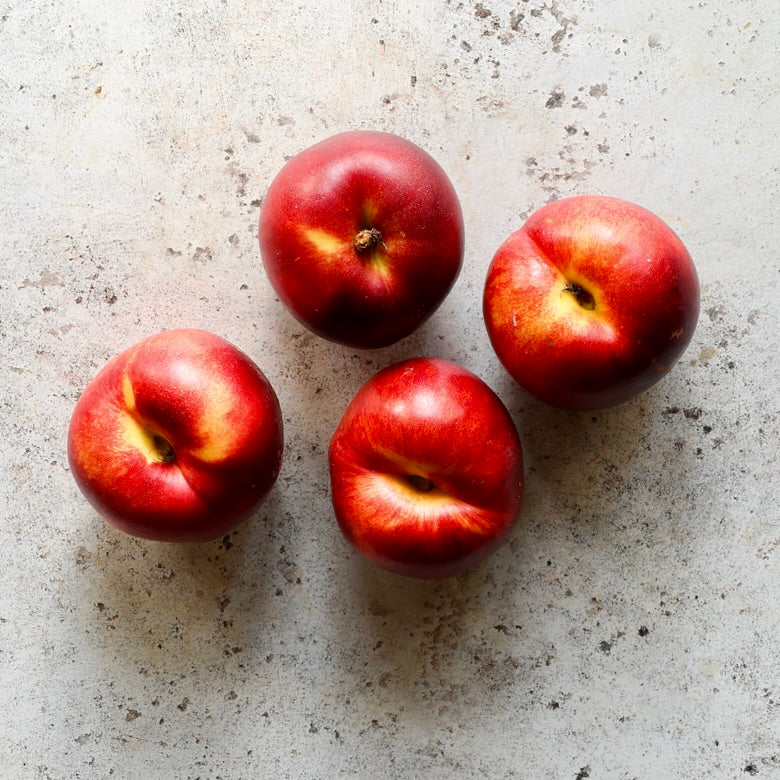
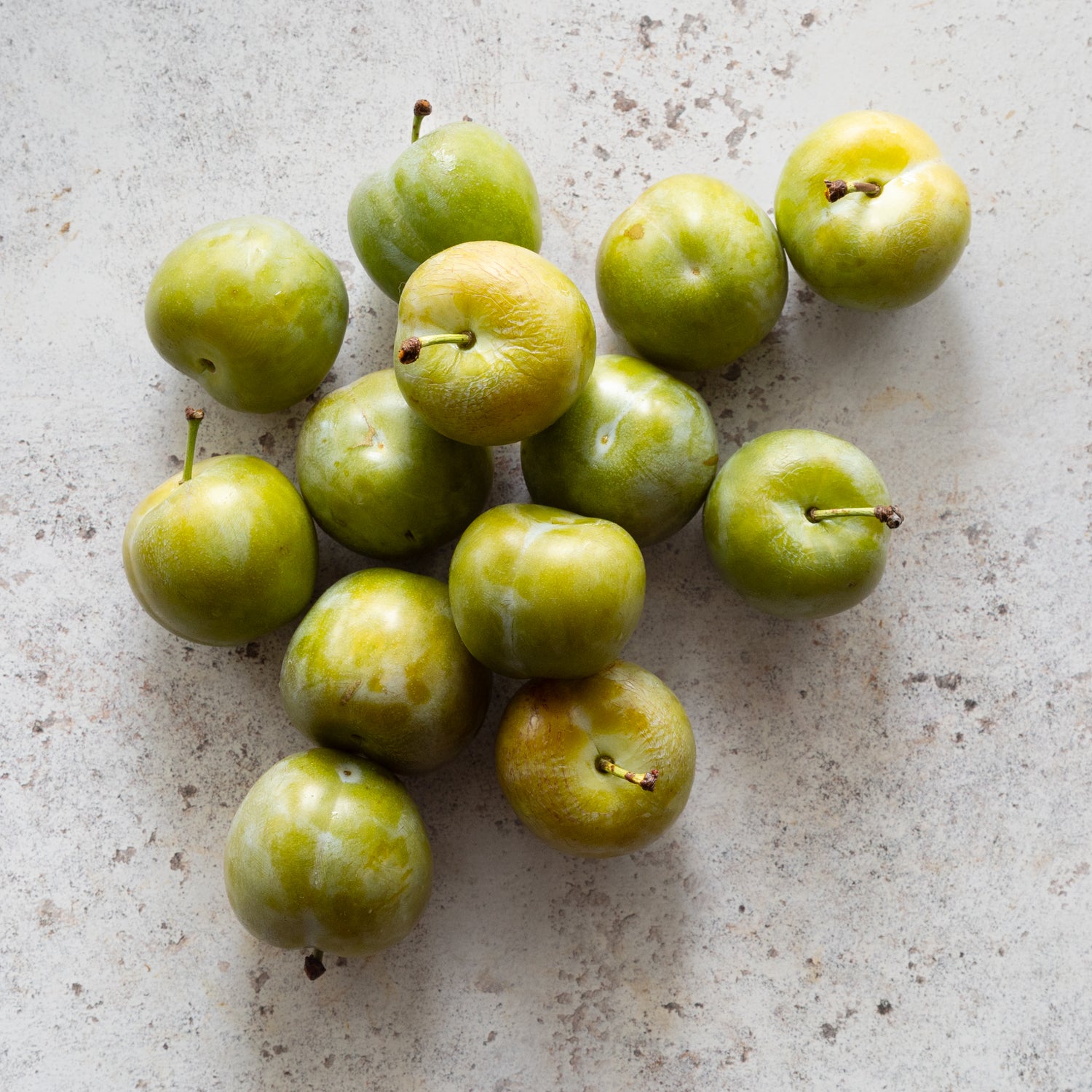
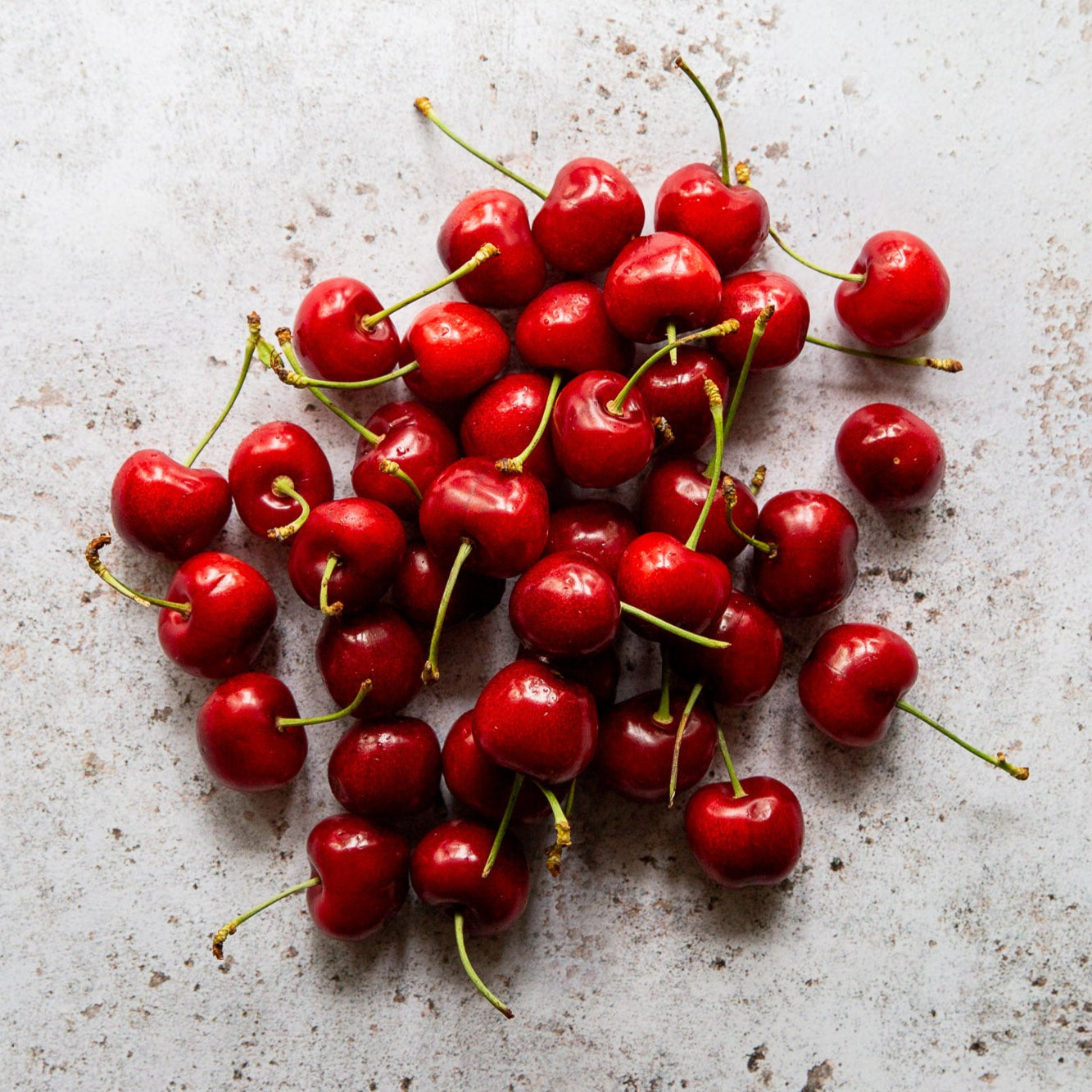
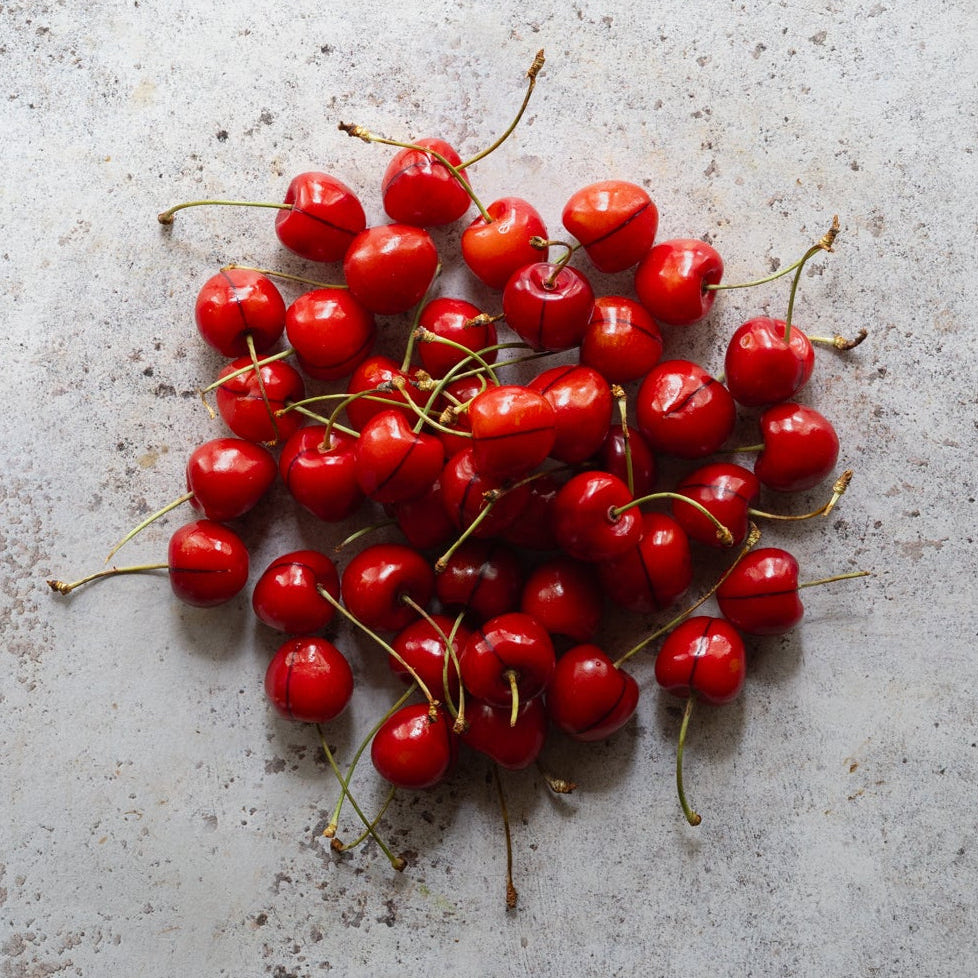
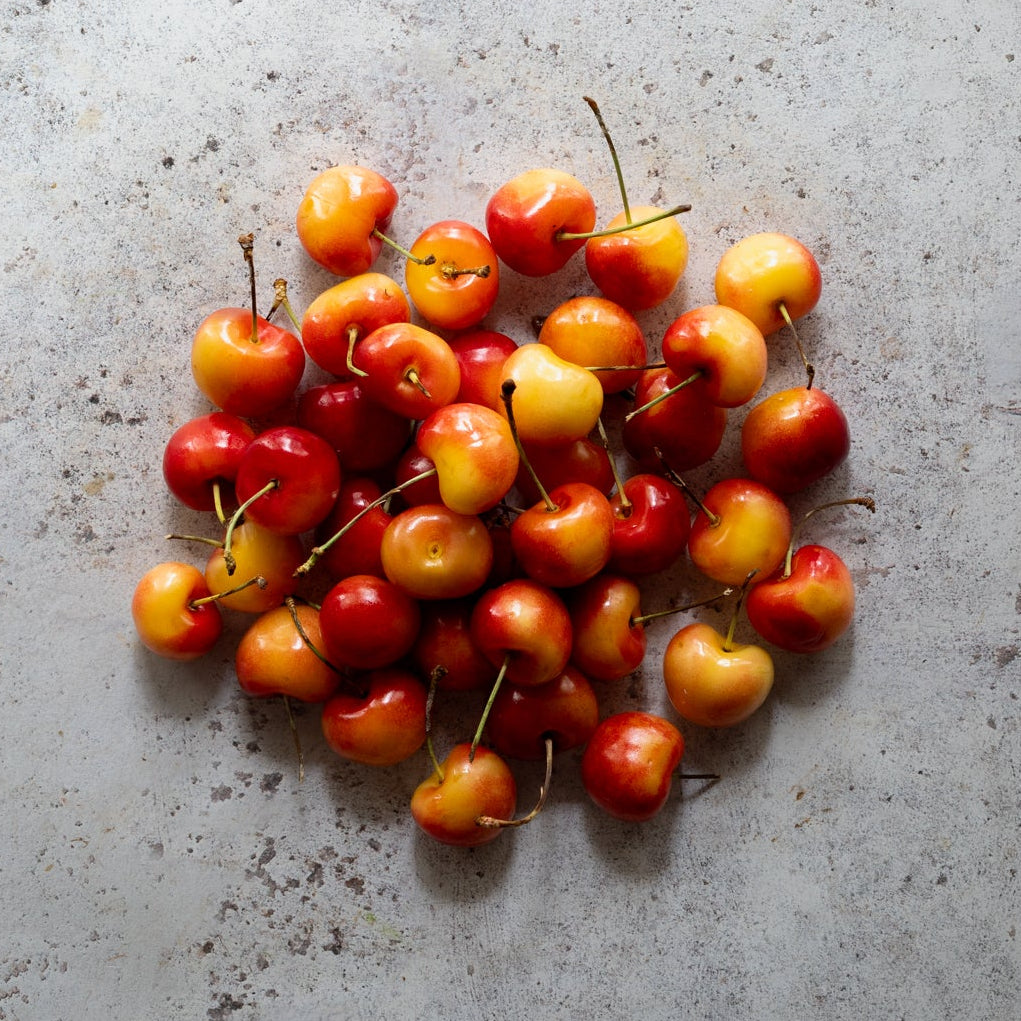
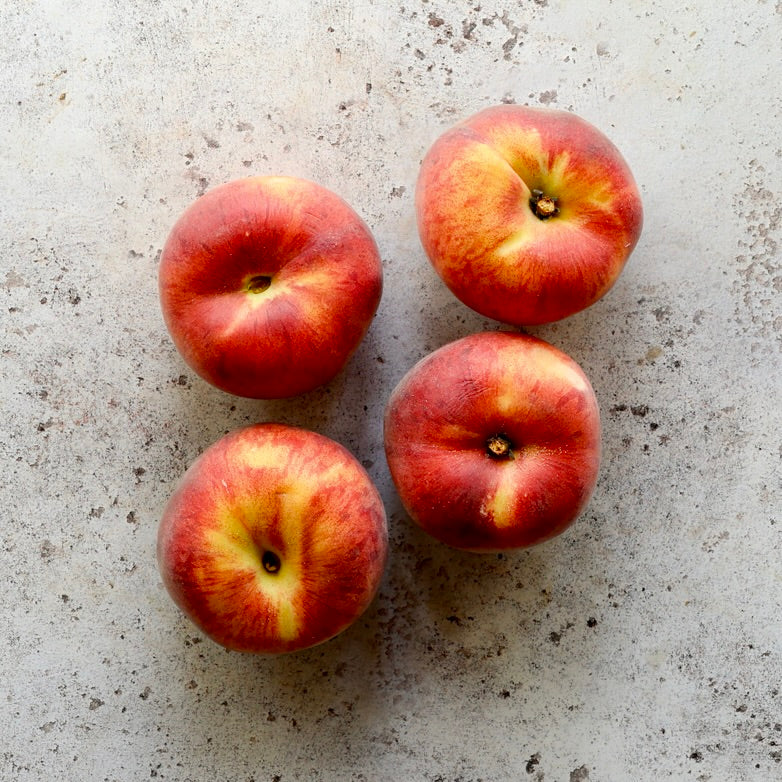
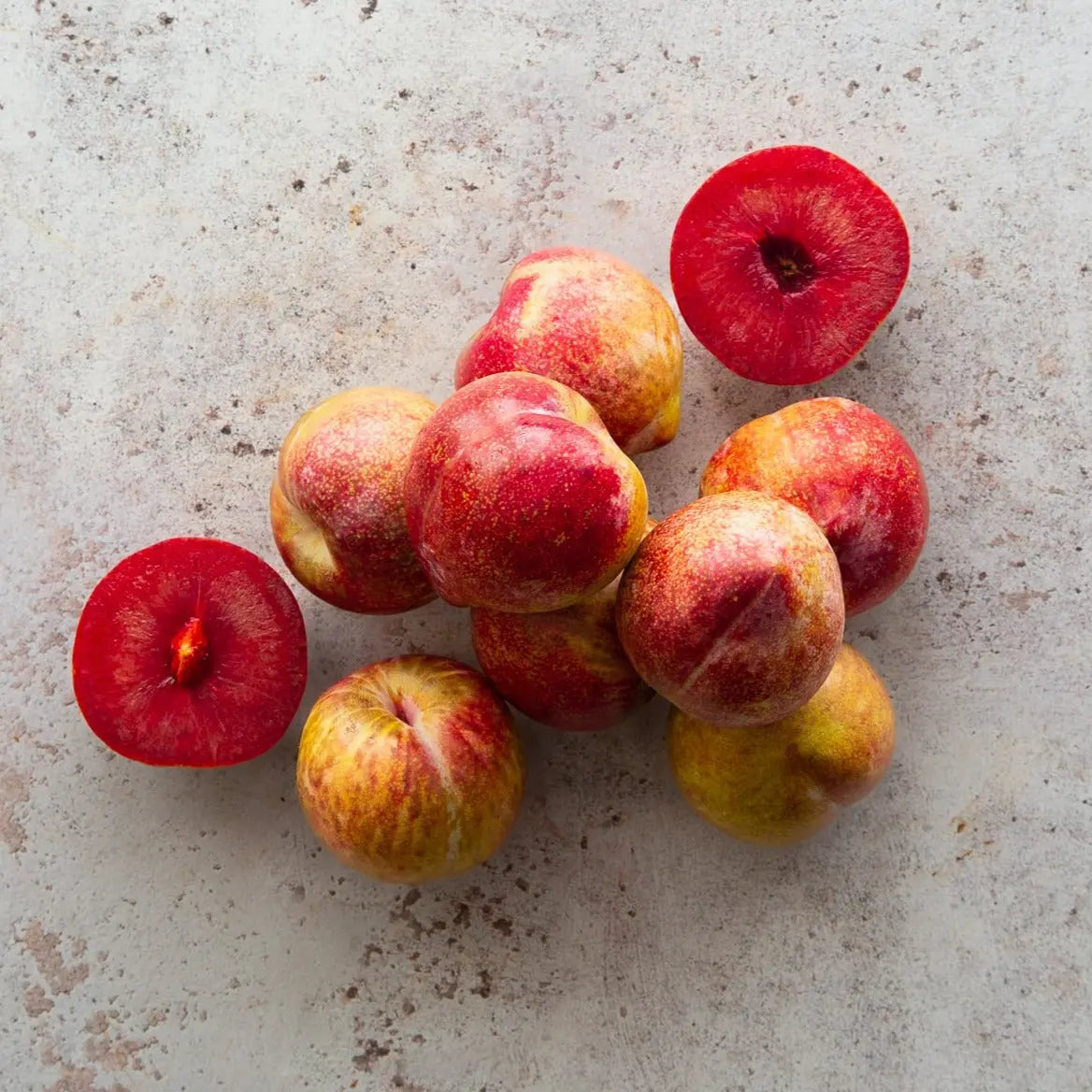
Pricia apricots from France in early summer — small, intensely fragrant and with the balance of acidity and honeyed sweetness that defines a proper apricot. Royal Tioga cherries from Spain, the early-season variety with deep colour, firm flesh and exceptional sugar levels. White and golden peaches and nectarines through high summer, sourced for ripeness rather than firmness — fruits that arrive ready to eat. Lovita plums and Reine Claude greengages in late summer, the latter widely regarded as the finest plum variety in the French tradition: small, green-gold, intensely sweet.
Figs
Solliès Black Figs
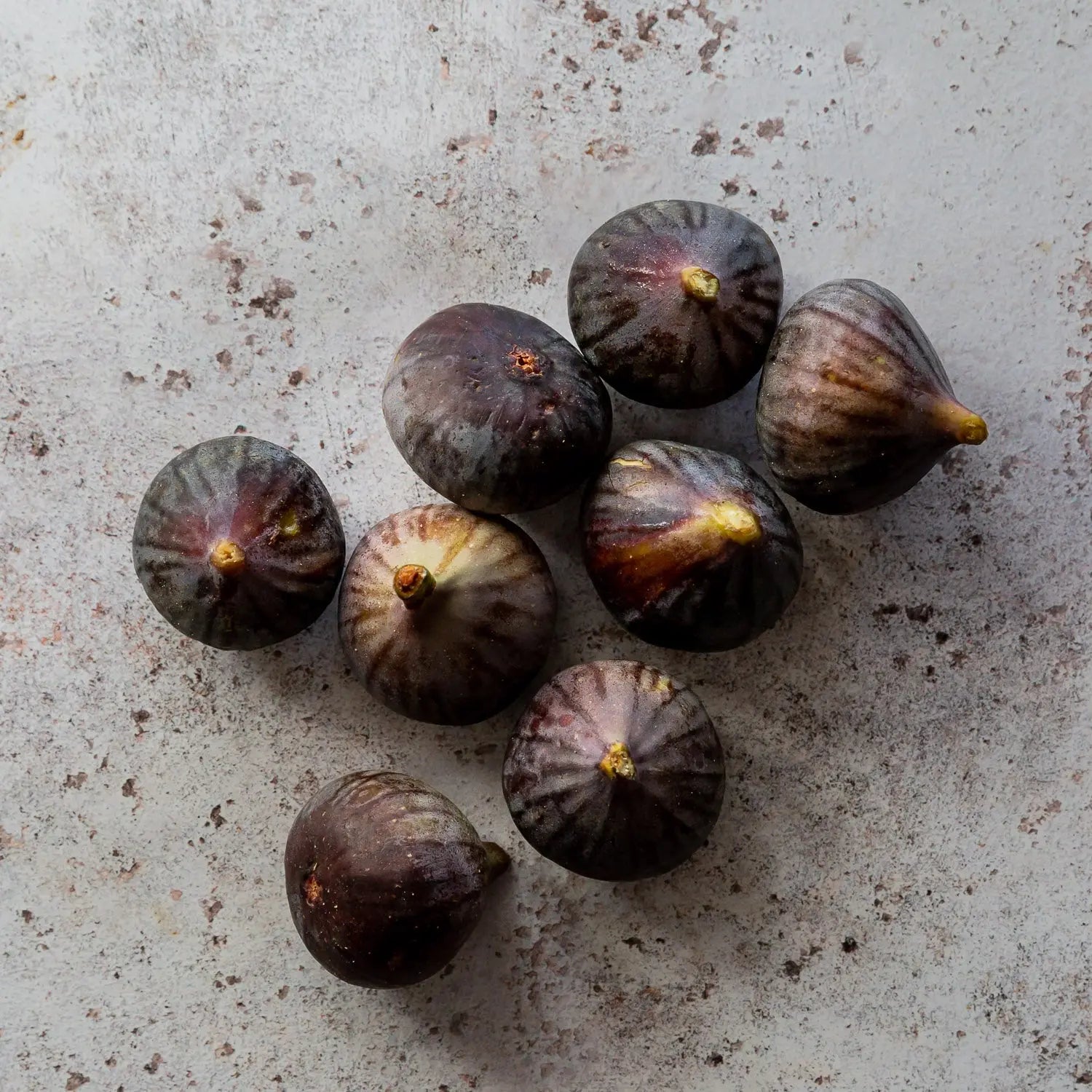
The benchmark for late-summer figs — deep purple, almost black, with a short season running August through October. The Solliès name carries AOP protection in France, and the figs themselves have a richness and balance of sweetness and acidity that justifies the reputation.
Forced Rhubarb
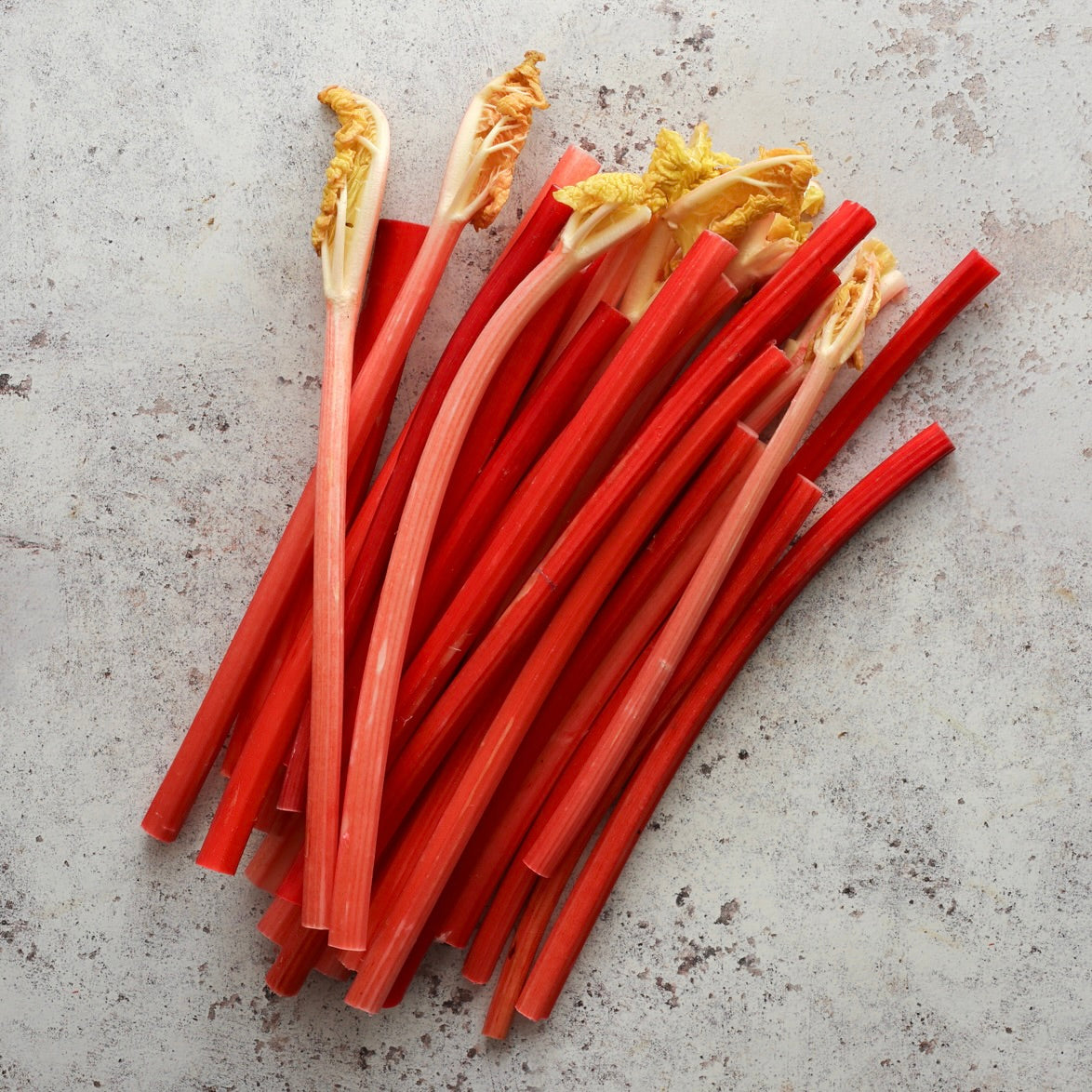
Yorkshire Forced Rhubarb
One of the few British protected-status ingredients in the collection — grown in the dark sheds of the Yorkshire Triangle and pulled in candlelight to preserve its bright pink colour and tender, intensely flavoured stems. January to March only.
Preparation & Pairing
The fruits in this collection have specific culinary personalities worth understanding before you cook with them.
Apples For Savoury Use
Chantecler and Reine des Reinettes both hold their structure well when cooked, making them the natural choice for tarte tatin, gratins alongside pork or game, or a classic Norman apple sauce. Their acidity balances rich proteins in a way that sweeter, lower-acid varieties cannot.
Passe Crassane For Cheese
A ripe Passe Crassane alongside a piece of aged Comté or a ripe Vacherin is one of the great French cheese course combinations. Serve at room temperature — never cold.
Stone Fruits At Room Temperature
Peaches, nectarines, apricots and plums all express their flavour properly only when warm. Refrigerate to slow ripening if needed, but always bring back to room temperature before eating. A ripe peach with a glass of chilled white Burgundy needs no further intervention.
Solliès Figs With Charcuterie
Figs and cured pork are a defining combination of the French summer table. Solliès figs split open at the table, served alongside a few slices of Jamón Ibérico or a dry-cured French saucisson, are the simplest and most effective application of the fruit.
Yorkshire Forced Rhubarb
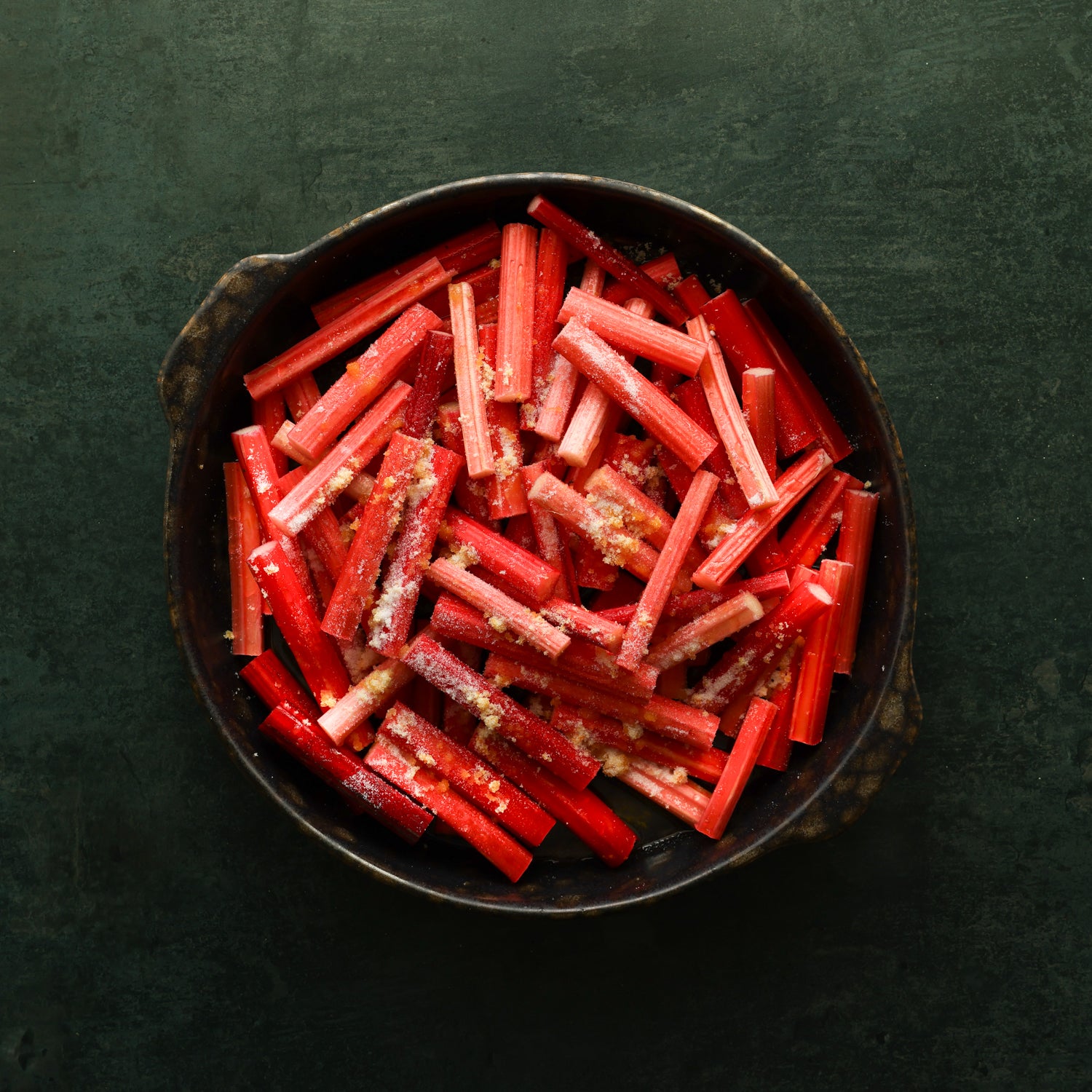
The delicacy of forced rhubarb deserves a light hand. A short bake in syrup with a vanilla pod, or poached gently and served with custard or panna cotta. Avoid heavy spicing or long cooking — the stems break down quickly and the flavour is subtle.
Storage & Ripening
Apples
Mouneyrac apples can generally be eaten on arrival, though Wolf's Paw and Gold Rush develop additional complexity with a few days at room temperature. Gold Rush mellows and sweetens out of cold storage. Chantecler has a naturally russeted skin which is a varietal characteristic, not a sign of poor quality. Store in a cool, dark place or refrigerate — up to a week at room temperature, two to three weeks refrigerated. Keep apples away from other produce as they emit ethylene which accelerates ripening in neighbouring fruit.
Passe Crassane Pears
Sold firm and must be ripened at room temperature before eating — typically three to five days depending on how firm they arrive. The pear is ready when the flesh around the stem end gives slightly under gentle pressure and the fruit is fragrant. Do not refrigerate before ripe. Once ripe, use within two to three days.
Stone Fruits
Peaches, nectarines, apricots and plums arrive ripe or close to it. Store at room temperature out of direct sunlight and use within three to five days. Refrigerate only to slow ripening if needed; bring back to room temperature before eating. Cherries are the exception — refrigerate on arrival and use within five to seven days.
Solliès Figs
Highly perishable. Store at cool room temperature and use within two to three days of delivery. Do not refrigerate — cold dulls the flavour and texture.
Yorkshire Forced Rhubarb
Wrap loosely and refrigerate. Use within five to seven days. The pink colour is brightest in the first few days after pulling.
Sourcing
The cornerstone of the apple and pear range is Mouneyrac — a French producer supplying Golden Rose, Chantecler, Wolf's Paw and Gold Rush across a season that runs from May through to April. Each variety is selected for its specific flavour profile and seasonal window. Reine des Reinettes and Passe Crassane come from the broader Rungis supply network, sourced from French growers producing to the standard demanded by the professional trade.
Solliès Black Figs come from Provence under AOP protection. Pricia apricots and Reine Claude plums are sourced from French growers at the height of their respective seasons. Royal Tioga cherries and Lovita plums come from Spain through the same channel; Fuji apples from New Zealand. Yorkshire forced rhubarb is sourced from the protected-status growers of the Yorkshire Triangle — the only British speciality fruit in the collection.
The standard at Rungis is set by the most demanding buyers in Europe, and we apply the same criteria to every variety in the collection.
Delivery
UK next-working-day delivery on orders placed before 2pm. Complimentary weekday delivery on orders over £225.