


Pricia Apricots
Choose options
Pricia is a French apricot cultivar — a modern variety bred by the INRA (Institut National de la Recherche Agronomique) as part of France's programme to develop apricots with better flavour, colour, and disease resistance than the older commercial varieties that had dominated European orchards for decades. It is an early-season variety, which means it reaches harvest ahead of many traditional cultivars, typically from late May or June depending on the growing region and the year.
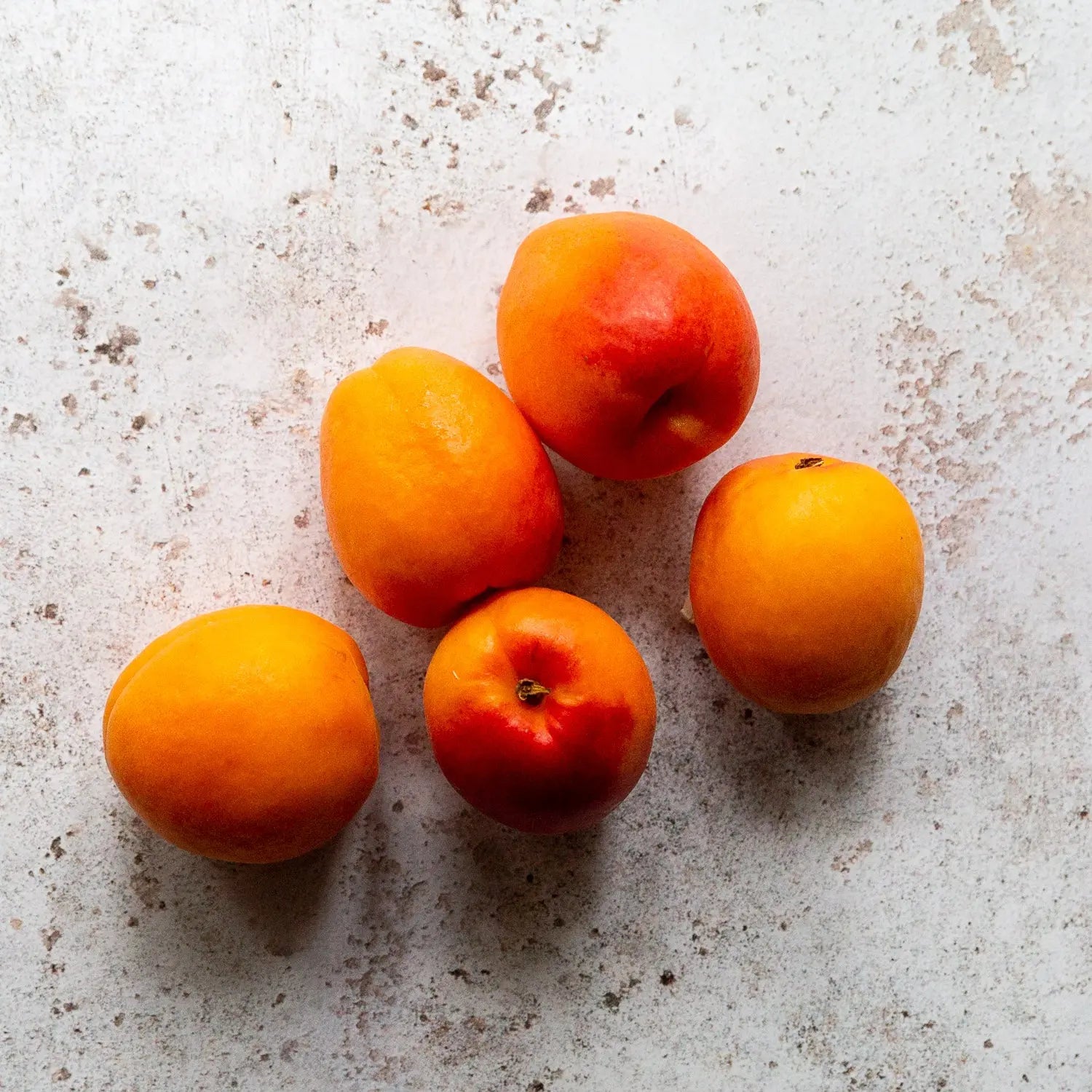
The fruit is medium-sized with a deep orange skin that develops a red blush on the sun-exposed side. The flesh is orange throughout, firm but not hard, and freestone — the stone separates cleanly from the flesh when the fruit is halved, which is a practical quality when you are cooking with them. The flavour leans sweet with a balancing tartness and an aromatic quality that is distinctly apricot — that musky, honeyed fragrance that sits somewhere between peach and plum but is not quite either. When a Pricia is ripe and at temperature, you can smell it before you bite into it.
Apricots are climacteric — they continue to ripen after harvest — but they are also notoriously temperamental in transit. The window between too firm and too soft is narrow, and the fruit bruises easily once ripe. If they arrive slightly firm, leave them at room temperature for a day or two until they give under gentle pressure and the fragrance intensifies. Once ripe, eat immediately or refrigerate for a day at most — a ripe apricot does not wait.
The gap between a good apricot and a bad one is wider than in almost any other fruit. A ripe, properly grown apricot is one of the best things you can eat in summer. An underripe, mealy, flavourless one — which is what most supermarket apricots are — is one of the most disappointing. The difference is almost entirely about how long the fruit was left on the tree before picking.
Origin: France
Ingredients: Pricia apricots (Prunus armeniaca).
Storage: Ripen at room temperature. Eat immediately once ripe.