



Artichokes
Artichokes reward good sourcing more than most vegetables. The difference between a fresh, properly grown artichoke and a tired one is not subtle — in flavour, in texture, and in how much work you have to do in the kitchen to get a good result.
We source three distinct varieties across an extended season: globe artichokes from Spain and Italy, violet artichokes from Italy, and Jerusalem artichokes from France. Each has a different character, a different season, and a different place in the kitchen.
A note: Jerusalem artichokes are not botanically related to globe or violet artichokes. They are a root vegetable — a tuber from the sunflower family — sharing nothing but the name. We stock all three because they're each exceptional in their own right.
The Varieties
Globe Artichokes
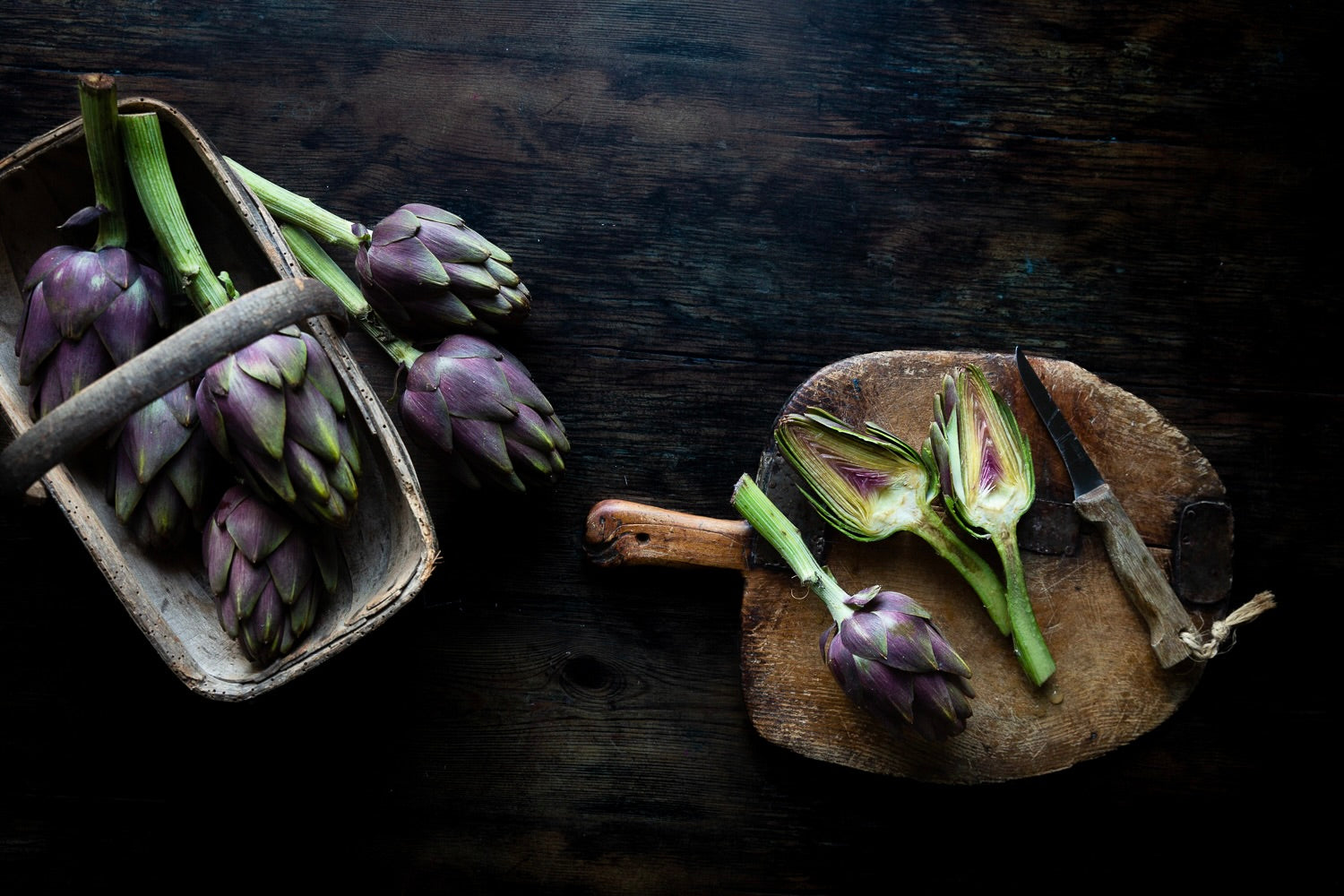
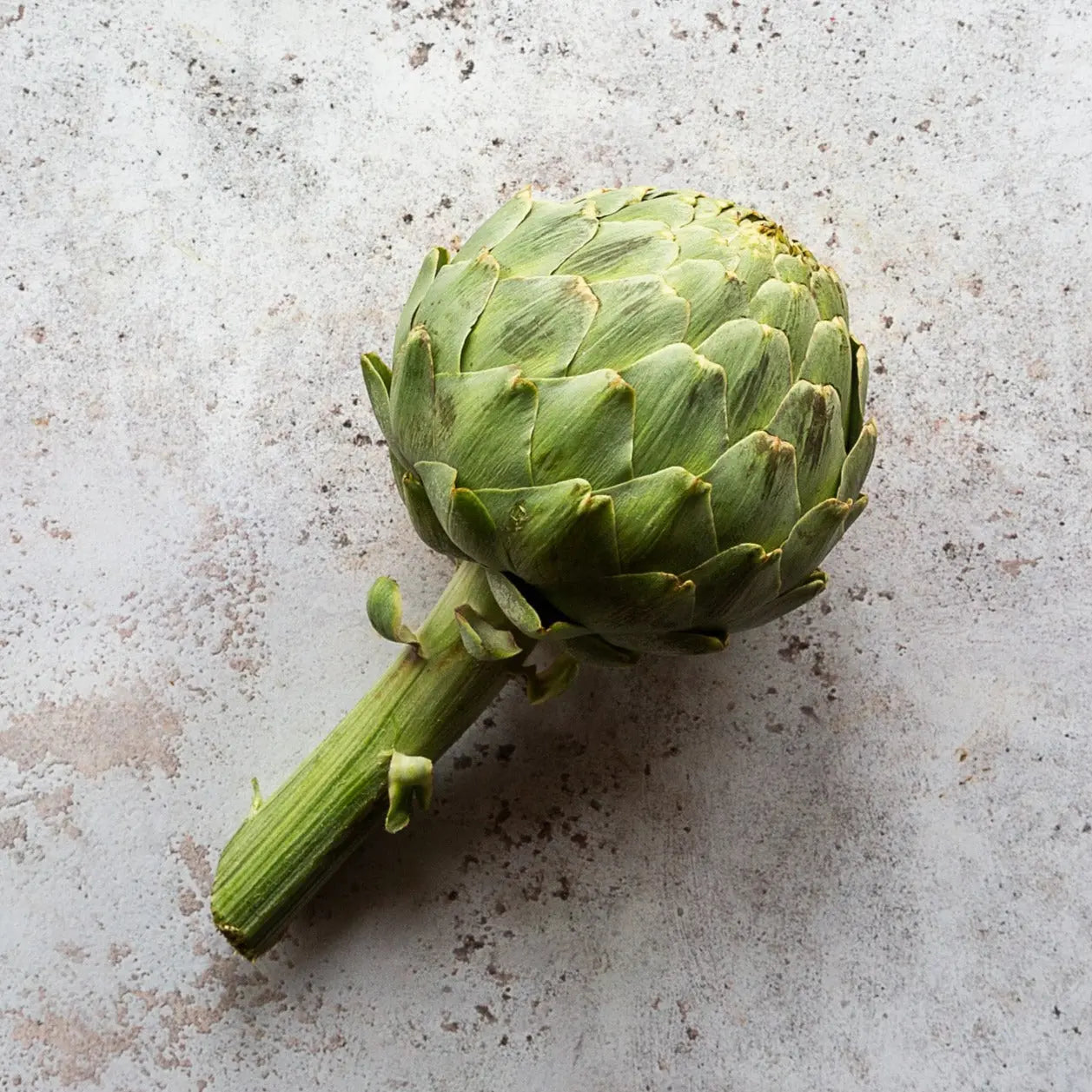
Large, architectural, and satisfying to eat as much for the ritual as for the flavour. The edible part is the heart at the base and the fleshy base of each leaf, scraped off with the teeth. Flavour is savoury, slightly bitter, with a mineral quality that makes them genuinely difficult to pair with wine.
Spanish globes tend to be large and firm, suited to boiling, steaming or roasting whole. Italian supply varies by season, equally well suited to whole cooking or preparation down to the heart.
Season: October to May.
Violet Artichokes
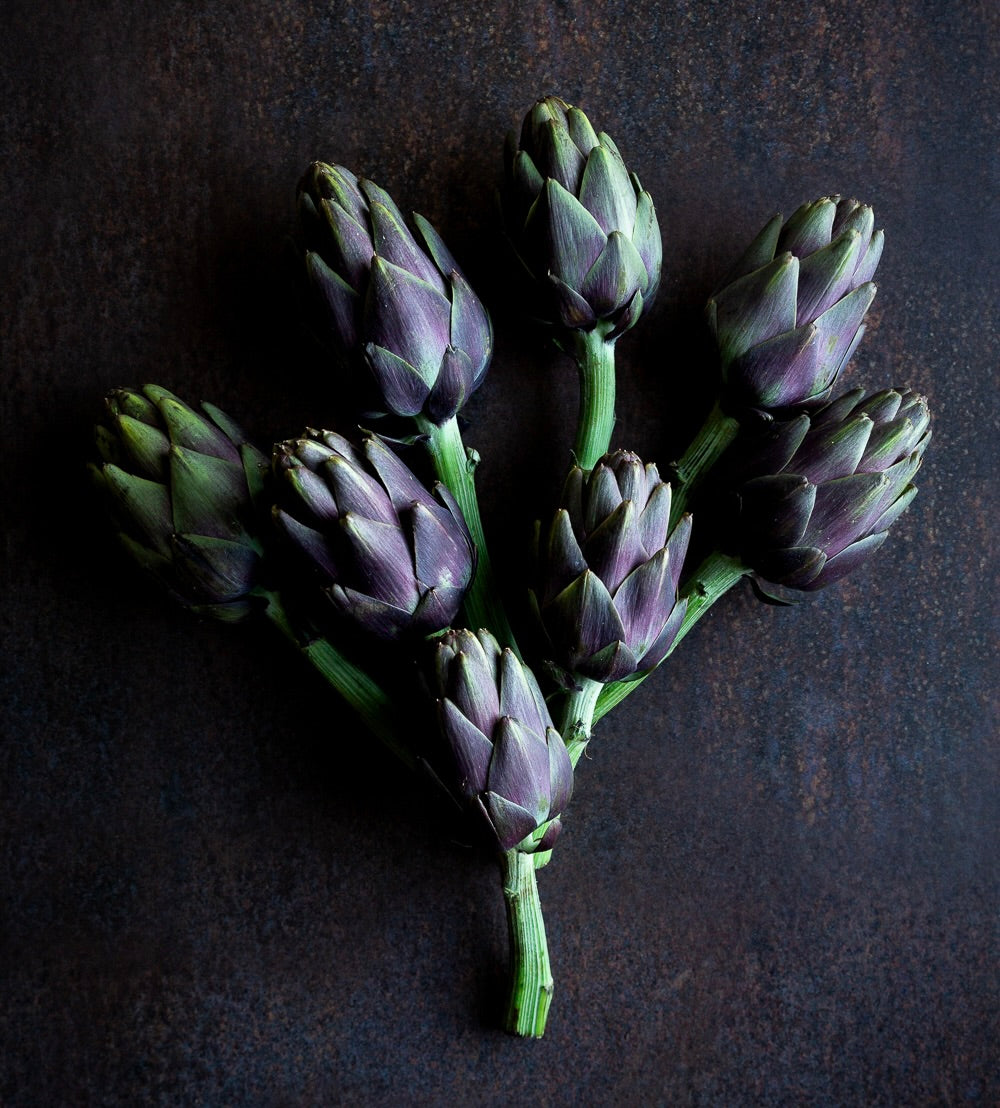
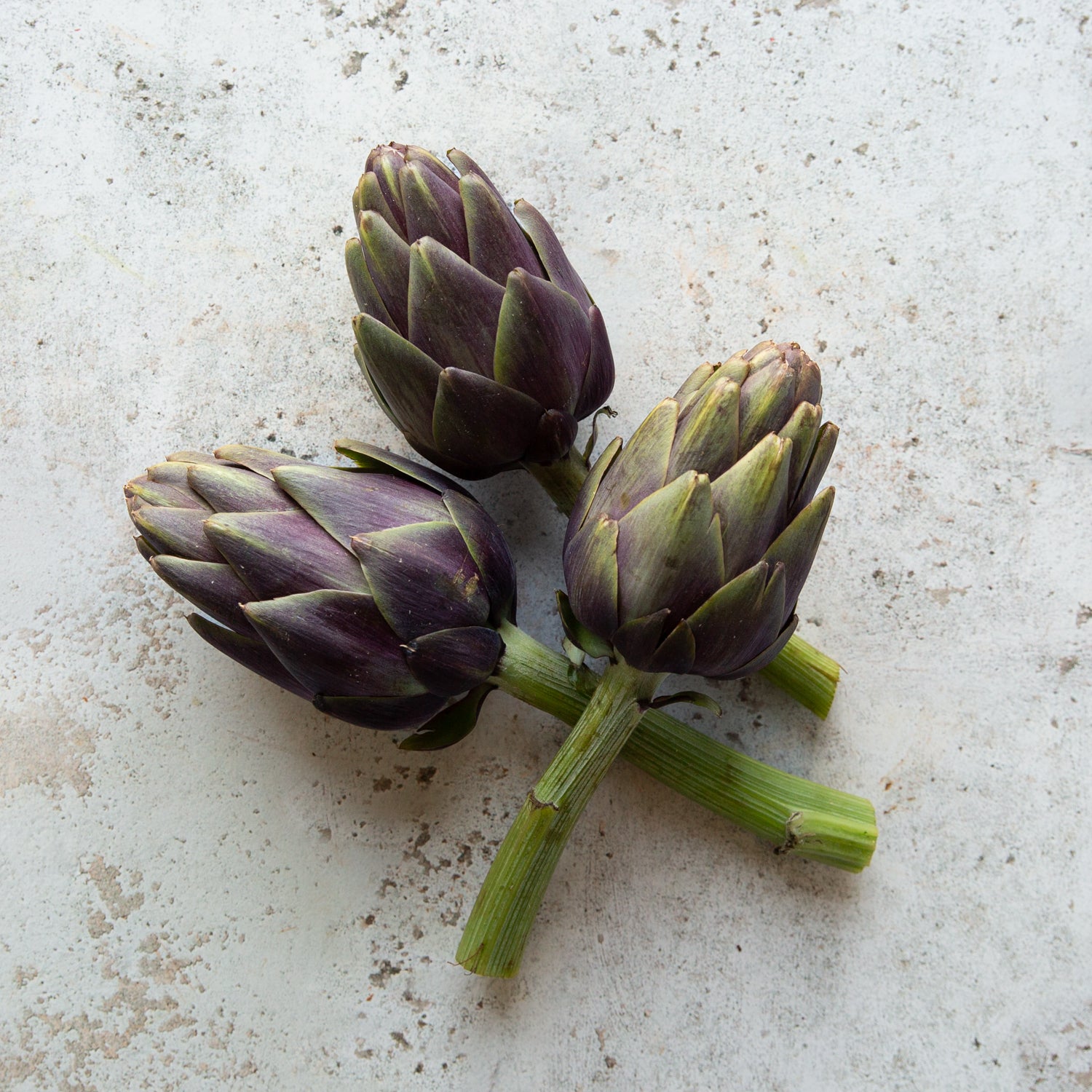
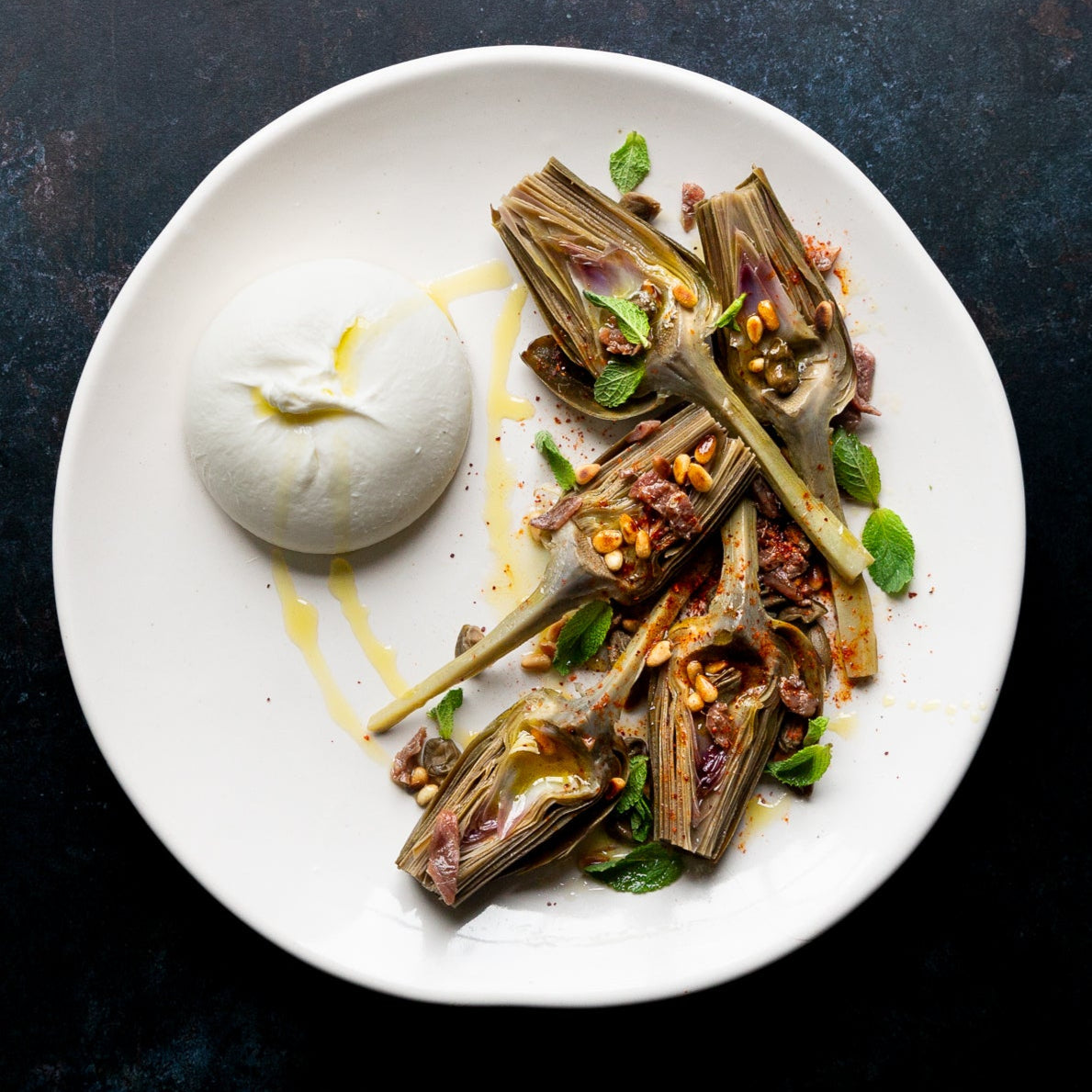
The Violetta di Chioggia from the Veneto — smaller and more tender, with tightly packed purple-tipped leaves and a heart that needs far less preparation than a globe. Young violets can be eaten almost whole, with only the outermost leaves and tips removed. Flavour is more delicate and less bitter than globe — well suited to raw preparations, quick frying, or Roman-style cooking with olive oil and herbs.
Season: a few weeks in spring. Stock sells quickly.
Jerusalem Artichokes
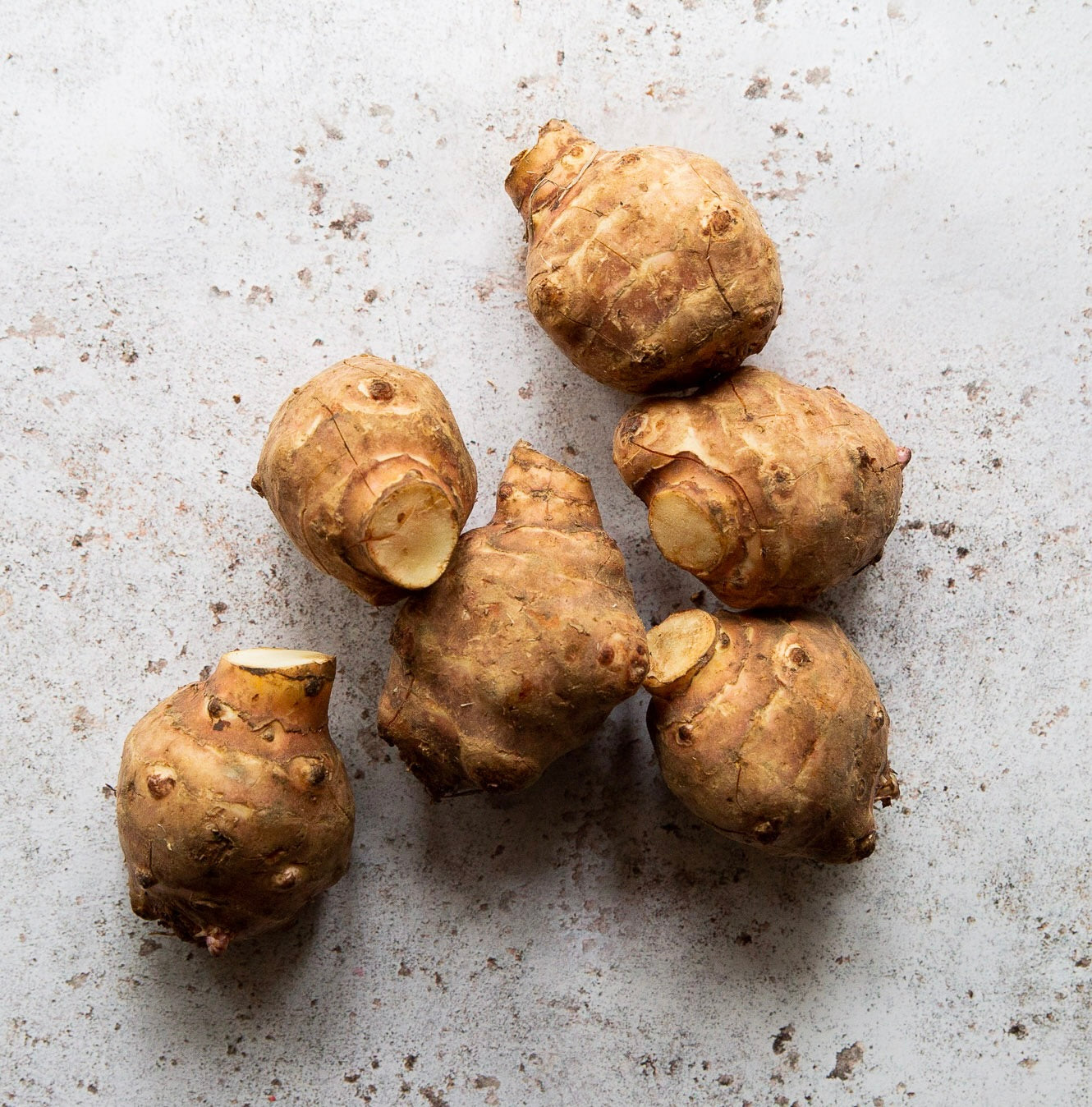
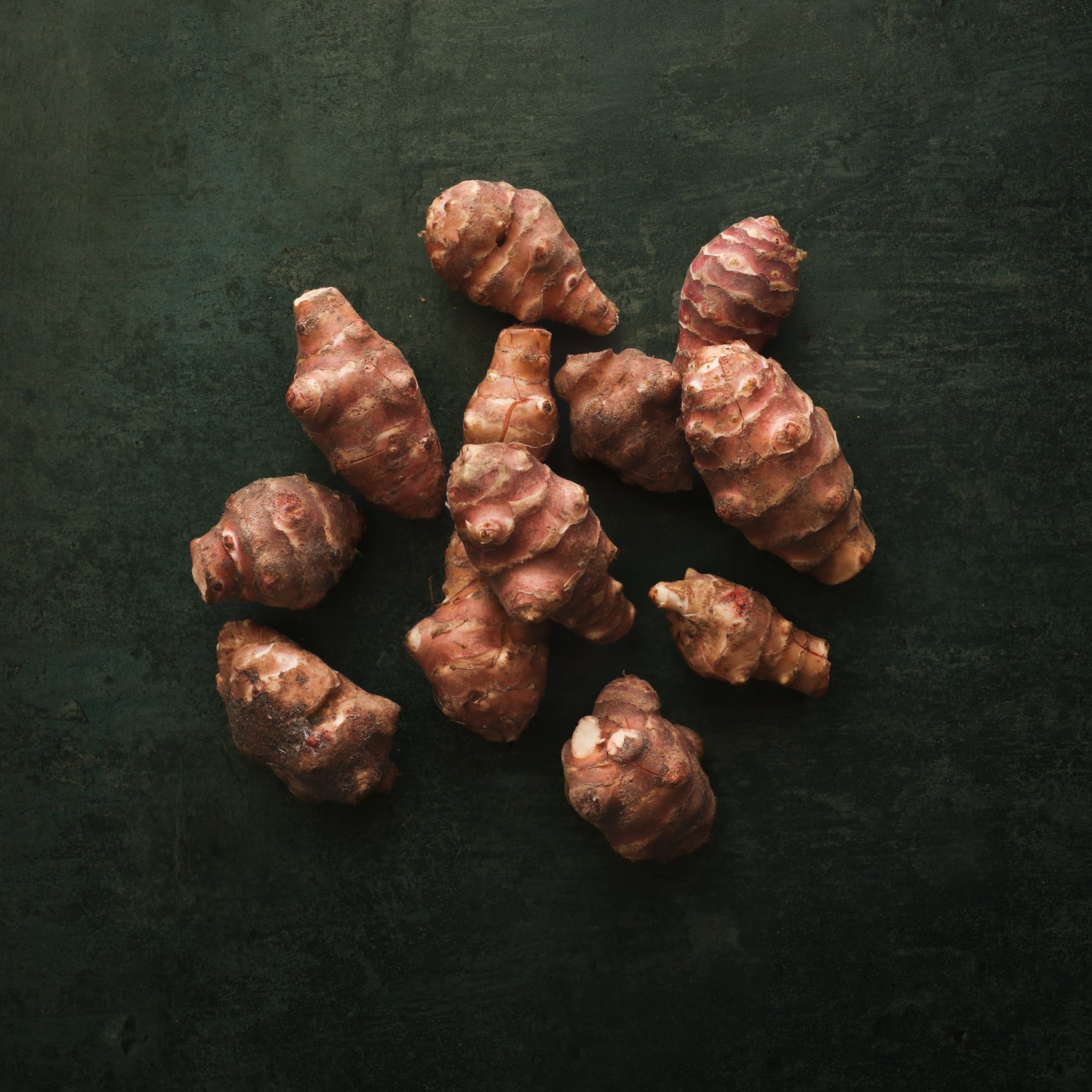
A root vegetable with a knobbly, irregular appearance and a flavour that's earthy, nutty and faintly sweet. They roast exceptionally well — caramelised exterior, creamy interior — and make one of the best cold-weather soups in the kitchen repertoire. The inulin content can affect digestion in large quantities, but cooked thoroughly and in reasonable portions this is rarely an issue.
Season: October to April. Best in deep winter, when cold has converted some of the starch to sugar.
Choosing Fresh Artichokes
For globe and violet, look for tight, compact leaves with no browning at the tips. The head should feel heavy for its size; the stem, if attached, firm. A squeaky sound when leaves are pressed together is a reliable sign of freshness. Avoid splayed, dry or yellowing leaves.
Jerusalem artichokes should be firm with no soft patches. The rough, knobbly skin is natural — cosmetic irregularity isn't a quality issue. Avoid any that feel hollow or show signs of mould.
How To Cook
Globe — Whole
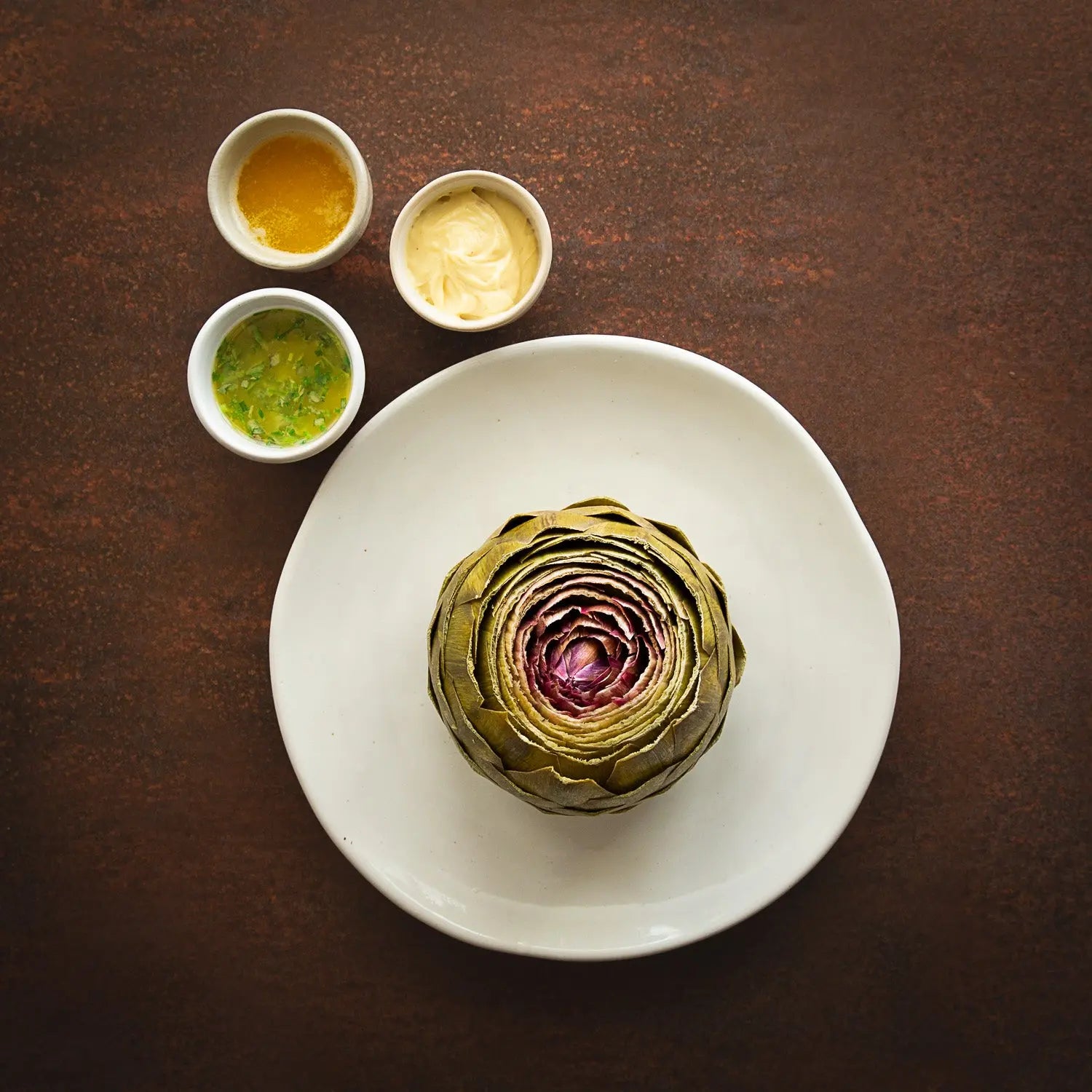
Trim the stem to 3cm, snap off the toughest outer leaves, scissor the spiky tips from the rest. Rub cut surfaces with lemon to prevent oxidation. Boil in heavily salted water with a halved lemon for 25 to 40 minutes depending on size — ready when an outer leaf pulls away cleanly and the base is easily pierced. Serve with melted butter, hollandaise or sharp vinaigrette.
Globe — To The Heart
Snap back the outer leaves until you reach the pale, tender inner leaves. Trim the top third, peel the stem, scoop out the fibrous choke with a spoon. Keep in acidulated water until ready to cook. Hearts braise, roast, or cook beautifully à la barigoule — quartered and slow-cooked in white wine, olive oil and aromatics.
Violet
Remove the toughest outer leaves, trim the tip, halve or quarter lengthways. If young enough the choke will be undeveloped and edible. Cook quickly in a hot pan with olive oil and garlic, or deep-fry for carciofi alla giudia. Also excellent raw — shaved thinly, dressed with good olive oil, lemon and Parmesan.
Jerusalem
Scrub under cold water — peeling is optional, the skin tenderises during cooking. Roast at 200°C in olive oil with salt for 35 to 45 minutes until golden. For soup, simmer in chicken or vegetable stock until completely soft, then blend with butter. Pairs naturally with truffle, hazelnuts and aged cheeses.
Pairings
Globe artichokes whole are a starter in themselves — a shared plate, pulled apart leaf by leaf, served with a dipping sauce. They're notoriously difficult with wine: cynarin makes many wines taste sweeter than they are. Crisp, dry whites with high acidity fare best — Pinot Grigio, Vermentino, Chablis. Avoid anything oaked or tannic.
Violet artichokes work well as part of an antipasti spread, alongside cured meats — particularly Ibérico or a good bresaola — and shaved hard cheeses. Keep accompaniments simple.
Jerusalem artichokes are a natural pairing with game, roast pork, and strong-flavoured fish like mackerel or turbot. A Jerusalem artichoke velouté with shavings of black truffle is one of the more straightforward ways to produce something that tastes genuinely special.
Storage
Globe and violet artichokes: store unwashed in the fridge, in a loosely sealed bag or wrapped in damp paper. Hold for 3 to 5 days, best in the first 2. Don't store airtight — they need some air circulation. Once cut or trimmed, keep in acidulated water to prevent oxidation.
Jerusalem artichokes: more robust. Store in a cool, dark place or the vegetable drawer for up to 2 weeks. Once cut, they oxidise quickly — keep in cold water with lemon until ready to cook.
Sourcing
We source for eating quality rather than cosmetic standards. Globe artichokes are perennial, which gives responsible growers a long-term incentive to maintain soil health — we work with farms in Spain and Italy who farm for flavour rather than yield. Violet artichokes from the Veneto are a heritage regional variety, grown in relatively small volumes; sourcing them supports the continuation of varieties that would otherwise struggle commercially. Jerusalem artichokes from France come from growers who treat them as a serious culinary crop rather than a commodity root.
We do not extend availability artificially. Shorter windows, better quality.
Delivery
UK next-working-day delivery on orders placed before 2pm. Complimentary weekday delivery on orders over £225.