


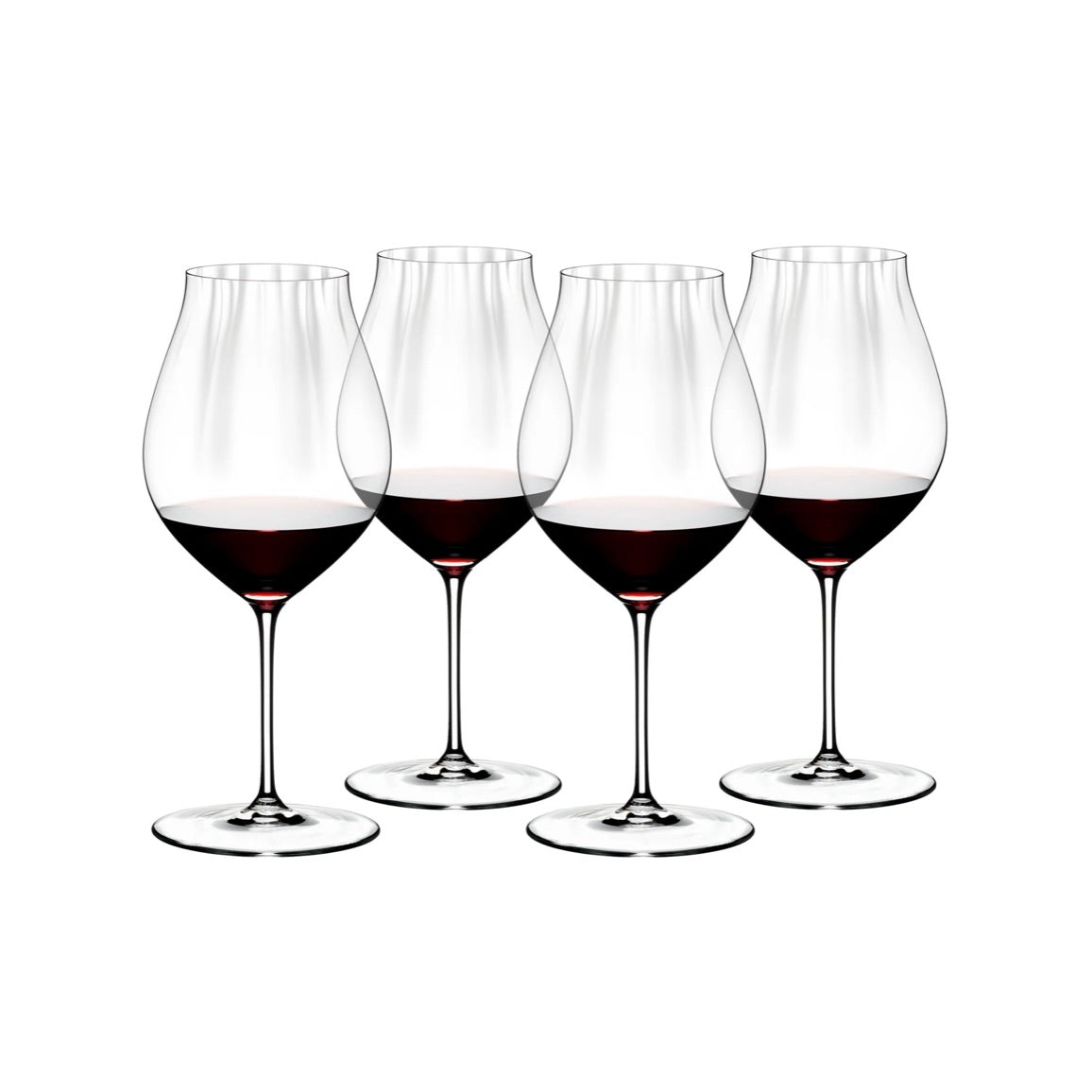
RIEDEL Performance Burgundy Glass x 4
Choose options
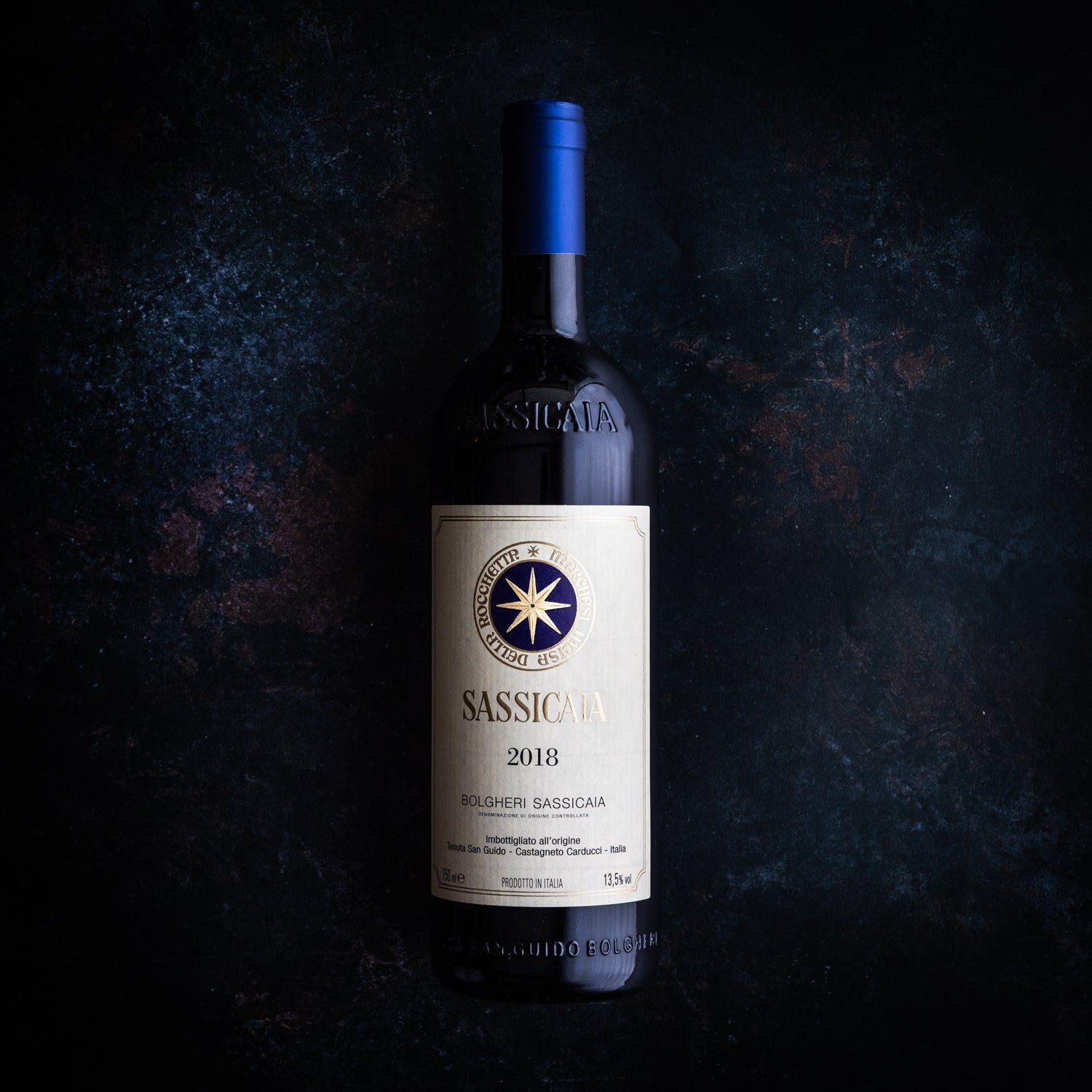
Burgundy asks more of a glass than most wine does, in either colour. Pinot Noir is pale and light-bodied and carries almost everything in aroma; white Burgundy is broad and worked, and shuts down in anything narrow. Both want the same thing — room. This bowl is 108mm across at the widest point, so the wine spreads out and meets air, then draws back in at a cut rim so what comes off it gathers rather than escapes. Riedel label the shape Pinot Noir. We call it Burgundy, because it is the glass for both.
Fine ridges run inside the bowl — Riedel's optic impact, first used on the Performance range and designed by Georg and Maximilian Riedel. They increase the inner surface area and catch the light as the wine moves. The glass is thin-blown crystal with a cut rim rather than a rolled one, on a long stem with a wide, stable base. A bowl this size wants holding by the stem, and a white wants it more.
Red Burgundy from village wines to Grand Cru, and Pinot Noir wherever else it is grown: Oregon, Central Otago, Baden, the Mornington Peninsula and increasingly England. White Burgundy and oaked Chardonnay — Meursault, Puligny-Montrachet, Chassagne-Montrachet, Corton-Charlemagne. Also Gamay and the Beaujolais crus, Nebbiolo from Barolo and Barbaresco, and older reds gone light and aromatic with age.
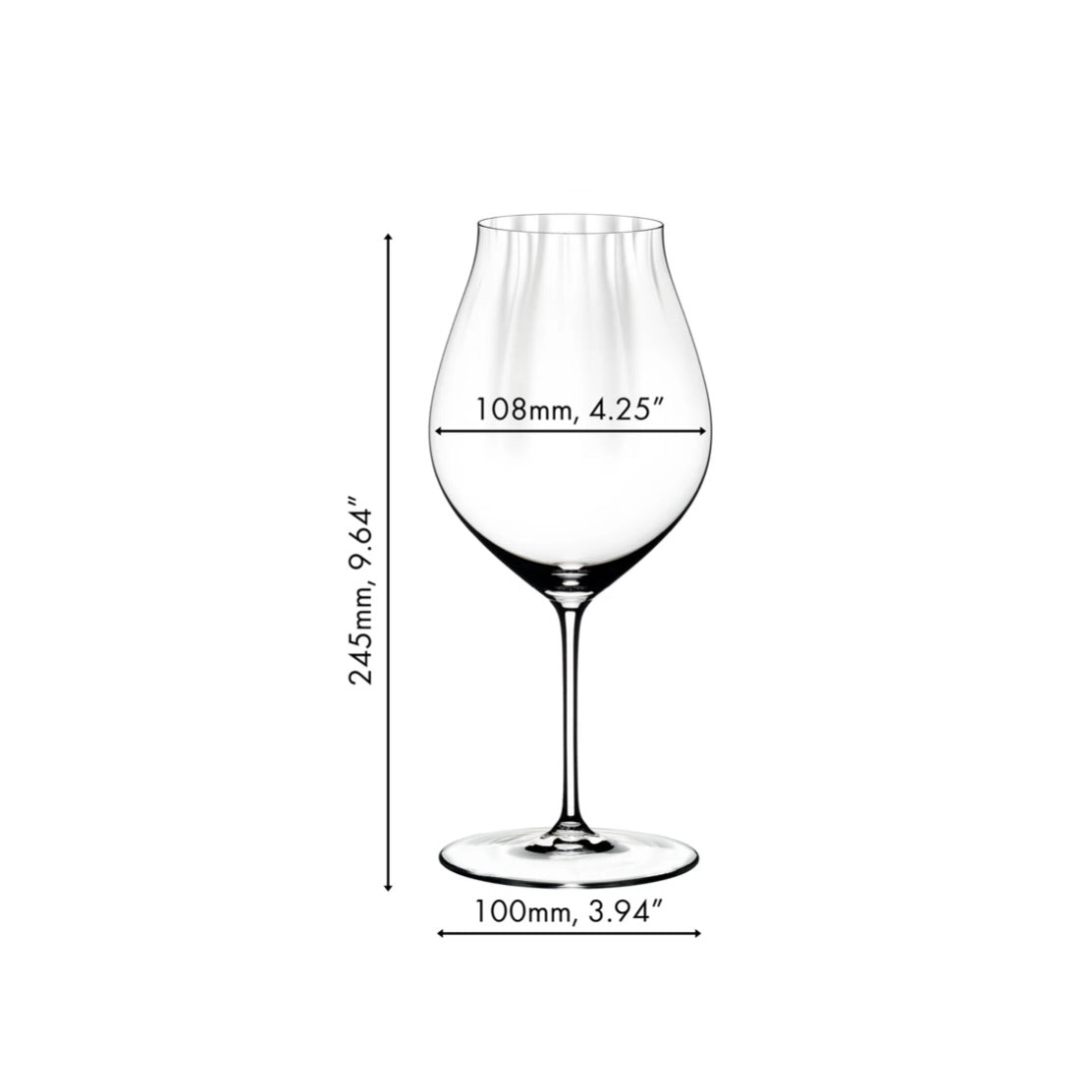
A set of four. The bowl holds 830ml to the brim and Riedel's serving measure is 125ml, which in a glass this wide looks like very little and is the right amount. 245mm tall, 108mm at the widest point. Premium machine-made crystal glass.
Dishwasher safe on a low temperature, with space around each glass so nothing touches — these bowls are wide and knock into things. If you wash by hand, use hot water and no detergent, which leaves a film that dulls aroma. Dry with a linen cloth and store upright rather than on the rim.
Riedel have been making glass since 1756, when the family founded a glassworks in Bohemia. They were dispossessed of it after the Second World War and began again in Austria, buying the Kufstein glassworks in 1956; Georg Riedel, the tenth generation, and his son Maximilian, the eleventh, run the company now. Claus Riedel, the ninth, was the first to design a glass around what was going into it rather than around how it could be decorated, stripping the form back to bowl, stem and base. His 1973 Sommeliers collection was the first stemware shaped for particular wines, and every serious glassmaker has followed since. The mouth-blown glasses are still made by hand at Kufstein; the machine-made ranges come from the factory at Weiden in Germany.