


Riedel Performance Champagne Glass x 4
Choose options
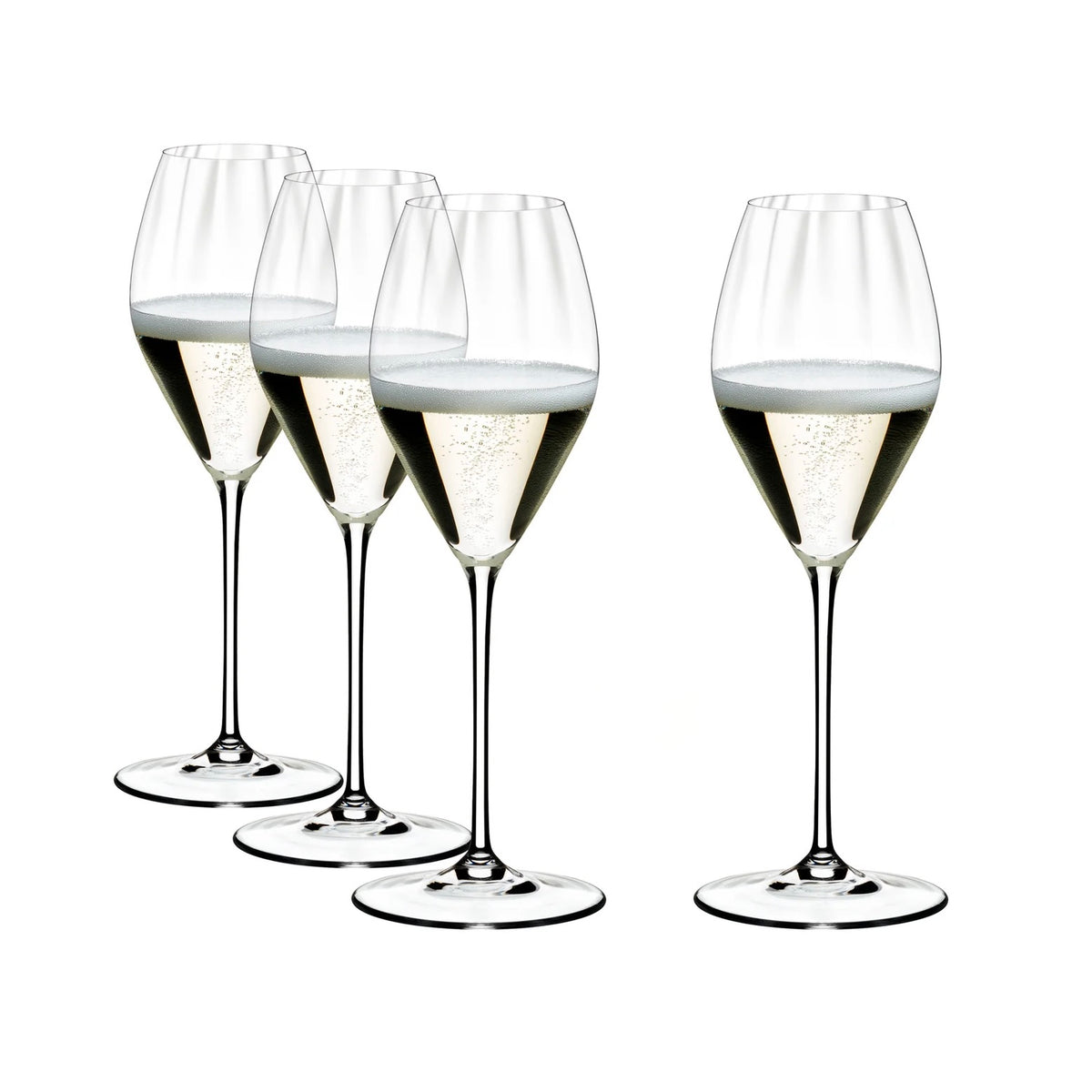
Champagne in a narrow flute looks right and smells of very little. This is the other approach: a tall, egg-shaped bowl, open enough at the top to carry aroma, drawn in again at a cut rim. Riedel etch a small rough point into the base of the bowl, because bubbles need something to form on, so the bead rises from a single place in a fine, even stream rather than scattering off whatever the glass happens to have. It is what keeps the mousse in a bowl this open.
Performance was the first Riedel range to carry the optic impact bowl, designed by Georg and Maximilian Riedel. Fine ridges run inside the glass, increasing the inner surface area and catching the light as the wine moves. Beyond that the shape does the work: width across the middle to give the wine air, a rim that draws back in to gather aroma above it. The glass itself is thin-blown crystal with a cut rim rather than a rolled one, on a long stem with a wide, steady base. The weight sits where it should.
It takes Champagne of any style, including Blanc de Blancs, Blanc de Noirs and rosé, along with Prosecco, Cava, Sekt and English sparkling. It suits sweet wines well too, from Sauternes to Beerenauslese and ice wine.
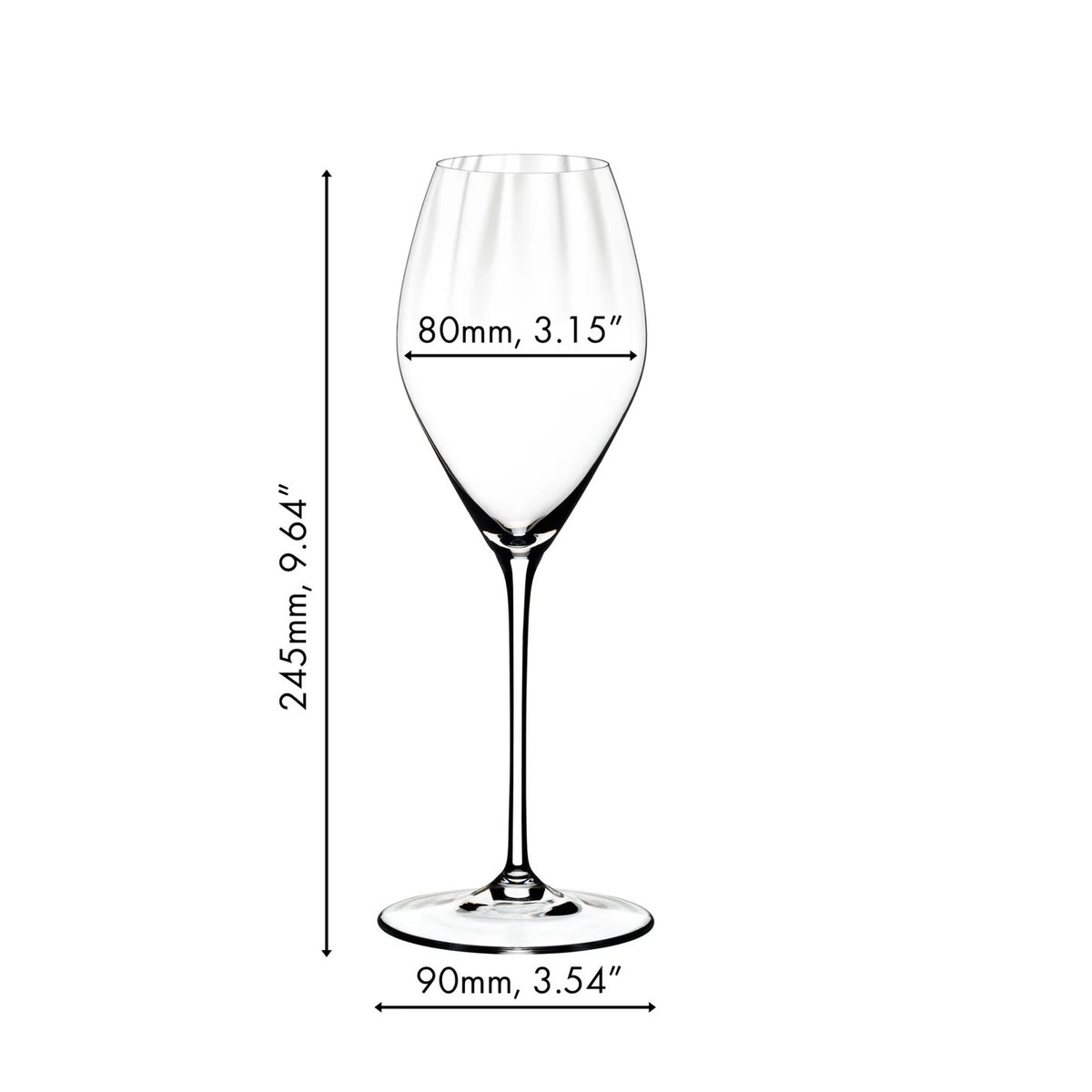
A set of four. The bowl holds 375ml to the brim and Riedel's serving measure is 100ml. 245mm tall, 90mm at the widest point, 80mm across the rim. Premium machine-made crystal glass.
Dishwasher safe on a low temperature, with space around each glass so nothing touches. If you wash by hand, use hot water and no detergent; any residue kills the mousse, which is the one thing this glass exists to protect. Dry with a linen cloth and store upright rather than on the rim.
Riedel have been making glass since 1756, when the family founded a glassworks in Bohemia. They were dispossessed of it after the Second World War and began again in Austria, buying the Kufstein glassworks in 1956; Georg Riedel, the tenth generation, and his son Maximilian, the eleventh, run the company now. Claus Riedel, the ninth, was the first to design a glass around what was going into it rather than around how it could be decorated, stripping the form back to bowl, stem and base. His 1973 Sommeliers collection was the first stemware shaped for particular wines, and every serious glassmaker has followed since. The mouth-blown glasses are still made by hand at Kufstein; the machine-made ranges come from the factory at Weiden in Germany.