





Fresh Japanese Yuzu
Choose options
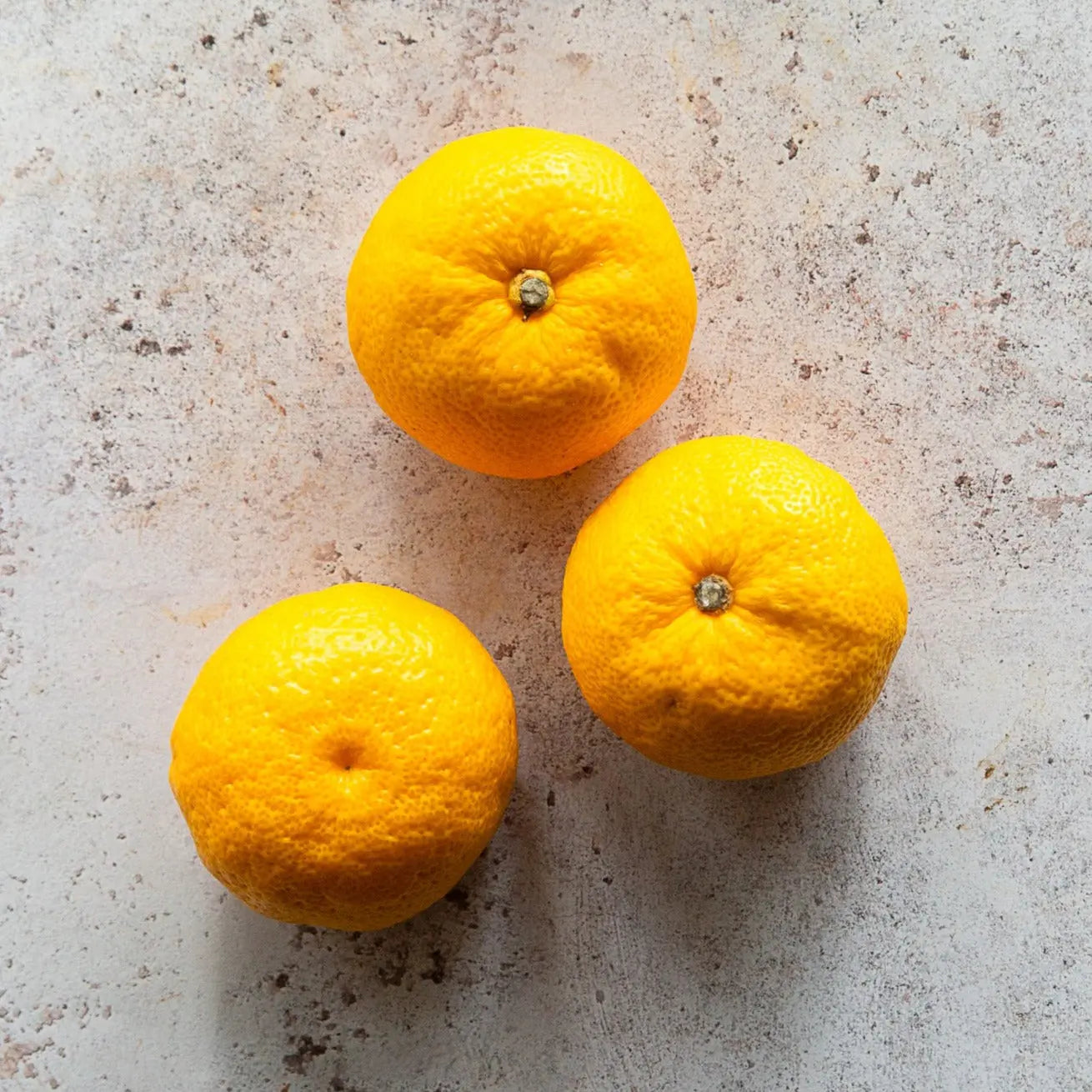
Yuzu (Citrus junos) is a Japanese citrus fruit — small, rough-skinned, and intensely aromatic. It is a natural hybrid, thought to have originated in central China as a cross between the mandarin orange (Citrus reticulata) and the ichang papeda (Citrus ichangensis), and has been cultivated in Japan for over a thousand years. The fruit is rarely eaten as a fresh citrus in the way you would eat an orange or a lemon. Its value is almost entirely in the zest and the juice, both of which carry a flavour profile that no other citrus replicates.
The aroma is the defining characteristic. It sits somewhere between grapefruit, mandarin, and lime, but with a sharp floral top note — sometimes compared to bergamot or lemon verbena — that is immediately distinctive. The compound primarily responsible is yuzunone, a ketone found in the rind oil that does not occur in significant quantities in any other commercial citrus. This is why yuzu smells like yuzu and not like a blend of other things, even though the individual flavour components overlap with fruits most people already know.
The flesh is pale, seedy, and yields relatively little juice — a single fruit might give you a tablespoon at most. The juice is tart and concentrated, closer in acidity to lemon than to orange, and is used sparingly. A few drops into a ponzu, a dressing, or a broth will shift the flavour noticeably. The zest is where the volume of aroma sits and is the part most often used in professional kitchens — finely grated over seafood, into custards and curds, or stirred through a vinaigrette at the last moment.
The fruit stores well in the fridge for up to two weeks. If you have more zest than you need immediately, freeze it — it holds its aroma well from frozen.
Origin: Japan
Ingredients: Fresh yuzu (Citrus junos).