


Buddha's Hand
Choose options
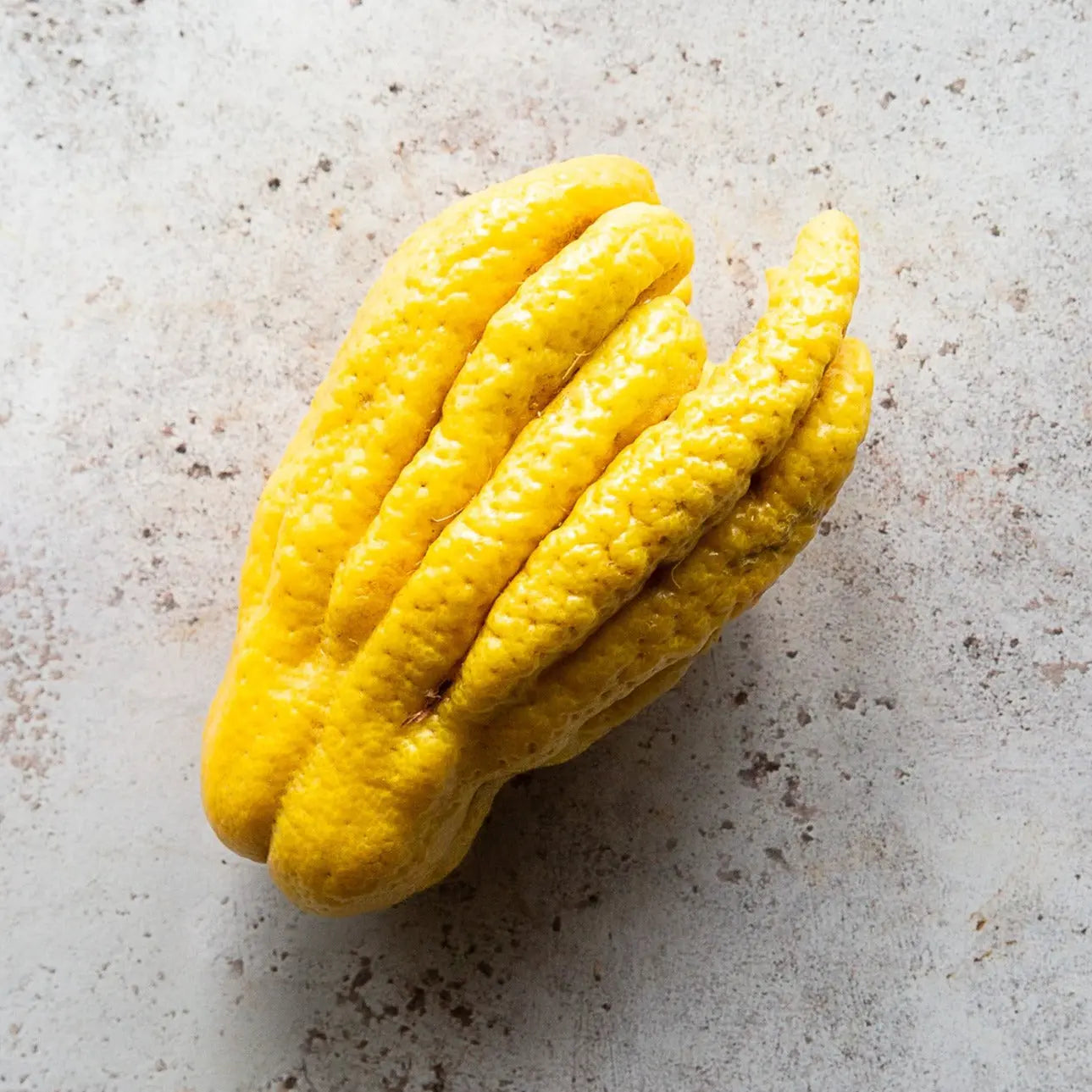
An extraordinary-looking citrus fruit with no juice, no pulp, and no seeds — just thick, fragrant peel divided into long, finger-like segments that splay outward from a central base. The resemblance to a hand with outstretched fingers gives it its name, and no two fruits look quite the same — some are tightly closed, others open and sprawling, depending on maturity and growing conditions.
Buddha's hand (Citrus medica var. sarcodactylis) is a variety of citron, one of the original ancestral citrus species from which lemons, limes, and oranges were all eventually hybridised. It has been cultivated across East and South Asia for centuries, primarily for its fragrance — the essential oil concentration in the rind is exceptionally high, producing an intense, sweet, floral citrus scent that is closer to lemon blossom than to lemon juice. The aromatic compound responsible for much of this character is limonene, present here in higher concentrations than in most other citrus fruits.
The absence of flesh and juice is the defining characteristic. The entire fruit is peel and pith, and unlike standard citrus, the pith is not bitter — it is mild, faintly sweet, and entirely edible. This means the whole fruit is usable, which makes it fundamentally different from a lemon or orange where you would discard the white interior. Zest it, slice it, candy it, or infuse it — there is nothing to throw away.
These are grown in Spain, where the Mediterranean climate provides the long, warm growing season the variety needs. The season runs from October through March.
Origin: Spain.
Ingredients: Buddha's hand citron (Citrus medica var. sarcodactylis)