



Castelfranco Radicchio
Choose options
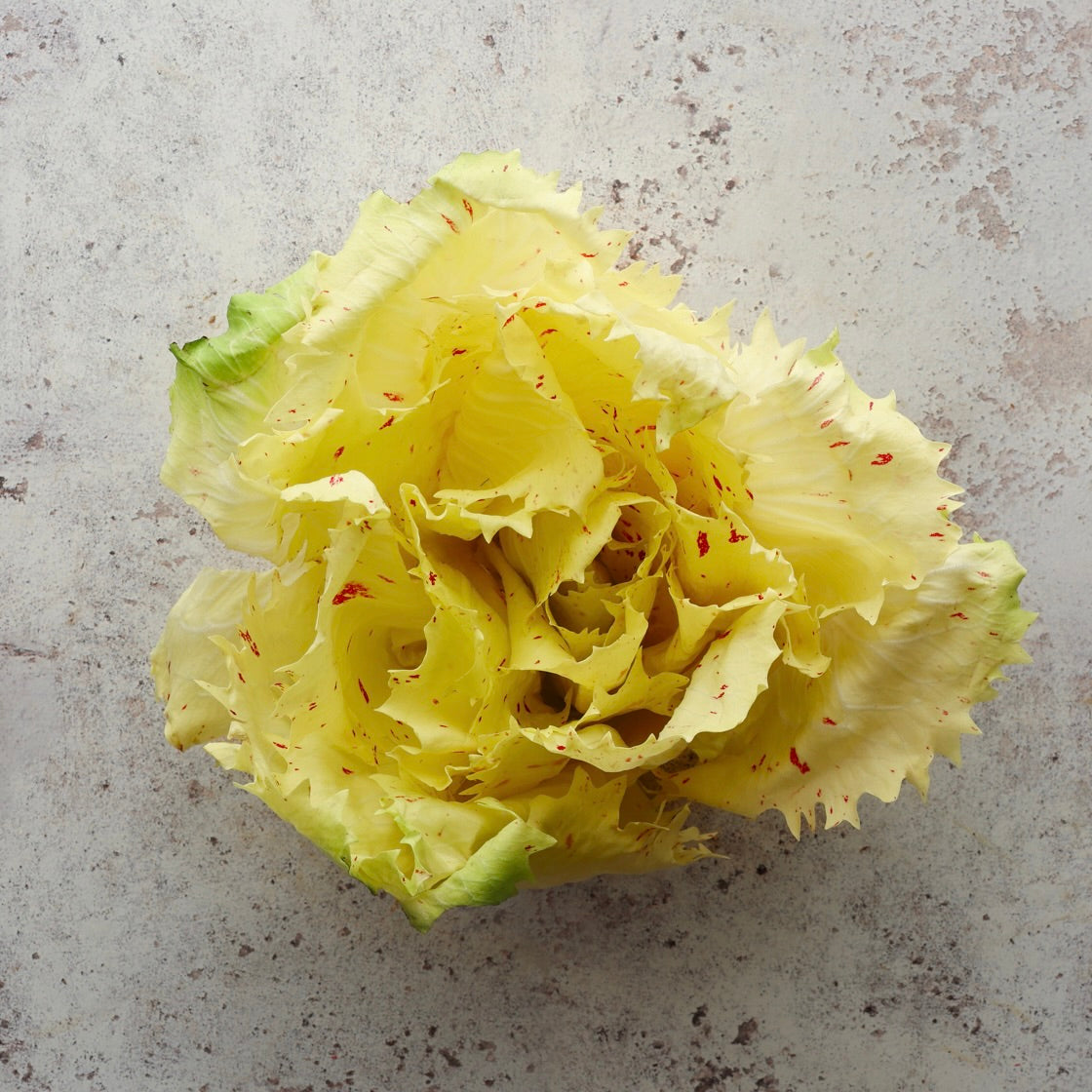
Castelfranco radicchio (Cichorium intybus var. foliosum) from the Veneto — the variegated winter chicory known in Italy as la rosa di Castelfranco for the way its pale, speckled leaves open like a flower. Each head is cream to pale yellow with irregular burgundy and wine-red flecks scattered across the leaves, making it one of the most visually striking salad ingredients you can put on a plate. The variety originated in Castelfranco Veneto and is a cross between radicchio di Chioggia and a broad-leaf endive, combining the bitterness of one parent with the mildness of the other.
What makes Castelfranco different from the more familiar red radicchios is restraint. The bitterness is present but gentle — closer to a suggestion than a statement — and the leaves have a delicacy that Chioggia and Trevigiano cannot match. This is a salad leaf, not a cooking leaf. It is at its best raw, torn into wide pieces and dressed simply, where the colour and texture can do the work. The mild bitterness pairs well with sweet and rich counterpoints: walnuts, pear, Gorgonzola, honey, pancetta, aged balsamic. It can be lightly grilled, but heat diminishes both the colour and the subtlety that make it worth buying in the first place.
Origin: Veneto, Italy
Ingredients: Castelfranco radicchio (Cichorium intybus var. foliosum)
Storage: Refrigerate immediately. Store whole and unwashed in the crisper drawer or loosely wrapped. Use within three to four days — the leaves wilt faster than denser chicory varieties.