


Chervil Root
Choose options
Chervil root (Chaerophyllum bulbosum) is a winter root vegetable from the same botanical family as parsley, carrot, and the herb chervil — though it is a different species from the leaf herb. It is one of the so-called légumes oubliés (forgotten vegetables) of French cooking: once common in 19th-century kitchen gardens, it largely disappeared from commercial cultivation during the 20th century and is now grown only by a small number of specialist producers.
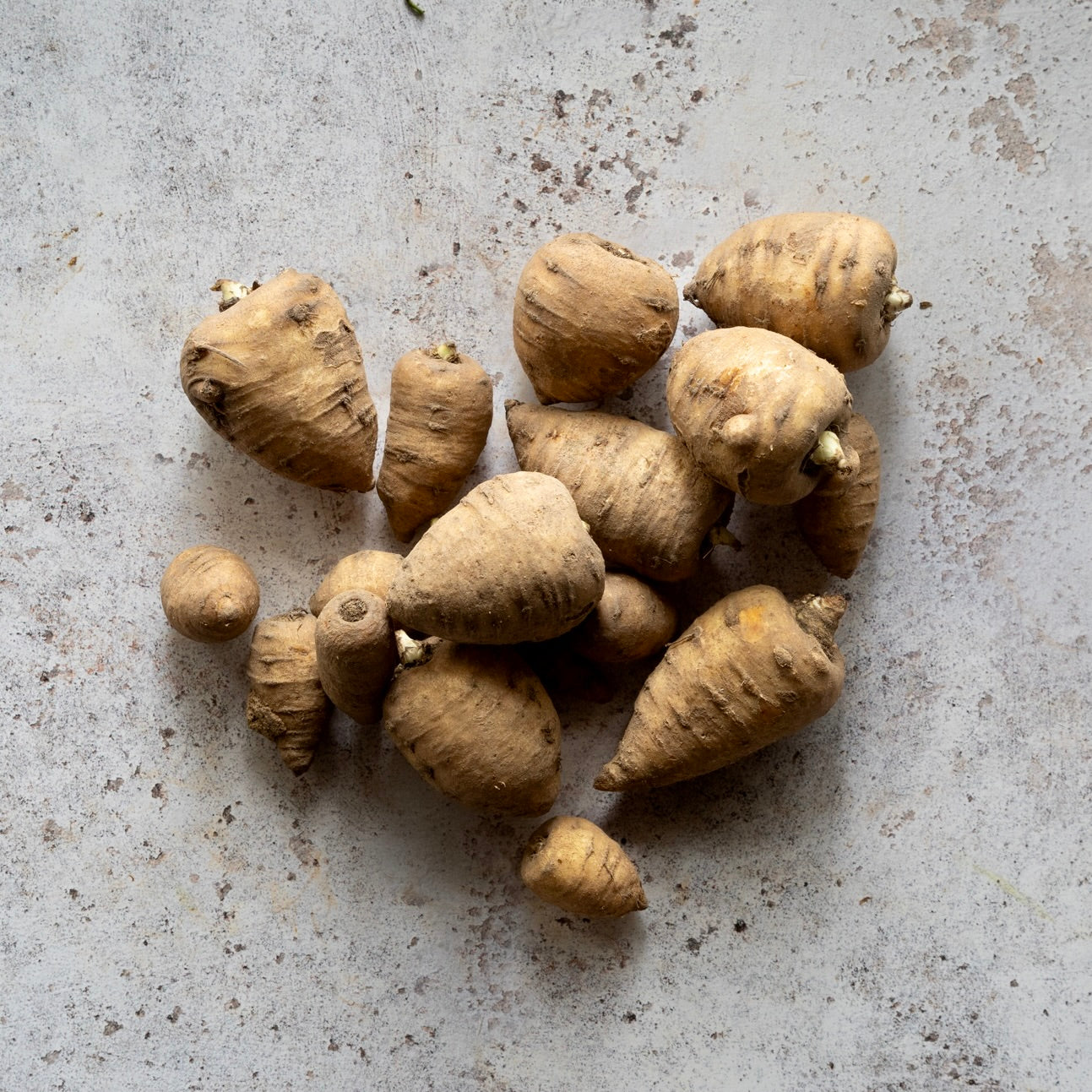
The roots are small, conical, and grey-brown on the outside with cream-coloured flesh. The flavour is distinctive and difficult to compare directly to anything else — it sits somewhere between parsnip and chestnut, with a gentle anise note and a sweetness that develops further with cooking. The texture when cooked is smooth and fine-grained, closer to a good potato than a fibrous root.
Part of the reason chervil root fell out of favour commercially is that it is slow to grow and the yields are low. The roots need a prolonged cold period after harvest to convert their starches into sugars — much like parsnips improve after frost, but more so. This means the flavour is at its best in the depths of winter, which is when these are harvested.
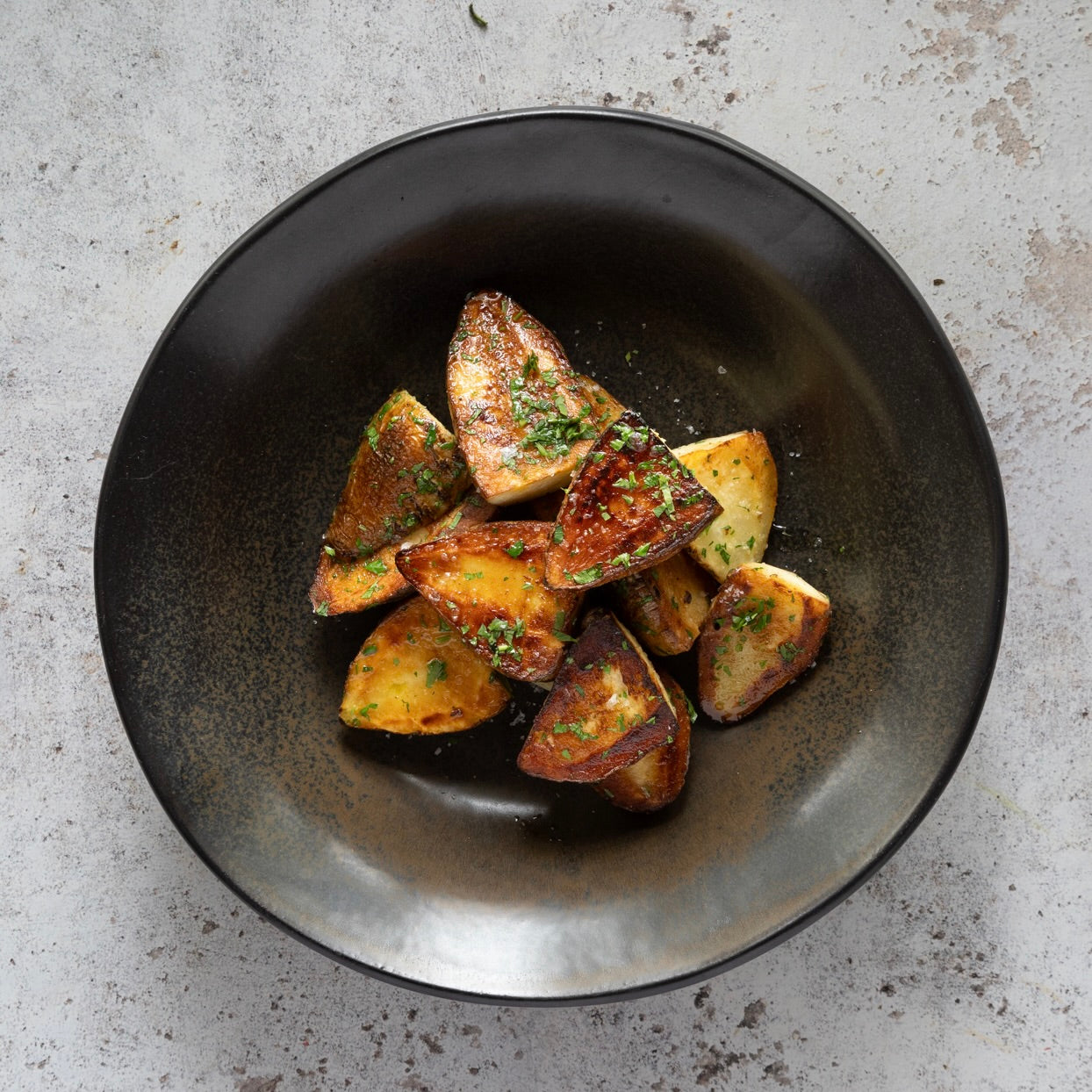
Peel and roast them whole or halved at 190°C with butter and a pinch of salt for 25–30 minutes — the sugars caramelise on the surface and the interior goes soft and creamy. They also make an exceptional purée: simmer peeled roots in salted water until very tender, then blend with butter and a splash of cream. The result is silky, subtly sweet, and pairs particularly well with game, pan-fried scallops, or roasted mushrooms. Sliced thinly and fried in butter until crisp, they make an unusual and very good garnish.
Origin: France