


Fresh Rambutan
Choose options
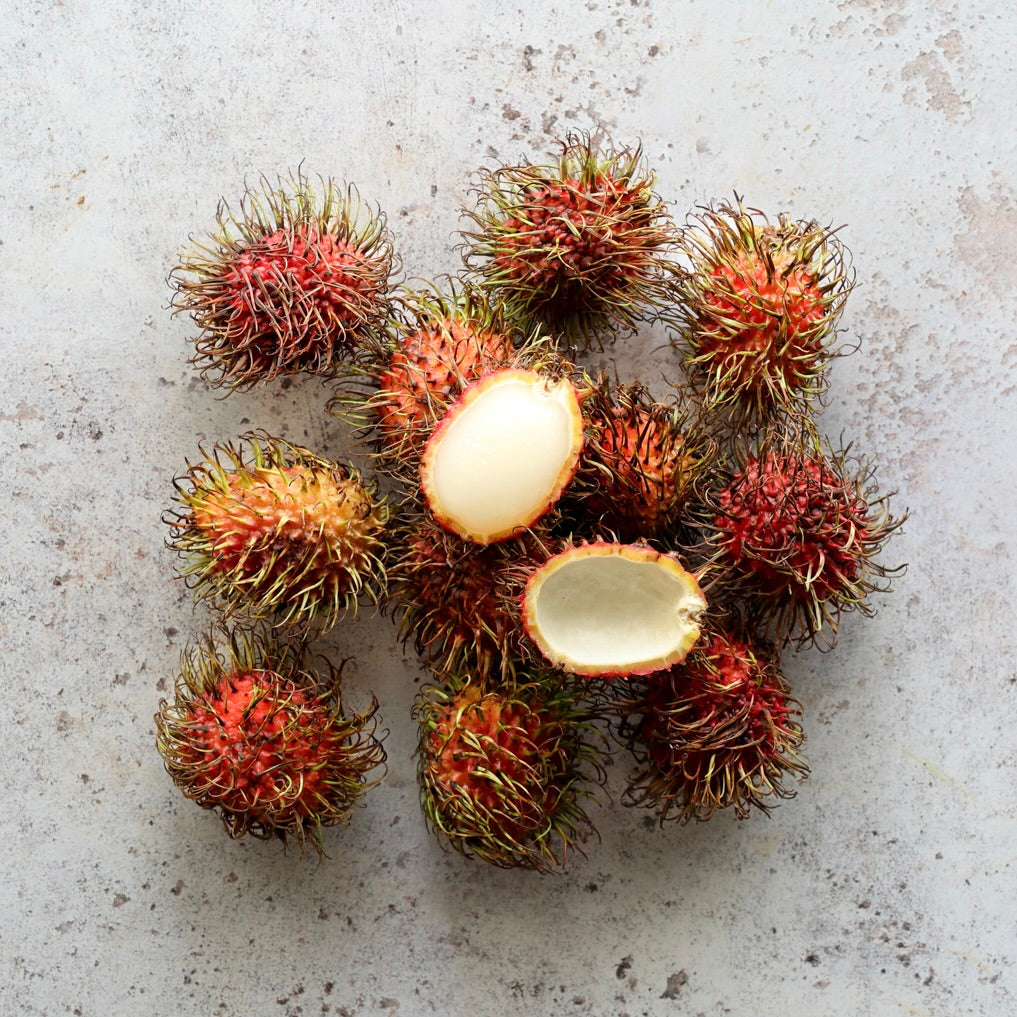
Rambutan (Nephelium lappaceum) is a South-East Asian fruit in the same botanical family as lychee — the Sapindaceae — and the similarity is immediately obvious once you get past the exterior. The name comes from the Malay word rambut, meaning hair, which describes the soft, fleshy spines that cover the shell. These are not sharp; they are flexible and slightly rubbery, and their colour — bright red when fresh, darkening to brown as the fruit ages — is the most reliable visual indicator of freshness.
Inside the shell is a single sphere of translucent, pearly-white flesh wrapped around a central seed. The texture is firmer and slightly less juicy than a lychee, with a chewier, more grape-like quality. The flavour is sweet with a mild floral note and a faint creaminess that lychee does not have — less sharply aromatic, more rounded. The seed is covered in a thin papery layer called the testa, which can stick to the flesh; in a good rambutan this peels away cleanly, but in some fruits it remains attached. It is not harmful if eaten but has a slightly bitter, woody taste.
Rambutan and lychee share a family but they are not interchangeable. The rambutan is less fragrant, sweeter, and denser in texture. People who find lychee too floral or too perfumed often prefer rambutan for its more restrained character. Both fruits are best eaten cold from the fridge — score the skin with a thumbnail or a small knife, twist the two halves apart, and pop the flesh out. They do not keep well once opened, so eat them the same day.
Store in the fridge in their shells. The spines will darken over a few days but the flesh inside remains good for up to a week if the shell is intact.
Origin: Thailand
Ingredients: Fresh rambutan (Nephelium lappaceum).