


Fresh Woodland Mushrooms
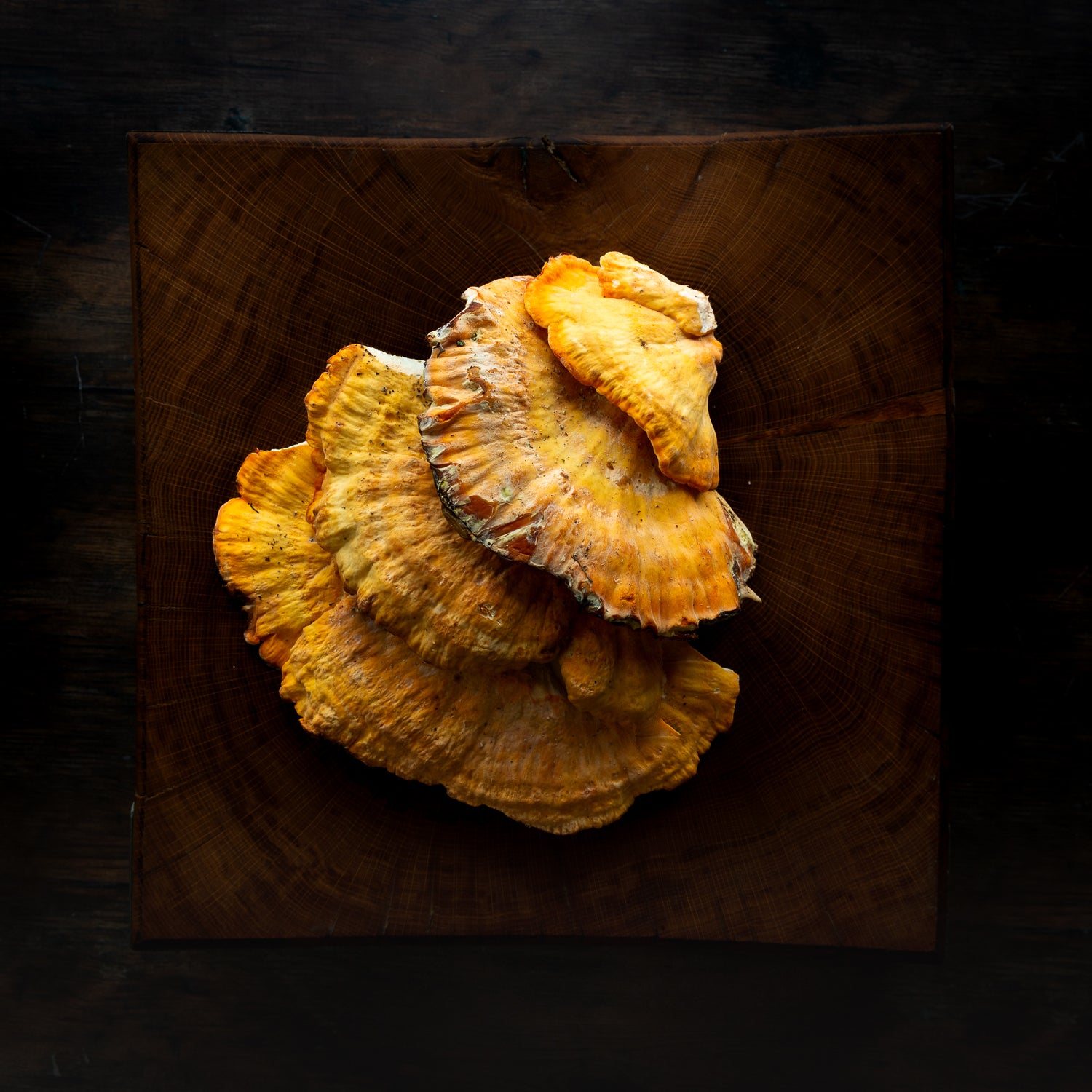
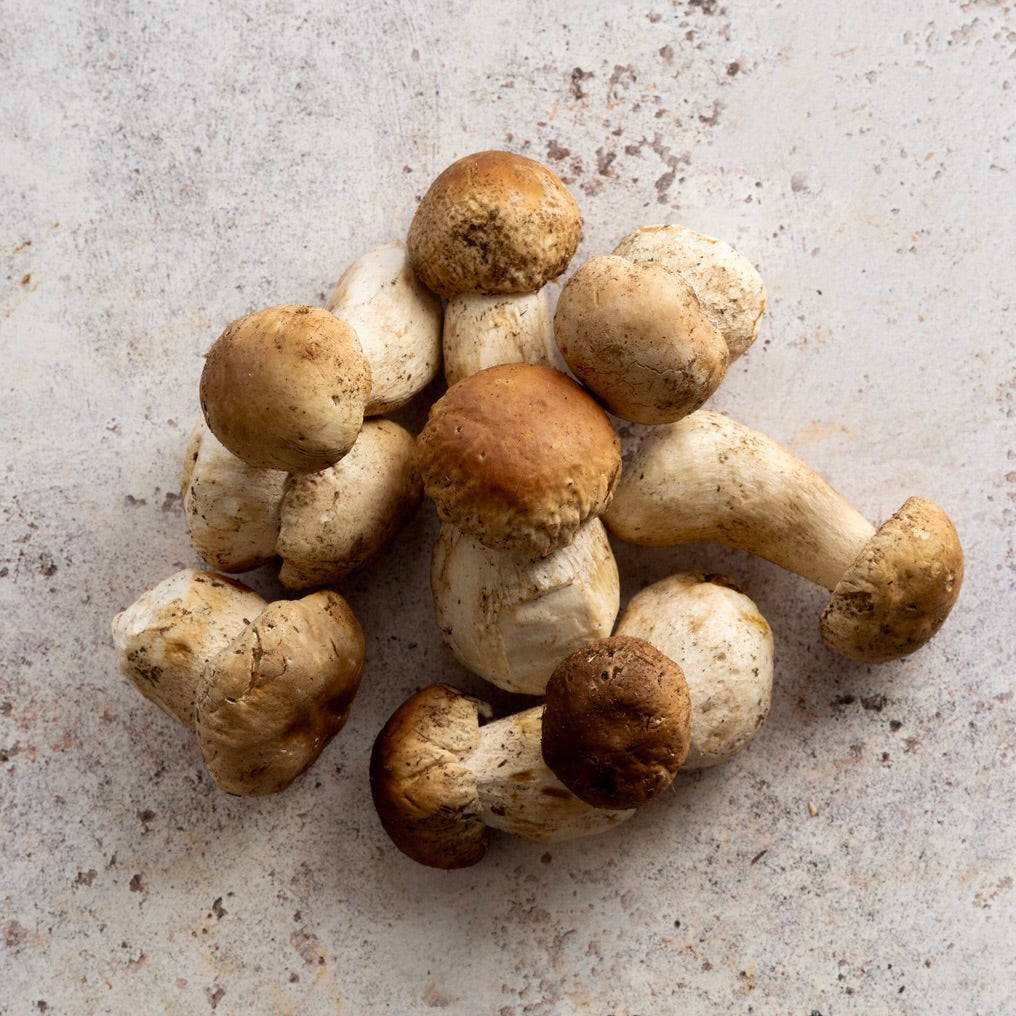
Woodland mushrooms are wild foraged fungi found across the temperate forests of Europe — harvested seasonally, impossible to replicate through cultivation, and among the most flavourful ingredients available to a serious cook. The collection spans the full wild mushroom calendar, from the first girolles of late spring through to the winter varieties that carry the season into March.
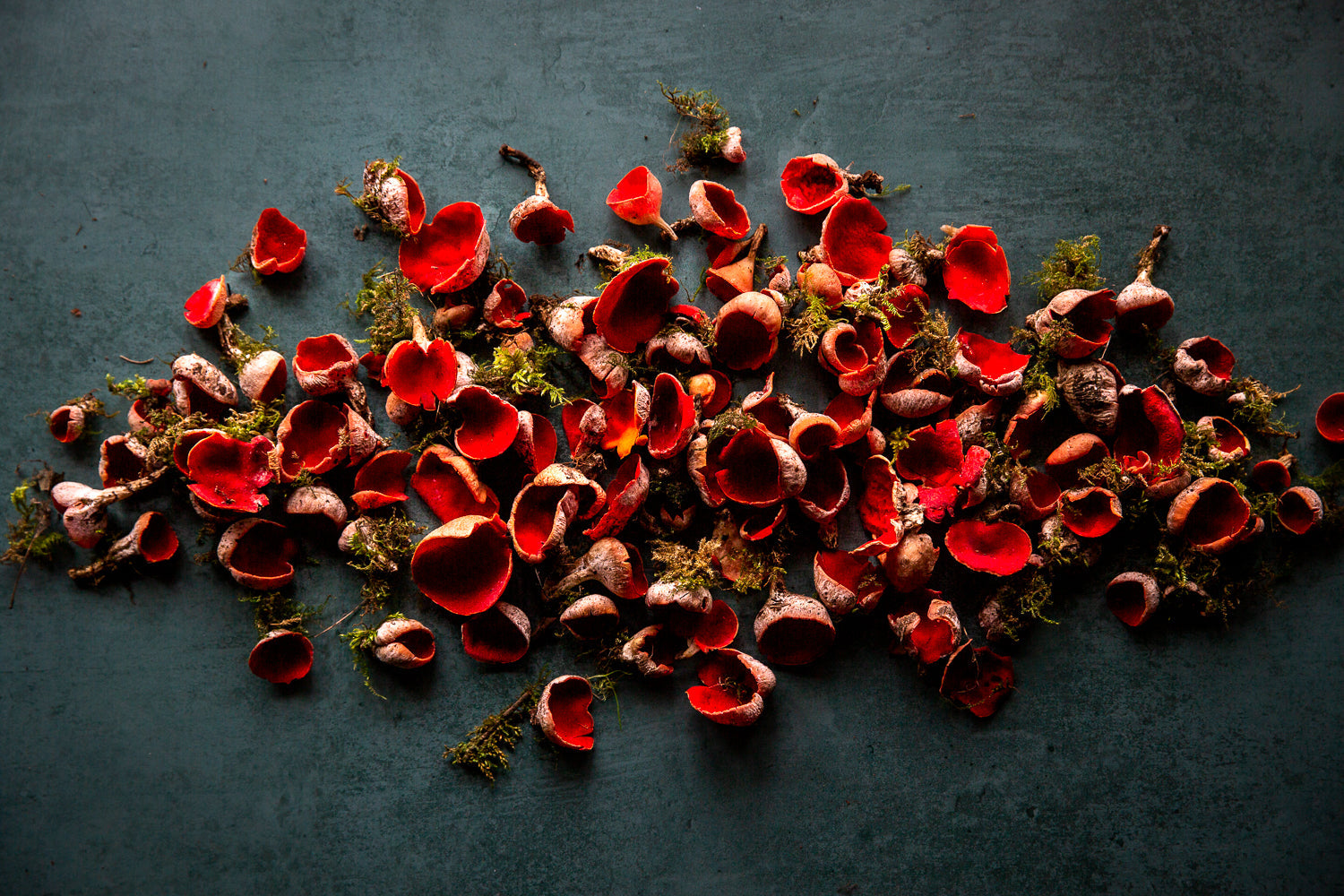
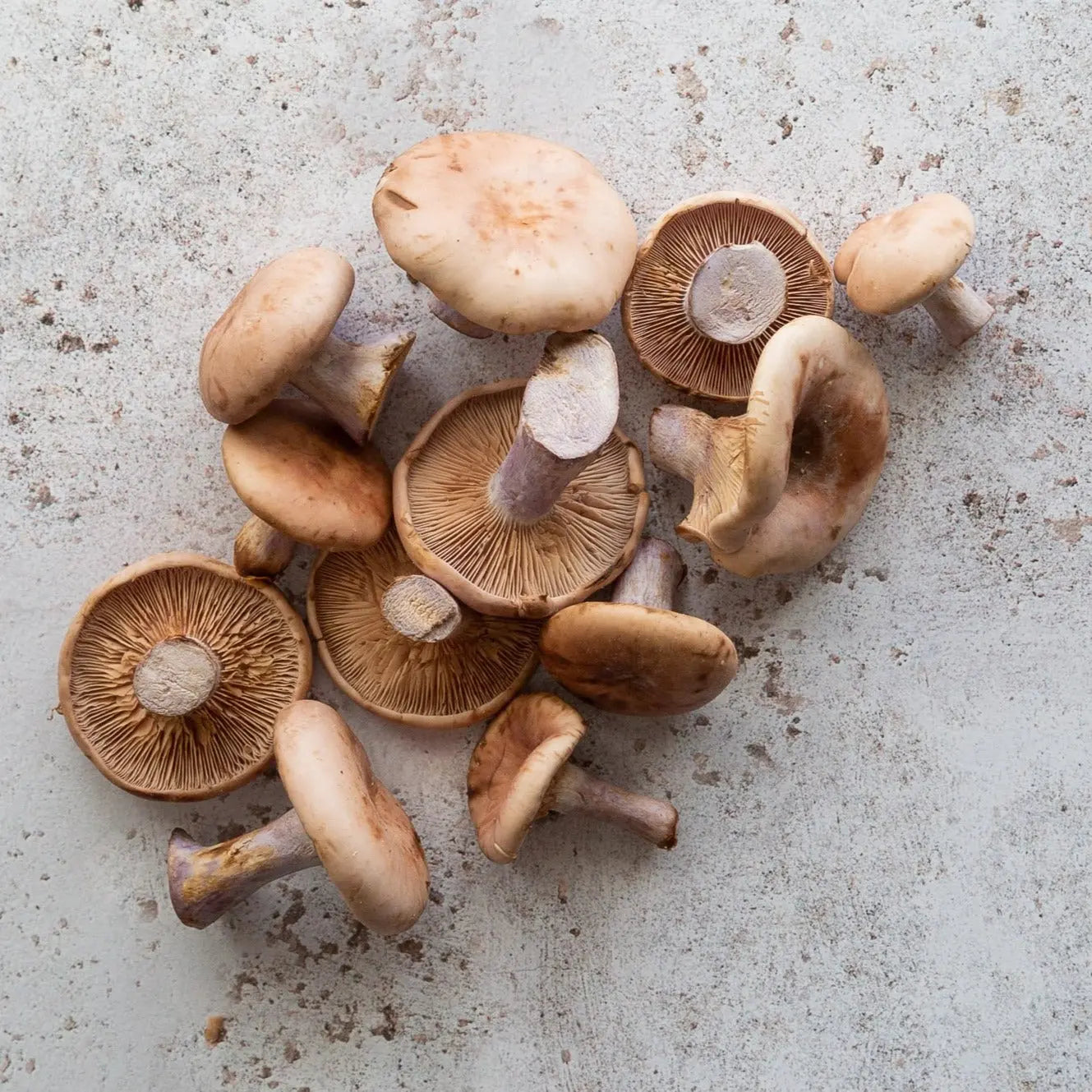
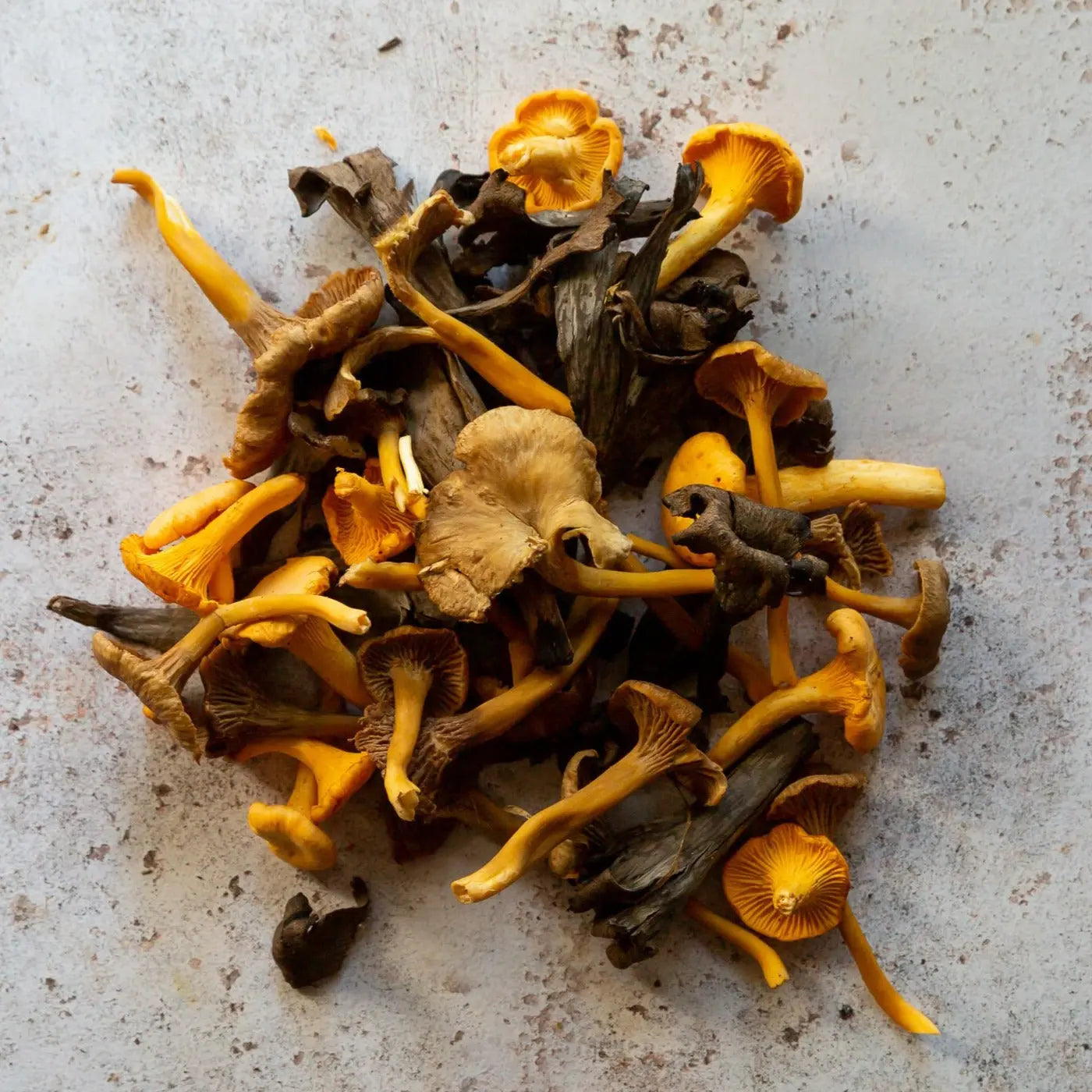
At the heart of the collection are three species that define European wild mushroom cooking: Girolles, Winter Chanterelles and Trompettes de la Mort. Each has its own season, its own flavour profile and its own place in the kitchen. Alongside them, the collection includes a rotating Woodland Mix that reflects whatever is at its best from our foragers at any given point in the season, a selection of rarer varieties — Pied de Mouton, Scarlet Elf Cups and Mousseron — when foraging conditions allow, and Dried Mixed Forest Mushrooms from Plantin for year-round availability.
Sourcing
FINE & WILD sources its woodland mushrooms through specialist European foragers and, where needed, supplements supply through Rungis Market in Paris. As with all wild produce, the selling point is the quality of the ingredient rather than the mechanics of the supply chain — these are species that cannot be farmed to the same standard, and the difference between good and average wild mushrooms is immediately apparent in the kitchen.
Flavour Profiles
Girolles
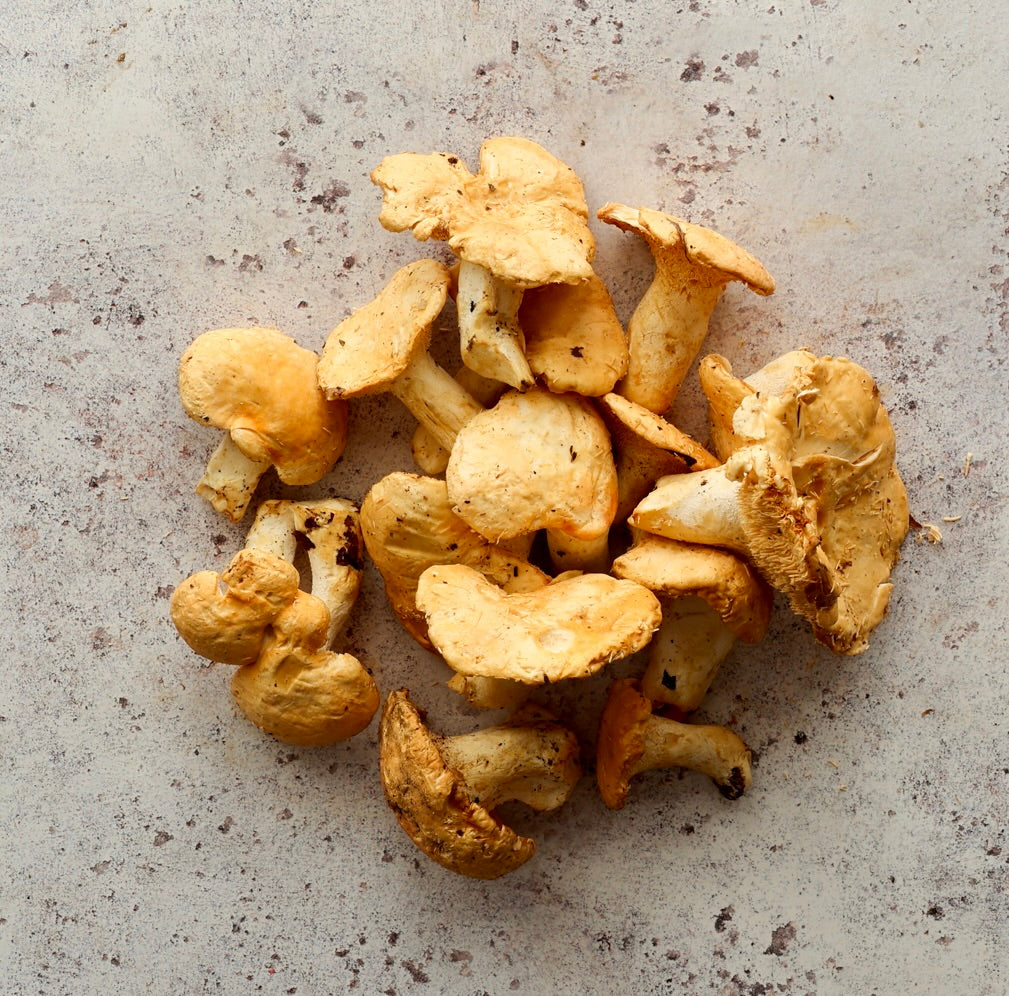
A flavour profile that is immediately distinctive — fruity and peppery with a firm, meaty texture that holds up well to heat. The aroma is floral and apricot-like, the clearest sensory marker of the species. They absorb butter and cream well but are also excellent cooked simply in olive oil, which lets their natural character come through.
Winter Chanterelles
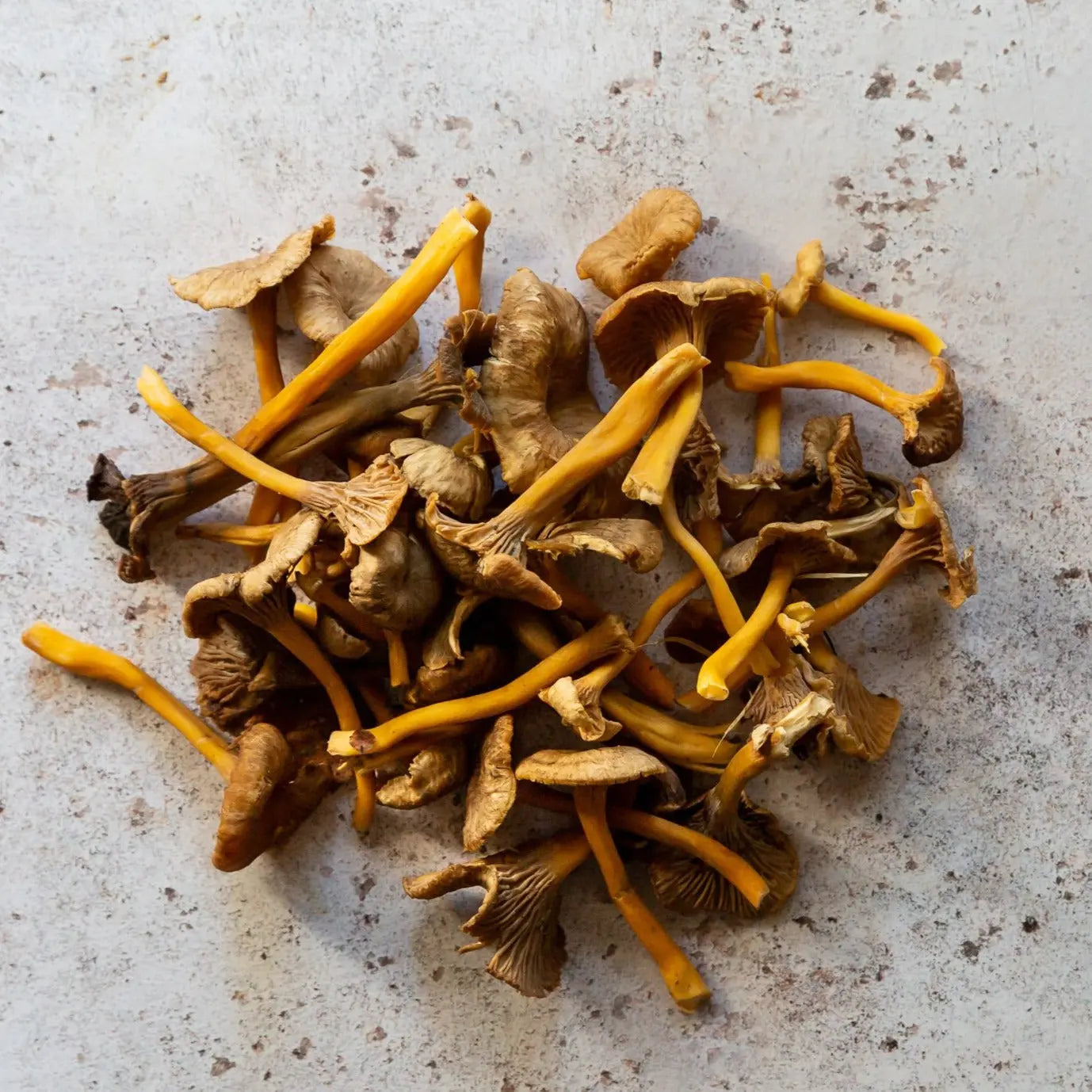
More delicate than girolles — slender, with a softer texture and a milder, earthier flavour. Their smaller size and thinner flesh means they cook faster and are better suited to applications where they can be used in quantity rather than as individual pieces.
Trompettes de la Mort
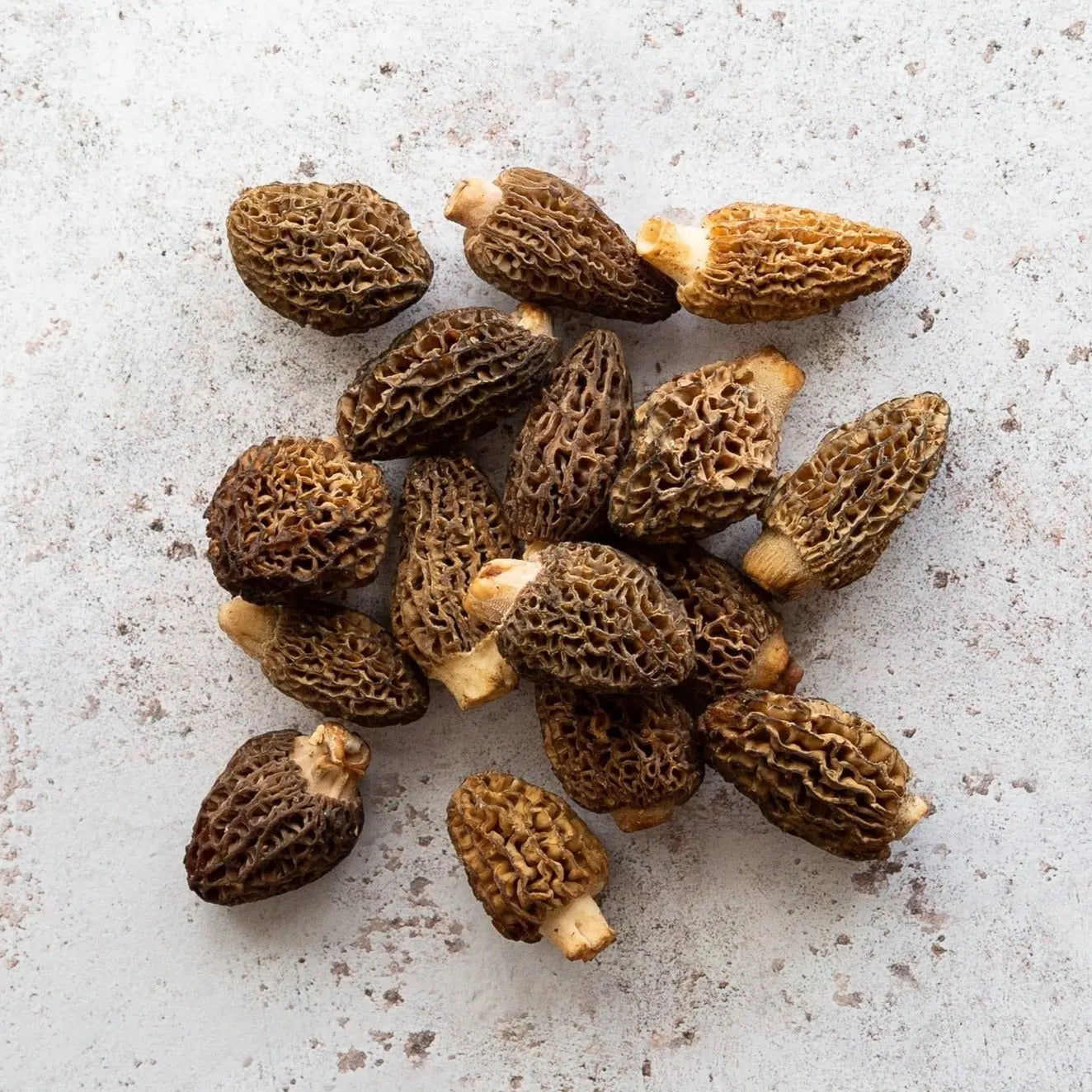
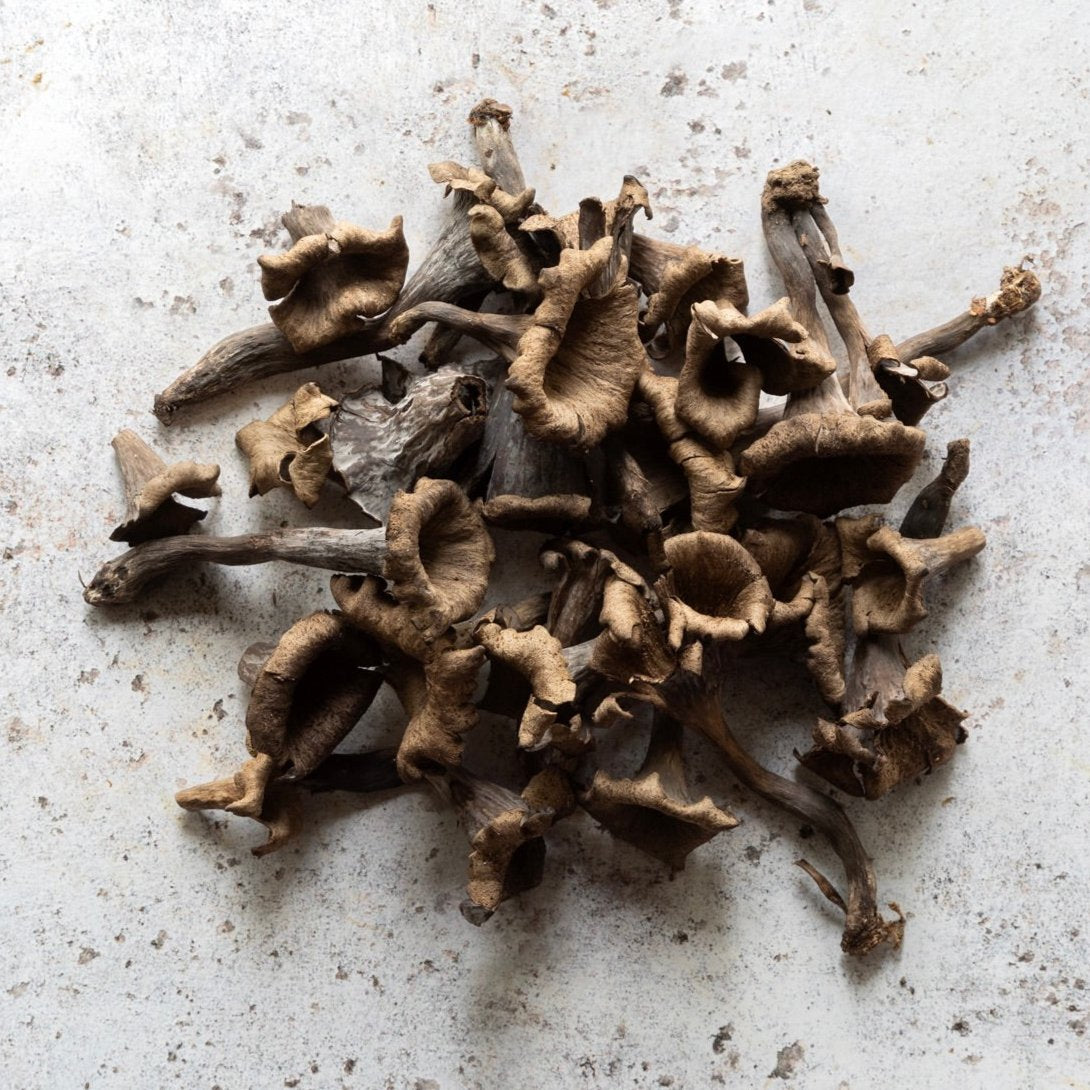
The most intensely flavoured of the three. Despite the ominous name — trumpet of death, a reference to their dark colour and the season in which they fruit — they are prized for a deep, earthy, umami-rich flavour that concentrates significantly on cooking. They pair naturally with cream, butter and robust proteins.
What Makes These Special
Wild foraged mushrooms cannot be replicated by cultivation. The flavour compounds that make girolles, chanterelles and trompettes worth buying develop in response to the specific conditions of the forest floor — soil composition, moisture, temperature variation — and are absent or significantly diminished in cultivated alternatives.
The seasonal limitation is part of what makes these ingredients worth having. A girolle in June has a quality and character that nothing else in the summer kitchen provides. A trompette in November is one of the defining flavours of the autumn.
How To Cook Woodland Mushrooms
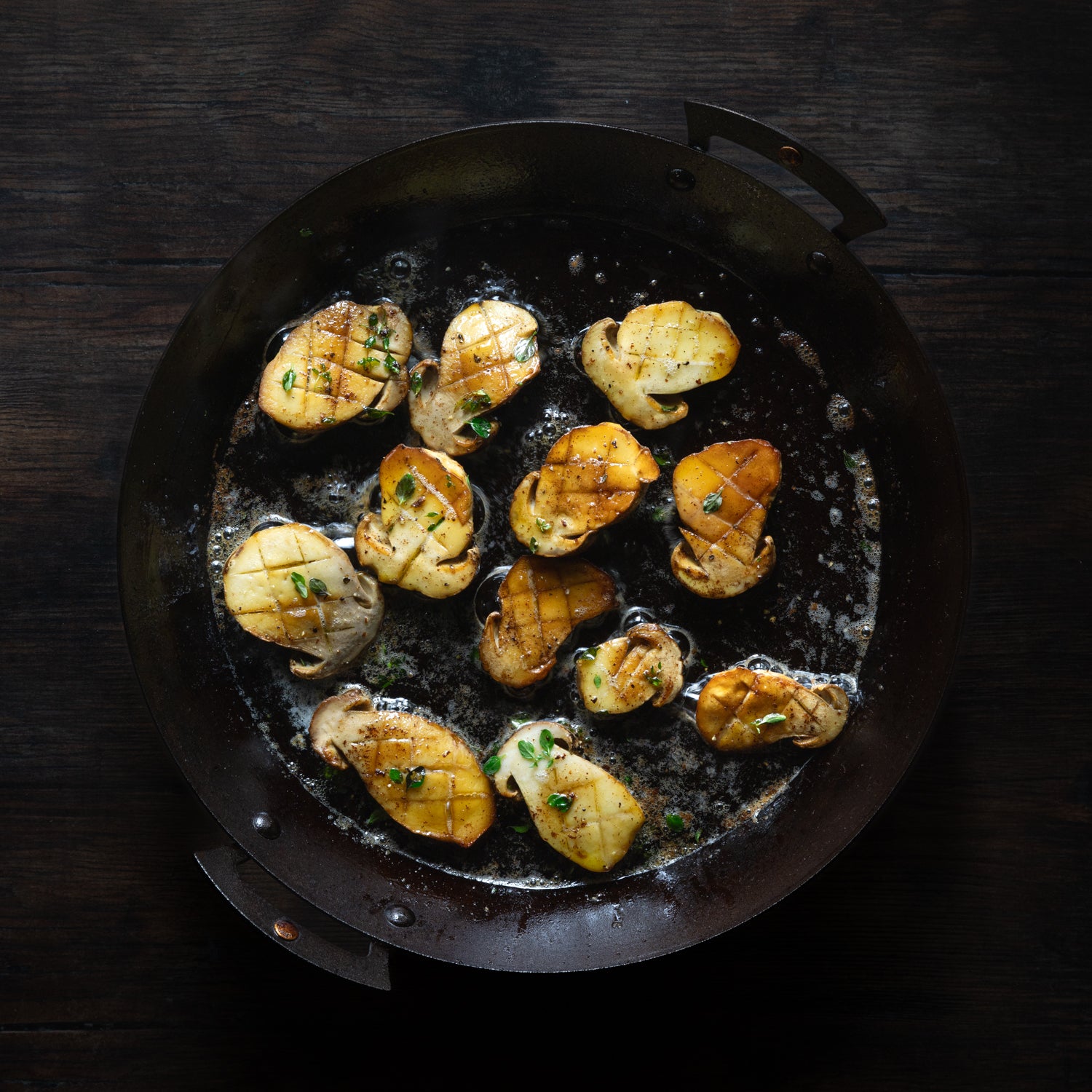
All three varieties should be cleaned with a brush or damp cloth — never washed. Sauté in butter or olive oil over medium-high heat without crowding the pan, and season only after the mushrooms have coloured. Girolles and trompettes take three to four minutes; winter chanterelles, being more delicate, are done in two to three. The principle is the same across all three: high heat, good fat, minimal interference.
Recipe Ideas
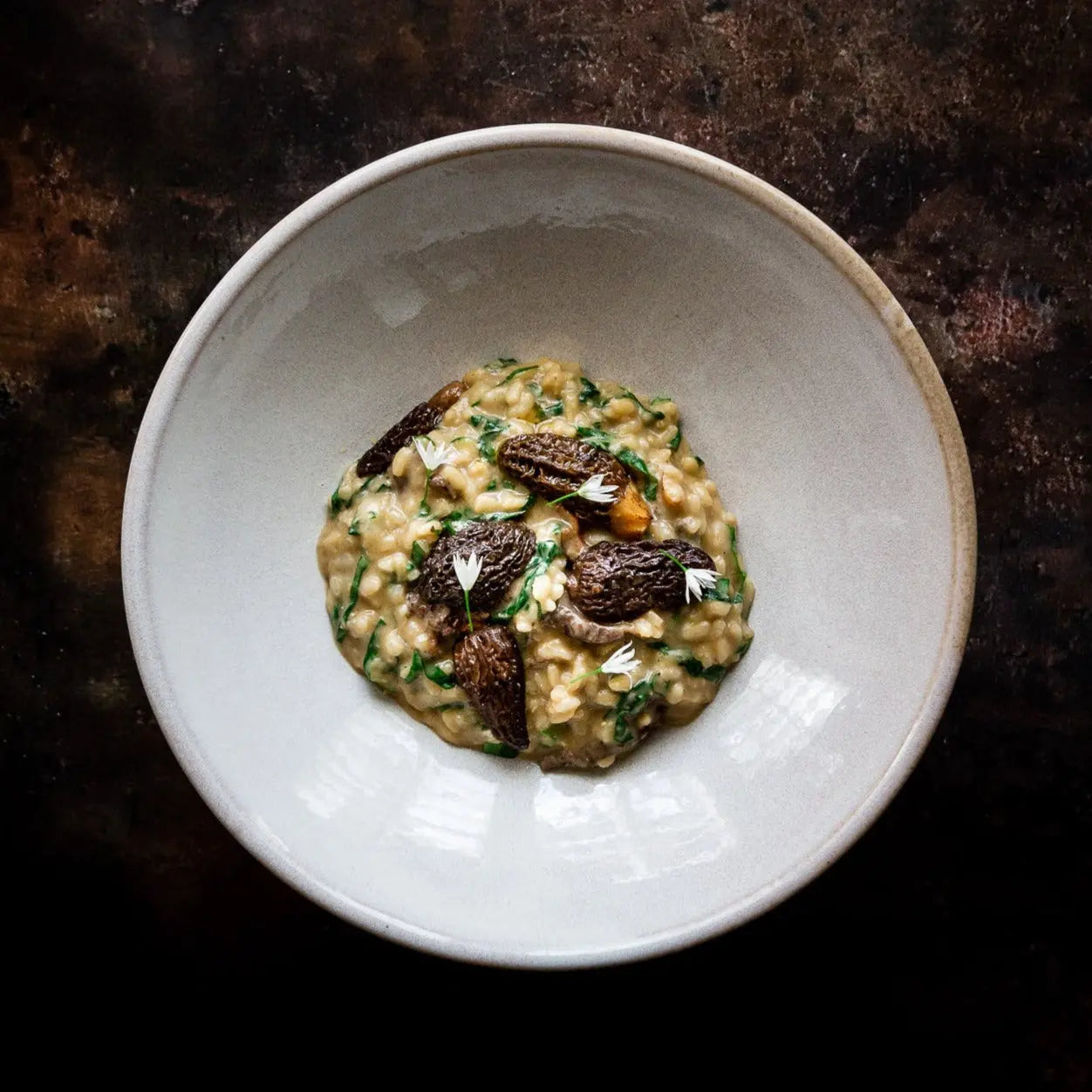
The classic applications are French — girolles on toast with butter and parsley, a winter chanterelle tart with crème fraîche and thyme, trompettes alongside beef or venison, a woodland mix omelette. For more involved preparations, a girolle cream sauce alongside roast chicken is one of the great French combinations; trompettes folded through a risotto add a depth that cultivated mushrooms cannot match. For recipe inspiration our recipe content covers the full range. [Link: /recipes/mushrooms]
Pairing Suggestions
Woodland mushrooms pair naturally with white Burgundy — a Meursault or Puligny alongside girolles is the classic combination. For the darker, more intense trompette, a light Pinot Noir from Burgundy or the Loire suits the earthiness without overwhelming it. A woodland mushroom tart alongside a well-aged Comté is a pairing that needs no further justification.
Storage
Fresh wild mushrooms are perishable and should be stored in the refrigerator in a paper bag or wrapped loosely in kitchen paper — never in a sealed plastic container, which traps moisture and accelerates deterioration. Use within two to three days of delivery. Inspect on arrival and use any damaged or soft pieces first — wild mushrooms past their best will not improve with time.
About The Varieties
What is the difference between a girolle and a chanterelle?
They are different species, though the names are frequently confused. Girolles are compact, fully orange and firm with a fruity, peppery flavour and a distinctive apricot aroma. Winter Chanterelles are a cousin species — yellow-orange legged with a brown cap, more delicate in texture and flavour, and with a different season: October through March versus the girolle's May–December.
Delivery
UK next-working-day delivery on orders placed before 2pm. Complimentary weekday delivery on orders over £225.